
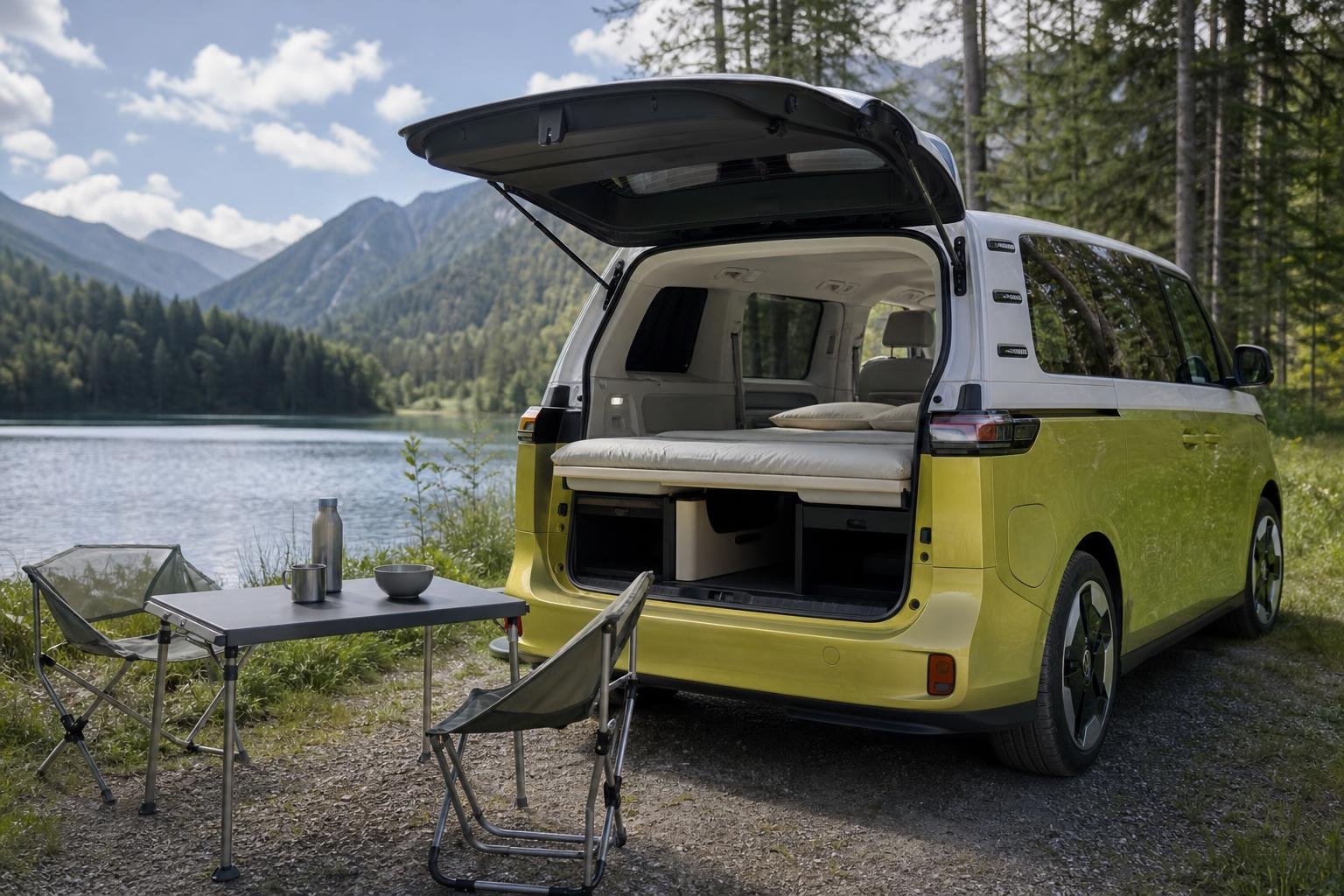

Volkswagen is turning the ID. Buzz into a more convincing weekend camper with the new ID. Buzz Beach. Rather than converting the electric van into a permanent motorhome, the Beach adds a removable sleeping system, compact camping furniture and software that lets occupants run cabin climate control away from a campsite hookup.
The result is a vehicle designed to switch between family transport and two-person accommodation without the bulk, cost or day-to-day compromises of a dedicated camper van. UK orders are scheduled to open later this month, with on-the-road pricing starting at $86,409.33 USD.
A removable bed keeps the ID. Buzz useful during the week
The central feature is a folding bed frame paired with a custom-fit mattress measuring 6.56 feet long and 3.94 feet wide. That is approximately 78.7 by 47.2 inches, giving two occupants a sleeping surface comparable to a small double bed.
Volkswagen has designed the system to remain removable rather than permanently occupying the rear of the vehicle. In five-seat versions, the folded bed frame is stored in the luggage compartment, with space remaining underneath the raised floor for bags and camping equipment. That arrangement should make the Beach considerably more practical than an improvised mattress placed directly on the cargo floor.
The six- and seven-seat versions use a different storage solution. The bed frame and mattress stand vertically behind the third row, preserving the additional seating but making the camping hardware more visible and potentially less convenient to remove. Buyers will therefore need to choose between maximum passenger capacity and the simplest camper layout.
Camping equipment is integrated into the van
The sleeping package includes more than the bed itself. A folding table and chairs are concealed within the rear storage area, allowing occupants to create a small outdoor dining setup without carrying separate furniture. In five-seat models, the equipment sits beneath the false boot floor; in larger versions, it is stored upright beside the mattress.
Blackout curtains are included to make the cabin darker at night, while ventilation grilles for the front side windows allow fresh air to enter when the windows are slightly lowered. Volkswagen is also offering blinds for the rest of the cabin, helping turn the large, glassy passenger compartment into a more private sleeping space.
These details reflect the Beach’s intended role. It is not a full motorhome with a permanent kitchen, bathroom or built-in sleeping furniture. Instead, it follows the simpler tradition of Volkswagen’s earlier camping-oriented vans, where owners could transform a versatile passenger vehicle for occasional trips and return it to normal service afterward.
Overnight mode uses the high-voltage battery
The most distinctive technical feature is the new Overnight mode. Selected through the central touchscreen, it uses energy from the ID. Buzz’s high-voltage battery to maintain the cabin temperature for up to 48 hours while the vehicle is parked.
That capability could be useful in both hot and cold conditions, particularly when the van is parked away from electrical hookups. It also avoids the need to run a combustion engine for heating or cooling, although actual operating time will depend on outside temperature, the selected cabin temperature and the vehicle’s state of charge. Volkswagen’s 48-hour figure should therefore be understood as a stated maximum rather than a guaranteed duration in every camping situation.
Overnight climate control also introduces an important practical trade-off. Every hour spent heating or cooling the cabin draws energy that cannot be used for driving. Owners planning a remote trip will need to balance comfort against the distance to the next charging station, especially because a large, upright van is less aerodynamically efficient than a conventional passenger car.
V0.53 US gallons turns the electric van into a power source
The ID. Buzz Beach also includes vehicle-to-load capability. A 230-volt socket adapter is standard, allowing the battery to supply power to selected external devices such as a kettle, coffee machine or electric grill. Volkswagen offers a dedicated camping connector as an option for users who expect to make regular use of campsite electrical hookups.
V0.53 US gallons gives the Beach a function that conventional vans cannot easily provide without an auxiliary battery or inverter. It can support small appliances without a separate generator, reducing noise and eliminating local exhaust emissions at the campsite. The limitation is that every powered appliance consumes energy from the same battery used for propulsion, so high-draw equipment will shorten the available driving range.
The electric camper remains an ID. Buzz underneath
Volkswagen has made relatively few changes to the underlying vehicle. The Beach retains the ID. Buzz’s upright proportions, sliding doors, spacious cabin and retro-inspired styling. A Candy White and Cherry Red two-tone finish and 20-inch Stockton alloy wheels provide the variant with extra visual distinction, but the camping equipment is largely what separates it from the regular people carrier.
Independent reporting on the UK-specification model identifies a single rear-mounted motor and a 79-kilowatt-hour battery, with Volkswagen quoting up to 279 miles of range for the corresponding configuration. That figure is a manufacturer claim and will vary with speed, weather, passenger load and the use of Overnight mode. The Beach’s range and charging requirements will matter more than its camping accessories for buyers planning long-distance trips.
The broader ID. Buzz lineup is built around flexible passenger and cargo use. Volkswagen’s US model, for example, offers six- and seven-seat configurations, more than 160 cubic feet of passenger space and available all-wheel drive. Those figures apply to the wider ID. Buzz range rather than necessarily describing the UK Beach specification, but they explain why the van is a useful foundation for a removable camper package.
Pricing and availability limit the Beach’s reach
UK pricing starts at $70,814.52 USD excluding VAT, rising to $86,409.33 USD including VAT and on-the-road costs according to the supplied launch reporting. That places the Beach well above an ordinary family vehicle, although it remains less elaborate than Volkswagen’s larger California camper range, which adds equipment such as a kitchen and more permanent accommodation.
The Beach’s appeal is therefore based on compromise. It offers a real bed, seating for everyday use, off-grid climate control and onboard power, but it does not provide the self-contained facilities of a full camper van. For occasional weekend trips, that may be exactly the point: owners do not have to dedicate their only vehicle to camping.
For now, the model is focused on the UK and other markets outside North America. Volkswagen has placed the ID. Buzz on hiatus in the United States, despite the van’s established presence there and the company’s broader plans for future electric models. That makes the Beach an important test of whether buyers will pay a premium for a flexible electric camper concept while charging infrastructure and long-distance EV travel continue to develop.
A practical interpretation of the electric Microbus
The ID. Buzz Beach does not attempt to recreate every feature of a traditional camper van. Instead, it uses the electric platform’s strengths—quiet operation, a large battery and a spacious flat-floor cabin—to make simple overnight travel more convenient.
Its removable bed and furniture preserve the ID. Buzz’s role as a family vehicle, while Overnight mode and V0.53 US gallons extend the usefulness of the battery beyond propulsion. That combination gives the Beach a clearer purpose than a standard van with an aftermarket mattress, even if buyers must still plan carefully around range, charging and the high purchase price.
Sources: Motor1, Volkswagen, and Electrek.
0 Comments