
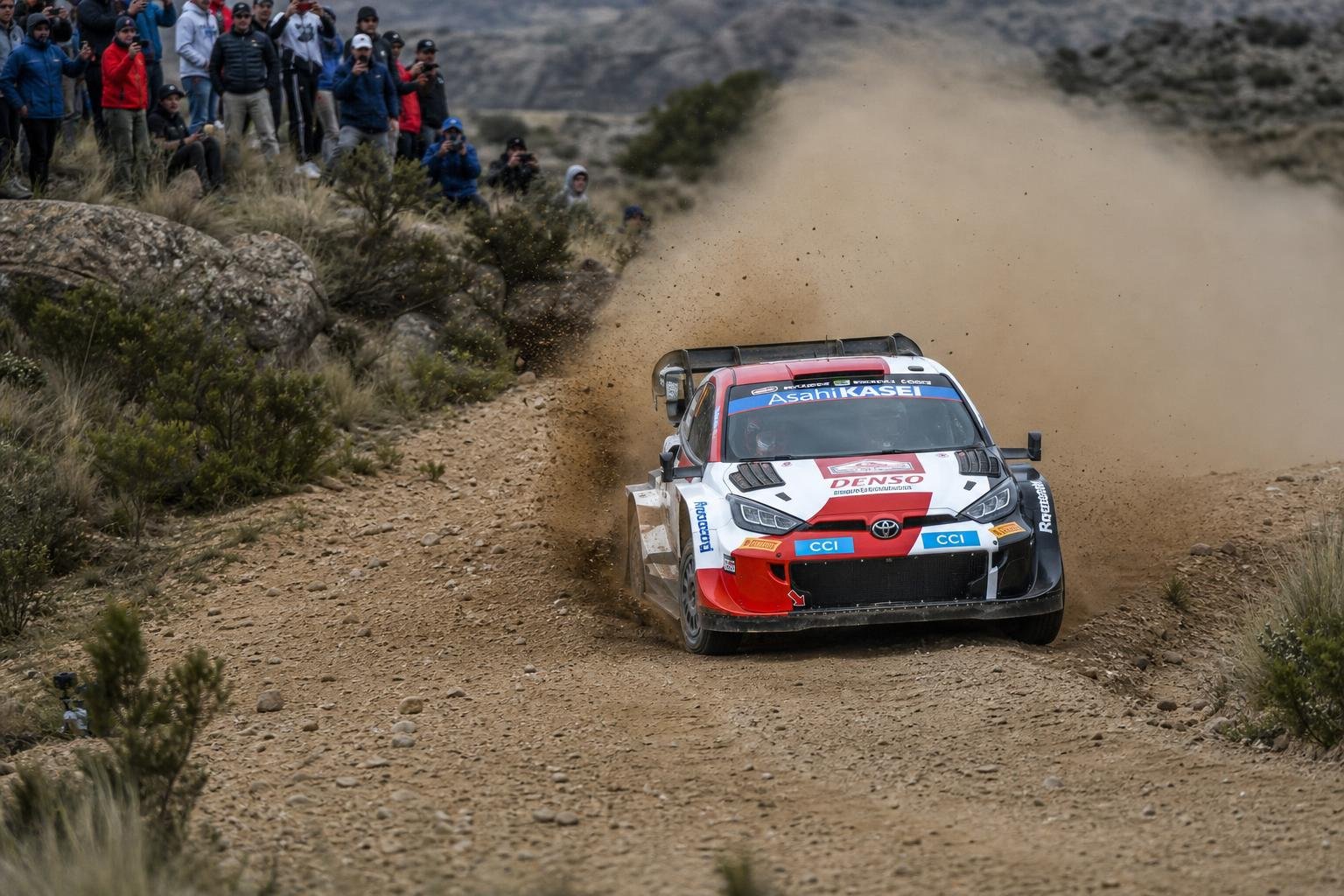

Rally Argentina is moving toward a potential return to the FIA World Rally Championship in 2028, ending an absence that began after the event’s last WRC appearance in 2019. The proposed comeback will depend on the success of a candidate rally in Córdoba this March and its approval by the FIA World Motor Sport Council.
The candidate event will run as a round of the FIA CODASUR Rally Championship. FIA delegates will work with Argentina’s governing body, the Automóvil Club Argentino, and local organizers throughout the three-day rally. Their assessment will cover sporting operations, safety, medical arrangements, infrastructure, organizational capabilities, the proposed stages and service park facilities.
A return built around a formal evaluation
Rather than receiving an immediate place on the WRC calendar, Rally Argentina must first demonstrate that its organization can meet the championship’s operational and safety standards. The post-event report will be submitted for approval by the World Motor Sport Council. If the FIA and WRC Promoter are satisfied and that process is successful, the event will return under a three-year agreement beginning in 2028.
That structure reflects the practical difficulty of bringing a major international rally back after a long break. A WRC round requires more than competitive roads. Organizers must provide secure spectator areas, reliable communications, medical coverage, efficient vehicle movements and a service park capable of supporting teams, officials and media. The candidate rally therefore represents both a sporting event and a full-scale organizational test.
For Argentina, the evaluation also provides an opportunity to prove that the event can be staged sustainably. The country’s return has been delayed by the COVID-19 pandemic, the all-European WRC calendar that followed, financial and logistical difficulties, and fires that affected Villa Carlos Paz in late 2023.
Córdoba plans aim to restore Rally Argentina’s identity
Plans for the proposed WRC event are centered on Córdoba, the region most closely associated with Rally Argentina. Organizers intend to return to the Estadio Mario Alberto Kempes for the service park while expanding the surrounding WRC Arena into a wider, more fan-friendly area.
The event also aims to bring back some of its best-known stages, including El Cóndor. Those roads are central to Rally Argentina’s identity: the rally has long been associated with legendary stages, passionate crowds and the distinctive terrain around Córdoba. Re-establishing familiar locations could help reconnect the championship with local spectators while giving the event a recognizable foundation for its return.
However, heritage alone will not secure a WRC place. The challenge will be combining the traditional character of the rally with modern expectations for safety, spectator management and team logistics. A successful candidate event must show that the famous stages can function within a contemporary world championship framework.
Why Rally Argentina matters to the WRC
Rally Argentina would restore a major South American presence to the WRC calendar. Its absence has removed one of the championship’s most distinctive events and left the series without the atmosphere and terrain associated with Córdoba.
For the championship’s commercial and sporting expansion, a return would also provide a long-term foothold in a country with a deep rallying culture. WRC Promoter CEO Éric Boullier described the proposed agreement as more than a return to a familiar destination, emphasizing the need to create a sustainable, long-term future for the event.
That long-term approach is important. A single appearance could generate excitement, but a three-year commitment would give organizers, teams and local authorities greater certainty. It would also provide time to refine the event, build its audience and establish the necessary infrastructure rather than treating the comeback as a one-off revival.
A championship preparing for its next era
The proposed Argentine return comes as the WRC seeks to build broader momentum around its future. Supporting reporting has linked the championship’s next phase to a new promoter, revised technical regulations and renewed manufacturer interest. Ford has announced plans to return as a full factory-backed entrant in 2028 with M-Sport, while Toyota has also been identified as committed to the reworked rules.
Those developments do not guarantee Rally Argentina’s place on the calendar, but they create a potentially stronger environment for its comeback. A championship looking to expand its global reach needs established rallies with recognizable identities, and Argentina offers both a proven audience and a distinctive competitive setting.
The timing could also make the event particularly valuable to manufacturers. Rallying remains one of the clearest ways for automakers to demonstrate durability, traction and vehicle control across varied surfaces. Ford’s stated intention to connect its WRC program with future rally-inspired passenger vehicles illustrates how the manufacturer views rally competition as a way to build emotional appeal around road cars.
Ben Sulayem’s personal connection
FIA president Mohammed Ben Sulayem has a personal connection to the event. At the 1993 Rally Argentina, he finished sixth overall and won the Group N category by 21 minutes in a Ford Escort RS Cosworth, an achievement described as one of his finest moments in the WRC.
“Argentina is a country with motorsport in its blood, passionate fans and remarkable terrain,” Ben Sulayem said. “It has an incredible rallying heritage, and I have great personal memories of competing in Córdoba.”
He added that a return would build on the WRC’s global momentum and deliver high-level competition to Argentine fans. While the president’s support is significant, the candidate rally’s technical and organizational performance will ultimately determine whether the planned return moves forward.
The next step is the most important one
Rally Argentina’s route back to the WRC is now clearly defined, but it is not yet complete. The Córdoba candidate event must demonstrate that the organizers can deliver a safe, efficient and internationally credible rally while preserving the character that made the event popular in the first place.
If it succeeds, Argentina could return to the WRC in 2028 with a three-year platform rather than a temporary invitation. That would give the championship a valuable South American round and restore one of its most recognizable rallies. For now, the road to El Cóndor runs through the candidate event and the FIA’s final evaluation.
Sources: DirtFish; Performance Racing Industry; Racecar Engineering; DirtFish on Ford’s WRC return.
0 Comments