
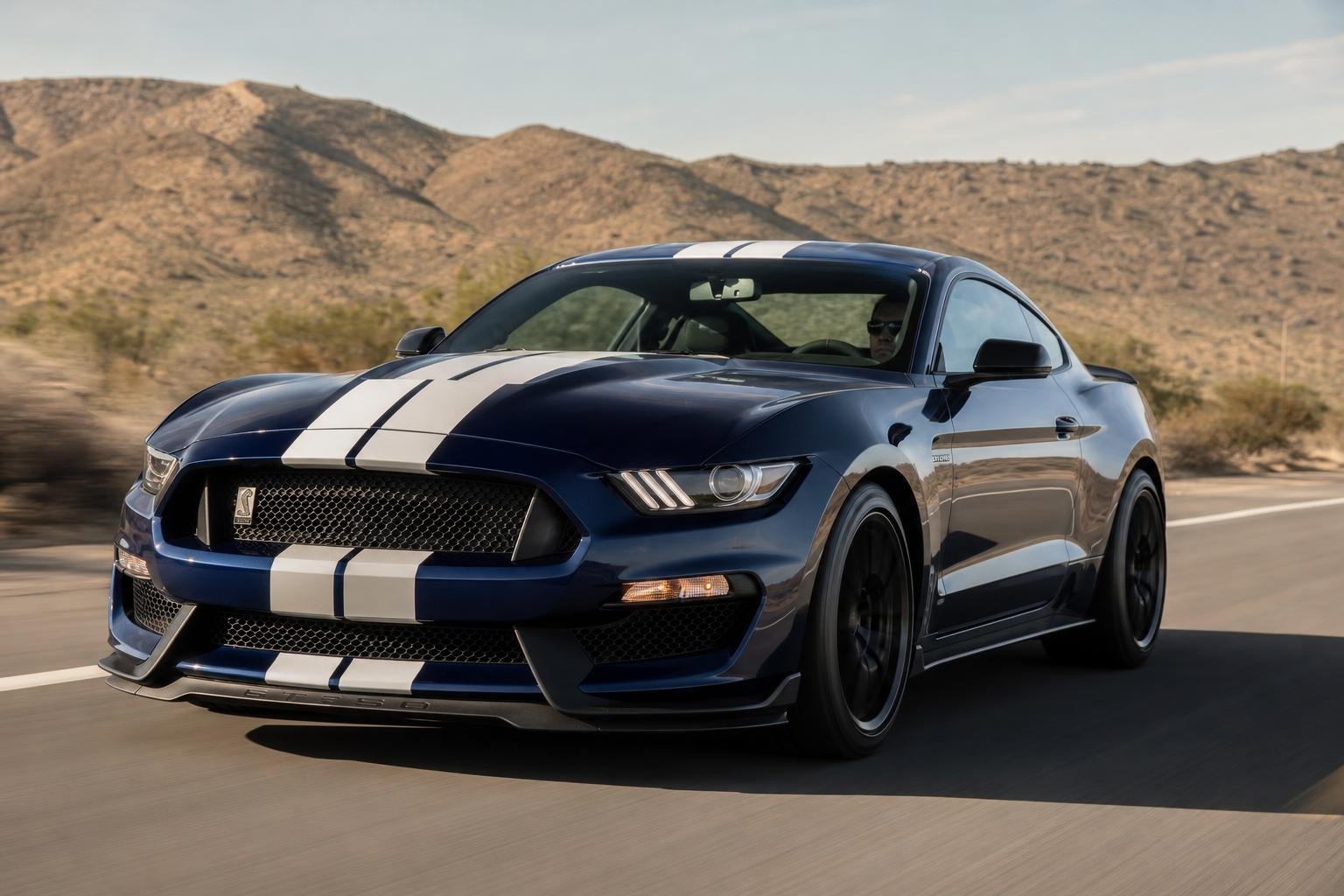

The Ford Shelby GT350 is not the fastest modern Mustang, the cheapest performance car, or the easiest sports car to own. That is precisely why it remains so appealing. Built from 2016 through 2020, the GT350 combines a 526-horsepower naturally aspirated V8, a six-speed manual transmission, and a genuinely track-capable chassis in a package that still works on ordinary roads.
For shoppers considering a used performance car, the GT350 offers something increasingly difficult to find: a distinctive engine and an involved driving experience without moving into exotic-car pricing. But its ownership demands are more serious than those of a regular Mustang GT, particularly where the high-revving Voodoo V8 is concerned.
The GT350’s appeal starts with its unusual V8
The GT350’s 5.2-liter V8 is the car’s defining feature. Unlike the cross-plane-crank V8s used in most American performance cars, the Voodoo engine uses a flat-plane crankshaft. That arrangement helps the engine breathe efficiently at high rpm and gives it a sharper, more exotic exhaust note.
It produces 526 hp and 429 lb-ft of torque, with a redline of 8,250 rpm. Those numbers do not tell the whole story. The GT350 does not deliver the immediate, overwhelming low-end thrust of the supercharged GT500. Instead, it encourages the driver to build speed, use the rev range, and shift the Tremec manual transmission with purpose.
That character matters to buyers. A newer Mustang GT may offer strong acceleration for less money, but the GT350 feels engineered around the relationship between the driver, engine, gearbox, and chassis. There is no automatic option to soften the experience and no dual-clutch system to remove the driver from the process.
Which model year offers the best balance?
The standard GT350 is generally the more sensible used purchase. It retains the engine, brakes, suspension technology, and basic performance character that make the model special without the GT350R’s much higher prices and more expensive carbon-fiber wheels.
Ford made useful updates throughout the car’s production run. For 2017, track-focused equipment that had previously been optional became standard, including additional cooling hardware. Ford then made more substantial changes for 2019, with revised suspension tuning, aerodynamic refinements, and Michelin Pilot Sport Cup 2 tires available as part of the performance upgrades.
That makes a 2019 or 2020 standard GT350 the most complete choice if the budget allows. A well-maintained 2020 benefits from the final round of factory development while remaining more usable and less costly to maintain than a GT350R. Earlier cars are not automatically poor choices, however. A 2017 or 2018 model with strong records and a clean inspection can deliver most of the experience for less money.
The GT350R is a different proposition. Its carbon-fiber wheels reduce unsprung mass, while its more aggressive aerodynamic and suspension equipment target track performance. The R makes sense for an owner who regularly attends track days and is prepared for the cost of replacing specialized components. For street driving, the regular GT350 is usually the better value.
Used prices vary widely
The supplied Kelley Blue Book valuation figures show how sharply condition, specification, mileage, and production year can affect the market. The cited national-average Fair Purchase Prices range from approximately $38,700 for a 2016 GT350 to $48,100 for a 2020 GT350. GT350R values range from roughly $44,500 for a 2016 model to $76,900 for a 2020 car.
Those figures are valuation references, not guarantees of what a specific car should cost. Actual listings can be higher, particularly for low-mileage examples with desirable colors, documented maintenance, or limited track use. Current listings supplied by CarGurus illustrate that spread, with examples ranging from the mid-$50,000s to more than $60,000 depending on mileage and condition.
Buyers should also remember that a low odometer reading does not prove gentle treatment. A GT350 that spent weekends at a racetrack may have more wear on its clutch, brakes, tires, suspension, and transmission than a higher-mileage car used primarily on the street. Service documentation is more valuable than a superficial mileage comparison.
The engine requires careful investigation
The Voodoo V8 is not guaranteed to fail, but oil consumption is a known ownership concern. Ford warned that extended high-rpm operation and track use could increase consumption, making regular oil-level checks especially important. A prospective buyer should ask how often the owner checked and added oil, whether the engine has consumed excessive amounts, and whether any internal work has been performed.
A documented engine replacement is not automatically a reason to reject a car, but it must be investigated carefully. A recent replacement may be valuable if the work was completed correctly and supported by invoices and warranty information. Conversely, vague claims about a “new motor” should not substitute for paperwork.
One owner account reported by Engineering Explained described a catastrophic engine failure involving heavy metal debris despite an adequate oil level. That individual case does not establish how common such failures are, but it reinforces the need for a professional inspection and a careful review of modifications. Aftermarket tuning or intake changes may complicate diagnosis and should prompt additional questions.
Some 2015–2017 GT350 and GT350R models were also subject to a recall involving improperly crimped engine oil-cooler hoses that could leak. Confirm the vehicle identification number and verify that any applicable recall repair was completed. The Tremec six-speed should also be inspected for difficult shifts, grinding, unusual noise, and clutch wear, especially if the car has documented track use.
Consider the alternatives before buying
The Chevrolet Camaro SS 1LE is an important alternative. Its naturally aspirated 6.2-liter V8 produces 455 hp, and its chassis offers serious track capability with a six-speed manual. The Camaro may provide comparable performance for less money, but its pushrod V8 does not have the GT350’s high-revving character.
A Chevrolet Corvette C7 Grand Sport brings a lighter, more focused sports-car layout and a naturally aspirated V8, while a Porsche 718 Cayman GTS offers sharper balance and a more refined cabin. Both can be compelling choices, but neither delivers the GT350’s combination of rear-seat practicality, American muscle-car presence, and unusual flat-plane V8 soundtrack.
A special car with ordinary-car compromises
The GT350 makes the most sense for a buyer who values involvement over convenience. It is loud, fuel-hungry, and less forgiving of neglected maintenance than a standard Mustang GT. Its rear seats are limited, its ride can be firm, and track use can turn routine consumables into expensive bills.
Those compromises are manageable when the purchase is approached realistically. Set aside money for a pre-purchase inspection, verify the service history, check the oil-cooler recall, inspect the drivetrain, and favor an unmodified car with evidence of responsible ownership. The reward is a Mustang that feels less like a trim level and more like a carefully developed performance machine.
A used Shelby GT350 is not the universal answer for someone shopping for speed. It is, however, one of the most distinctive Mustangs Ford has built in recent years. For consumers who want a manual transmission, a genuinely unusual engine, and a car that remains engaging at legal road speeds, that distinction can justify the extra care and expense.
Sources: Motor1; Business Insider; CarGurus; Engineering Explained.


0 Comments