
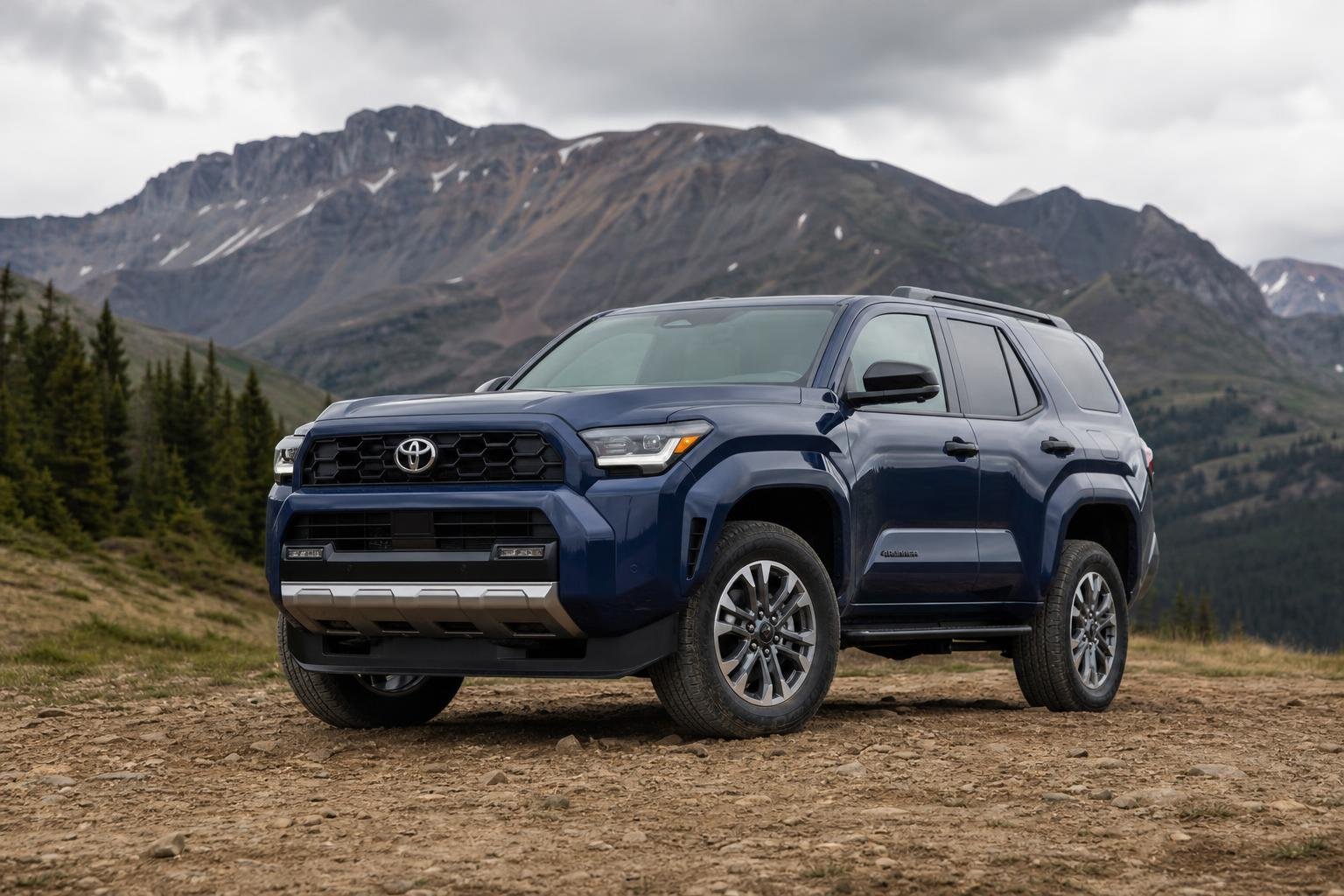

The 2027 Toyota 4Runner is more comfortable at its most affordable trim, but that upgrade comes with a higher threshold for entry. The base SR5 now starts at $45,085 including destination, marking the first time Toyota’s midsize SUV has crossed the $45,000 mark.
That price includes a $43,490 MSRP and a $1,595 destination charge. The increase is $1,220 over the previous model year, according to Motor1. In return, the SR5 adds heated, eight-way power-adjustable front seats as standard equipment.
More comfort, but a higher starting point
Heated front seats are now standard across the 2027 4Runner lineup, not just on higher trims. The SR5, TRD Sport and TRD Off-Road also receive eight-way power-adjustable front seats, making the update more relevant to everyday drivers than a cosmetic package or limited-edition color.
For buyers who use their 4Runner as a daily commuter, the seat upgrade addresses a common gap in entry-level SUVs. Heated seats are useful in cold-weather regions, while power adjustment can make it easier for multiple drivers to find a comfortable position. Still, the feature does not erase the broader price increase: shoppers are paying more before adding options, taxes, registration or dealer fees.
The 4Runner remains a truck-based SUV rather than a car-based crossover. That distinction helps explain its appeal to buyers who want traditional SUV proportions, available four-wheel-drive systems and off-road-focused trims. It also means the vehicle’s higher purchase price is only one part of the ownership equation, with fuel costs and the price of off-road-oriented equipment still relevant to a buyer’s budget.
One powertrain, two levels of output
Nonhybrid 2027 4Runner models use Toyota’s turbocharged 2.4-liter four-cylinder engine, which produces 278 hp and works with an eight-speed automatic transmission. Four-wheel drive is standard on most grades, although it remains a $2,000 option on certain versions.
Toyota also offers the i-FORCE MAX hybrid powertrain. It combines the turbocharged engine with an electric motor for a total of 326 hp. Toyota lists an estimated 23 mpg combined rating for i-FORCE MAX trims, though the manufacturer’s official specifications page cautions that equipment and availability can vary by vehicle and region.
The hybrid’s additional power comes at a significant price premium. Hybrid models begin at approximately $55,945, or about $10,000 above the base SR5. That difference puts the i-FORCE MAX in a different buying conversation: it may appeal to drivers who value stronger output and the hybrid system, but it is not an inexpensive efficiency upgrade.
How the 2027 price increases are distributed
The SR5 receives the largest increase, but it is not the only trim affected. The TRD Sport, TRD Off-Road and hybrid TRD Off-Road each rise by $870 for 2027. The hybrid Platinum increases by $490, while most other trims see increases of roughly $200.
That spread matters because the 4Runner lineup is designed around distinct use cases. The TRD Sport is aimed at buyers who prefer a road-oriented appearance and suspension tuning, while the TRD Off-Road and TRD Pro add hardware intended for more demanding terrain. Toyota’s official 4Runner materials list features such as available part-time or full-time four-wheel drive, Multi-Terrain Select and Crawl Control, depending on configuration.
For buyers who do not need specialized off-road equipment, the SR5 remains the logical value starting point. However, its new standard seat equipment also makes the price comparison with higher trims less straightforward. A buyer may no longer need to step up solely for heated seats, but the additional trims can still bring differences in drivetrain, suspension, tires, technology and appearance.
Small changes shape the higher trims
The 2027 update also includes several trim-specific changes. The TRD Pro adds newly standard red tow hooks and offers Hot Honey exterior paint for an additional $695. The Platinum gains puddle lamps that project the 4Runner logo onto the ground when the front doors open.
Toyota is also renaming the Black exterior color to Inked across the lineup. The name change does not add cost or alter the vehicle’s equipment, but it will appear on ordering documents and dealer listings.
These changes are unlikely to determine a purchase on their own. They do, however, illustrate how Toyota is separating the 4Runner’s trims through appearance and convenience features while maintaining a recognizable family identity. Buyers paying more for a TRD Pro or Platinum are purchasing a combination of capability, styling and cabin equipment rather than simply a larger engine.
What buyers should consider before ordering
The 2027 4Runner’s new base price makes the heated-seat upgrade an easier feature to appreciate and a harder one to view as a bargain. The SR5 now offers a more comfortable standard cabin, but buyers are also committing to a vehicle that starts above many mainstream compact and midsize crossover SUVs.
The right trim will depend on how the vehicle is used. A commuter may find the SR5’s new seat equipment and standard safety technology sufficient, while an owner who regularly travels on rough trails may place greater value on four-wheel-drive hardware, terrain controls and specialized suspension components. The available third row can also make the 4Runner more useful for families, although Toyota says seating for up to seven is available on i-FORCE MAX trims rather than universal across the lineup.
Toyota Safety Sense 3.0 is standard on every 2027 4Runner. That gives the lineup a consistent set of driver-assistance features, but shoppers should still verify the exact equipment, drivetrain and final transaction price on a specific vehicle. Toyota notes that availability can differ by region and that vehicles shown on its website may include available equipment.
The 2027 4Runner is available to order now, with vehicles expected to reach dealerships toward the end of the year. Its latest update is not a major redesign or mechanical overhaul. Instead, Toyota has made a familiar SUV more comfortable at the entry point while steadily moving its pricing upward—a trade-off buyers will need to judge against their need for truck-based capability.
Sources: Motor1; Toyota; Toyota 2027 4Runner specifications.
0 Comments