
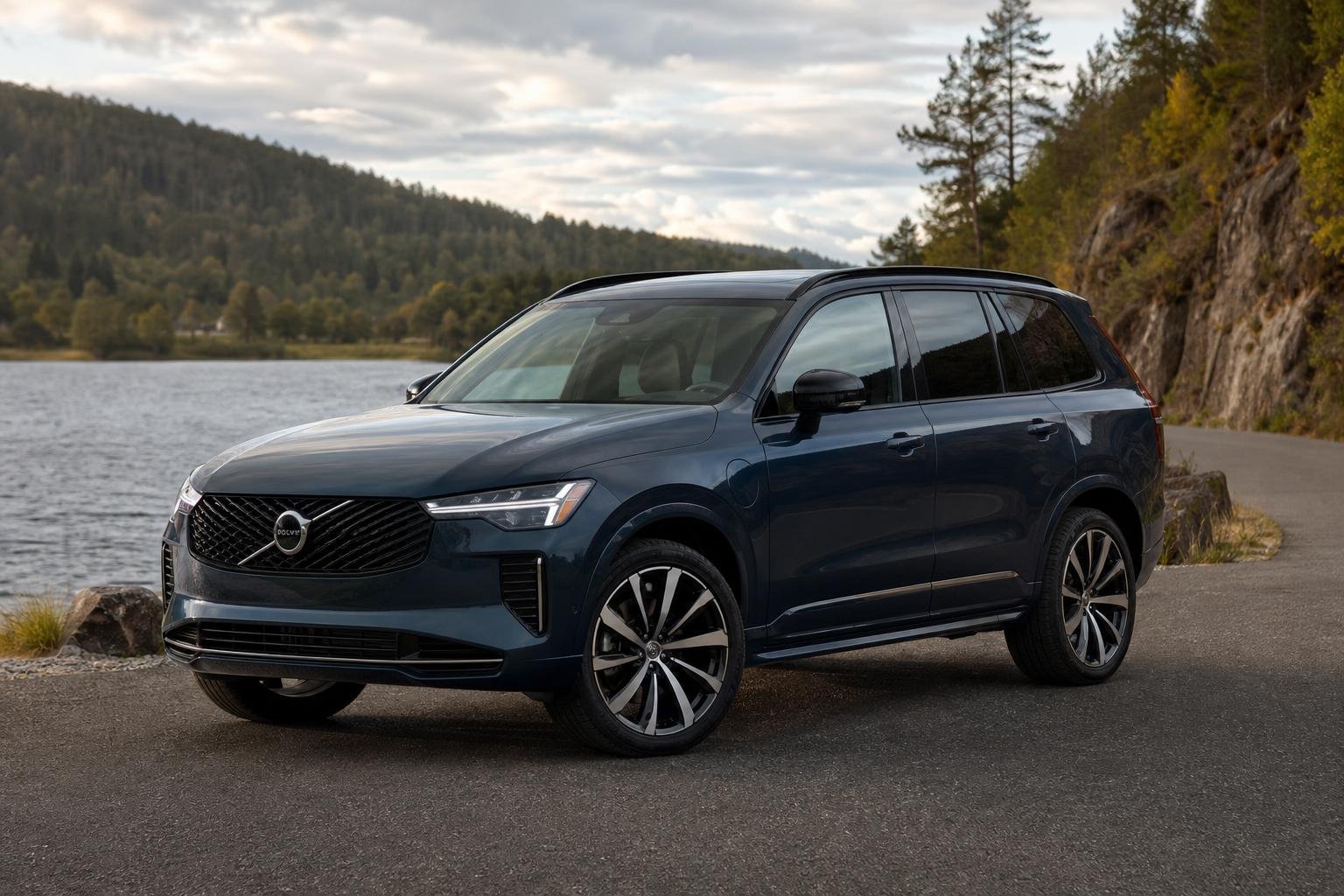

The Volvo XC90 is not new, but its plug-in hybrid system is taking a substantial step forward. For 2028, the XC90 Long Range adds a 41.2-kilowatt-hour battery and an estimated 73 miles of electric driving, giving this aging three-row SUV a far more practical electric operating window.
That change matters more than a cosmetic update would. The XC90 already has a polished cabin, comfortable seats and a design that has aged unusually well. Its biggest weakness has been the limited usefulness of its plug-in hybrid range. With the larger battery, many daily trips could be completed without starting the gasoline engine at all.
The XC90 Still Looks the Part
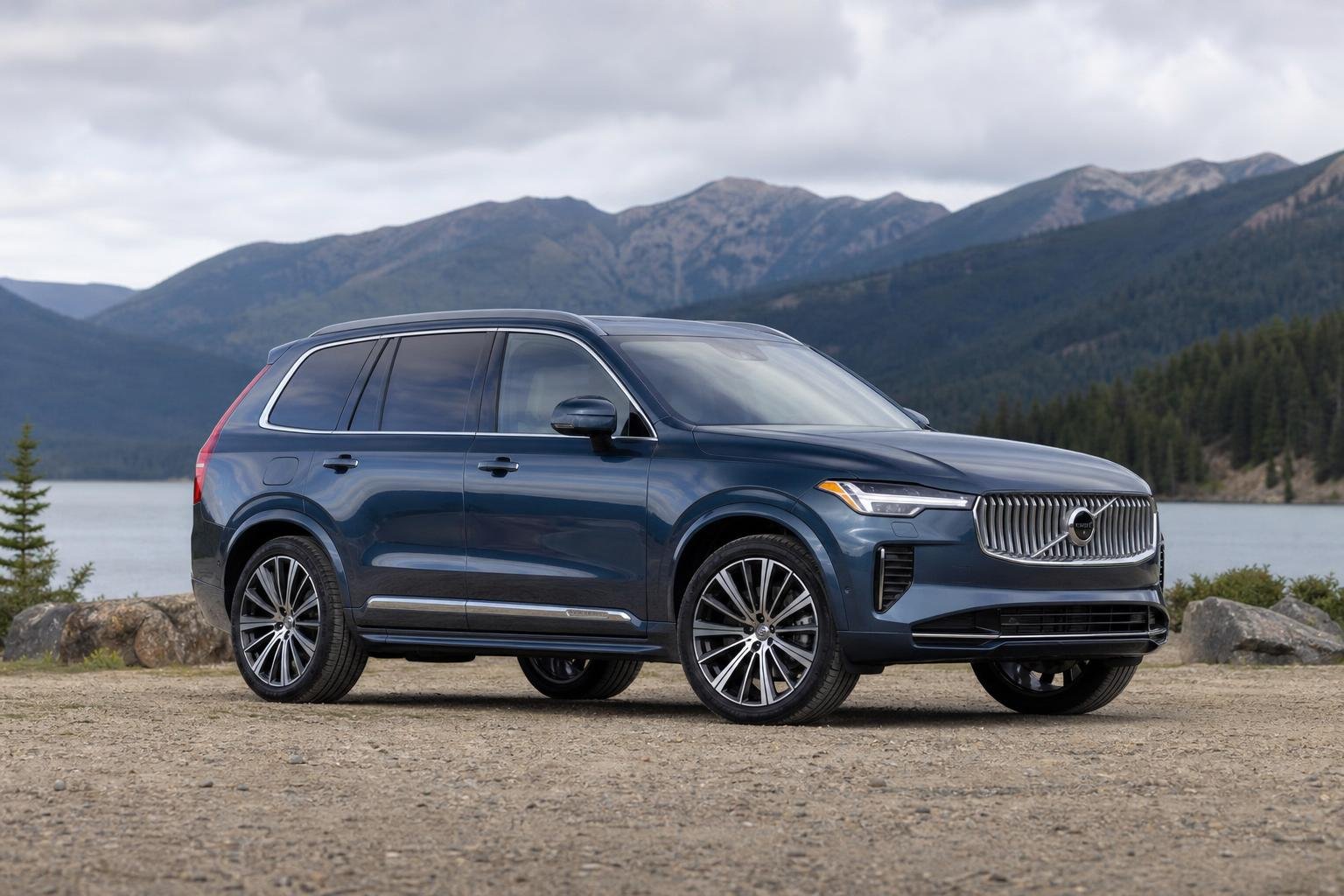
The 2028 XC90 Long Range carries over the exterior design introduced with the 2024 facelift. That means Volvo’s updated grille, familiar Thor’s Hammer headlights and the restrained styling that has helped the XC90 remain relevant despite its long production run.
There is no major visual distinction between the Long Range model and the rest of the updated XC90 lineup. That may disappoint shoppers expecting a visibly new vehicle, but the design remains one of the SUV’s strengths. It is elegant without being fussy, and it avoids the oversized detailing that has become common among newer luxury SUVs.
The cabin follows the same approach. Its overall architecture is not fresh, but the materials, seating comfort and quiet presentation still make it feel appropriately upscale. A Cardamom brown interior with brown ash wood trim gives the cabin a particularly warm character, while the available Bowers & Wilkins audio system adds another layer of luxury.
A More Usable Plug-In Hybrid System
The XC90 Long Range retains a turbocharged 2.0-liter four-cylinder engine producing 247 horsepower and 266 lb-ft of torque. Combined system output rises to 455 hp and 560 lb-ft, with power sent through an eight-speed automatic transmission and all-wheel drive.
Those numbers suggest a performance SUV, but the XC90 does not behave like one. Its 4.9-second 0-to-60-mph time is quick, yet the vehicle is tuned primarily for smooth, composed transportation. Power arrives without much drama, and the SUV needs a firm throttle input before the engine and electric motor deliver their full output.
That calibration makes sense for a six- or seven-seat family vehicle. The XC90 feels stable and balanced rather than aggressive. Its ride leans toward the soft side, but the suspension still limits excessive body motion. The larger battery also adds weight low in the vehicle, which can help lower the center of gravity and provide a more settled feel through corners.
The battery is the real story. A 73-mile electric range is enough to cover the typical daily driving pattern Volvo identifies for XC90 owners, including commuting, school runs and shopping trips. The range will vary with weather, traffic, speed and accessory use, but the improvement should reduce how often the gasoline engine is needed during ordinary use.
Why 73 Electric Miles Matter
Plug-in hybrids occupy an awkward middle ground when their electric range is too short. A driver may charge every night and still use the gasoline engine on routine errands. That can make the additional hardware and cost harder to justify compared with a conventional hybrid or a fully electric vehicle.
The XC90 Long Range addresses that problem directly. A driver with a short commute may be able to complete several days of local travel before recharging, while longer trips retain the flexibility of a gasoline engine. That combination is especially relevant for households that want to reduce fuel use but are not ready to depend entirely on public charging or a single electric vehicle.
During testing in traffic-heavy Copenhagen, the larger battery reportedly remained useful over multiple days. That is not an independent efficiency test, and real-world results will depend heavily on conditions, but it illustrates the practical advantage of adding capacity rather than merely optimizing the existing system.
The trade-off is mass. A larger battery makes the XC90 heavier, and that affects efficiency, handling and potentially tire and brake wear. The SUV’s relaxed driving character helps mask the weight, but buyers should not mistake its quick acceleration for sports-car agility.
Technology That Feels Less Distracting
The XC90 uses Volvo’s 11.9-inch Google-based infotainment system. Earlier versions drew criticism for software problems, but the system in the tested vehicle reportedly operated without the serious bugs that affected early examples.
That improvement is important because infotainment is now central to everyday vehicle use. Navigation, media, climate-related functions and charging information all need to be easy to access, particularly in a plug-in hybrid where drivers may want to monitor electric operation and charging status.
Still, the XC90’s screen-based technology cannot erase the age of the underlying vehicle. Newer luxury SUVs may offer fresher interfaces, more extensive driver-assistance capabilities or more flexible cabin technology. Volvo’s advantage is that the XC90’s basic layout remains familiar and the rest of the interior does not feel dependent on novelty.
Pricing Will Decide Its Appeal
Volvo has not announced pricing for the 2028 XC90 Long Range. The expected starting point is in the low- to mid-$80,000 range, which would make it an expensive proposition even before options and destination charges.
That price places the XC90 in a narrow but meaningful part of the market: premium three-row SUVs with plug-in capability. Buyers who need occasional long-distance flexibility may prefer it to a fully electric SUV, while those who drive mostly locally could take advantage of its long electric range without changing their daily routine.
The value question will depend on how much the Long Range version costs over a standard XC90 plug-in hybrid and whether a buyer can charge consistently at home. Without regular charging, the larger battery becomes an expensive way to carry additional weight. With convenient charging and a short daily driving pattern, it could meaningfully reduce gasoline use.
Aging Hardware, Better Ownership Logic
The 2028 Volvo XC90 Long Range is not a new-generation SUV. Its exterior, cabin and basic driving character remain familiar, and shoppers looking for the latest architecture may find its age difficult to ignore.
But Volvo has focused on the area that most directly affects ownership. Seventy-three miles of electric range gives the XC90 a stronger reason to exist as a plug-in hybrid, rather than simply adding electric assistance to a gasoline SUV. It will not make the vehicle light or particularly sporty, and its eventual price will be crucial, but the larger battery better aligns the powertrain with how many families actually use a three-row SUV.
For now, the XC90 Long Range looks less like a reinvention than a practical extension of a proven formula. The vehicle’s design may be approaching the end of its life cycle, but this powertrain update gives it a more convincing answer to the everyday fuel-use problem facing plug-in hybrid buyers.
Sources: Motor1 first-drive review; Volvo Cars official XC90 specifications page.
0 Comments