
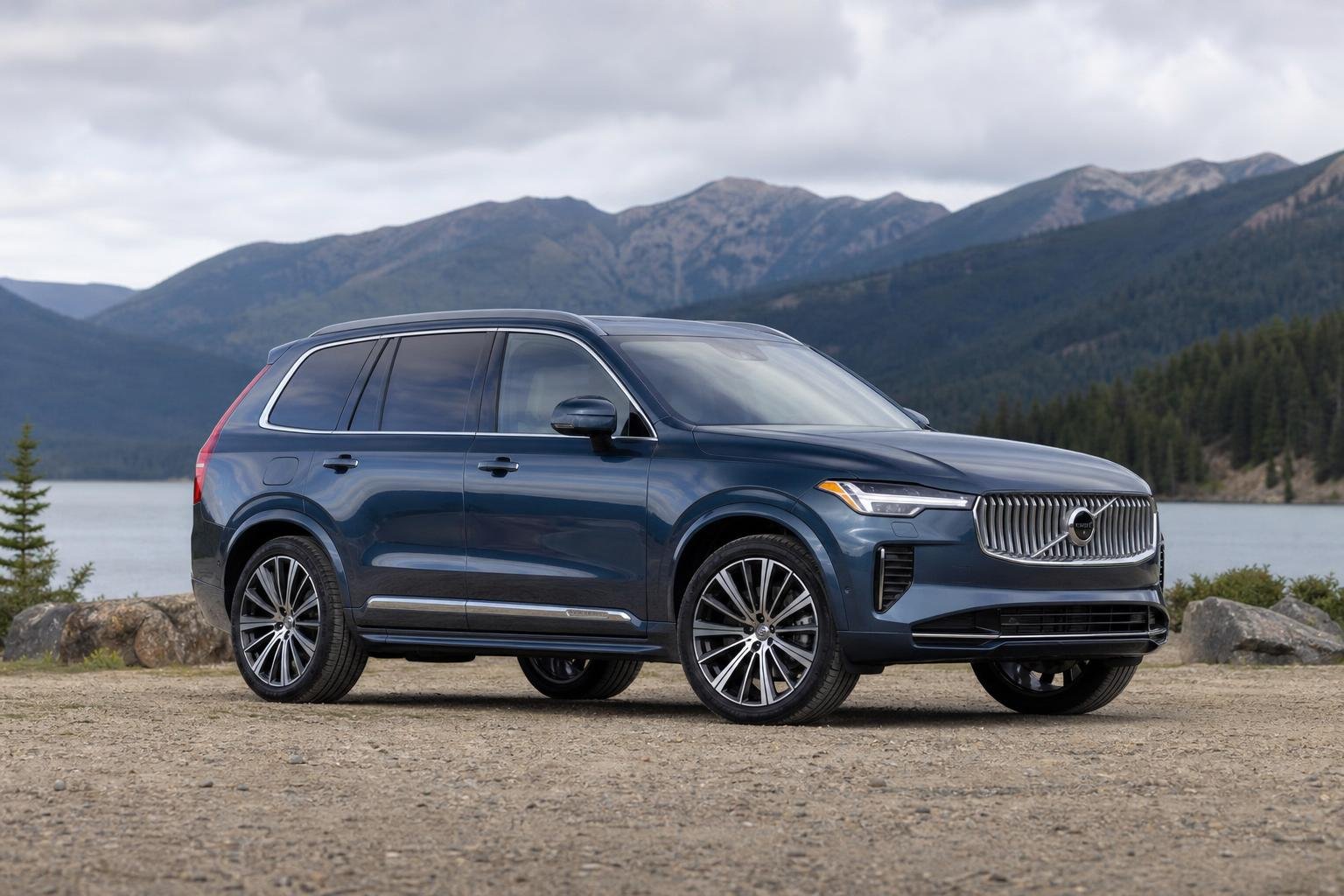

The Volvo XC90 is not Volvo’s newest SUV, but its 2028 Long Range update may be one of the company’s most useful. Rather than replacing the familiar three-row model, Volvo has given its plug-in hybrid a much larger battery and enough electric range to cover many daily drives without starting the gas engine.
According to Motor1’s first drive review, the 2028 XC90 Long Range is expected to reach U.S. dealerships in early 2027. Pricing has not been announced, although the vehicle is expected to start somewhere in the low-to-mid-$80,000 range. That would make it an expensive family SUV, but also one of the few large luxury SUVs offering meaningful electric driving without giving up a gasoline engine for longer trips.
The XC90’s biggest change is underneath
The Long Range model retains the XC90’s turbocharged 2.0-liter four-cylinder engine, eight-speed automatic transmission and all-wheel-drive system. Total output is listed at 455 hp and 560 lb-ft of torque, with a claimed 0-to-60-mph time of 4.9 seconds.
Those numbers sound more appropriate for a performance SUV than a family hauler, but the XC90 does not feel eager to behave like one. Motor1 describes the driving experience as solid and balanced, with a preference for a comfortable, slightly floaty ride rather than aggressive handling. That is a sensible choice for an SUV designed to carry up to seven people, even if the powertrain’s output suggests more drama than the chassis delivers.
The larger 41.2-kWh battery is the important part. Volvo says the U.S.-specification XC90 Long Range can travel up to 73 miles on electric power, more than twice the range of the previous version. The battery is mounted low in the vehicle, which helps lower the center of gravity and can improve stability through corners. It also gives the electric system enough capacity to be useful beyond a short commute.
Electric range that fits actual family routines
Plug-in hybrids often make their best case on paper but require owners to charge constantly to deliver their benefits. The XC90’s longer range reduces that burden. Volvo estimates that its customers drive about 22 miles per day, meaning the Long Range model could theoretically handle a typical commute, school run or shopping trip on electricity alone.
Real-world results will vary with weather, speed, traffic, cargo and climate-control use. Still, Motor1’s drive through traffic-heavy Copenhagen suggested that the larger battery could last multiple days before needing a recharge. That is a more useful result than simply posting a large laboratory range figure: drivers may be able to complete several ordinary trips before plugging in again.
The arrangement also preserves the flexibility that makes a PHEV attractive to some families. A fully electric SUV can be excellent for daily driving, but long-distance travel still depends on charging availability and trip planning. The XC90 can use electric power around town and its gasoline engine when the trip extends beyond the battery’s practical range. That flexibility is especially relevant for households that want to reduce gasoline use but are not ready to move entirely to an EV.
A familiar interior remains one of the XC90’s strengths
The Long Range version does not introduce a new cabin. It carries over the XC90’s recently updated interior, including Volvo’s Google-based infotainment system and 11.9-inch center display. Motor1’s test vehicle reportedly avoided the software problems associated with early versions of the system, though buyers should still remember that connected features and over-the-air updates can vary by market and equipment level.
The rest of the cabin remains appealing for reasons that have little to do with the battery. The front seats are comfortable, the materials have a restrained Scandinavian character, and the available Bowers & Wilkins audio system adds a genuinely premium touch. The third row is more suitable for children than adults on extended journeys, but it provides useful flexibility for families who occasionally need extra seating.
Volvo’s official specifications for the long-range XC90 in other markets list seven seats, a flat cargo floor and substantial storage flexibility. Depending on configuration, the model can provide room for luggage behind the third row or expand its cargo area substantially with the rear seats folded. U.S. equipment and capacity figures should be confirmed closer to launch, but the basic layout remains one of the XC90’s practical advantages.
The trade-off is weight, cost and an aging platform
A battery this large is not free. The XC90 Long Range is a heavy SUV, and its additional battery mass will affect efficiency once the electric charge is depleted. It also adds cost to a vehicle that was already positioned in the premium segment. The expected starting price reinforces that this will be a substantial investment for family buyers.
There is also the question of age. The current XC90 generation dates back to 2015, and the 2028 model remains fundamentally the same vehicle beneath its updated technology. Its design has aged well, but buyers may reasonably expect a newer architecture, more advanced packaging and a more modern software experience at this price.
That limitation is balanced by a less obvious advantage: Volvo is improving a known product instead of asking buyers to accept the uncertainties of an entirely new system. The larger battery, familiar cabin and conventional gasoline backup make the XC90 easier to understand than many early-generation electric alternatives. Volvo’s overseas specifications also show that the company is continuing to develop long-range plug-in-hybrid versions of the XC90, although market-specific figures are not interchangeable with U.S. ratings.
Why the Long Range version matters
The XC90 Long Range does not make the plug-in hybrid obsolete, and it does not turn the XC90 into a sports SUV. Its value is more practical: it makes electric driving relevant to a larger, heavier family vehicle without requiring the compromises some shoppers associate with a full EV.
For buyers with home charging, the 73-mile electric range could cover most daily driving while retaining the convenience of gasoline for road trips. For buyers who rarely charge, however, the larger battery becomes expensive weight with limited benefit. The XC90 Long Range therefore works best for owners willing to make charging part of their routine.
That is a modest but important shift. The XC90 is not new, yet this battery upgrade makes its plug-in system substantially more useful. Volvo may eventually replace the SUV with a clean-sheet successor, but for now, the Long Range model gives the aging XC90 a convincing second act.
Sources: Motor1; Volvo Cars UK specifications; Volvo Cars Ireland; Yahoo Autos.
0 Comments