
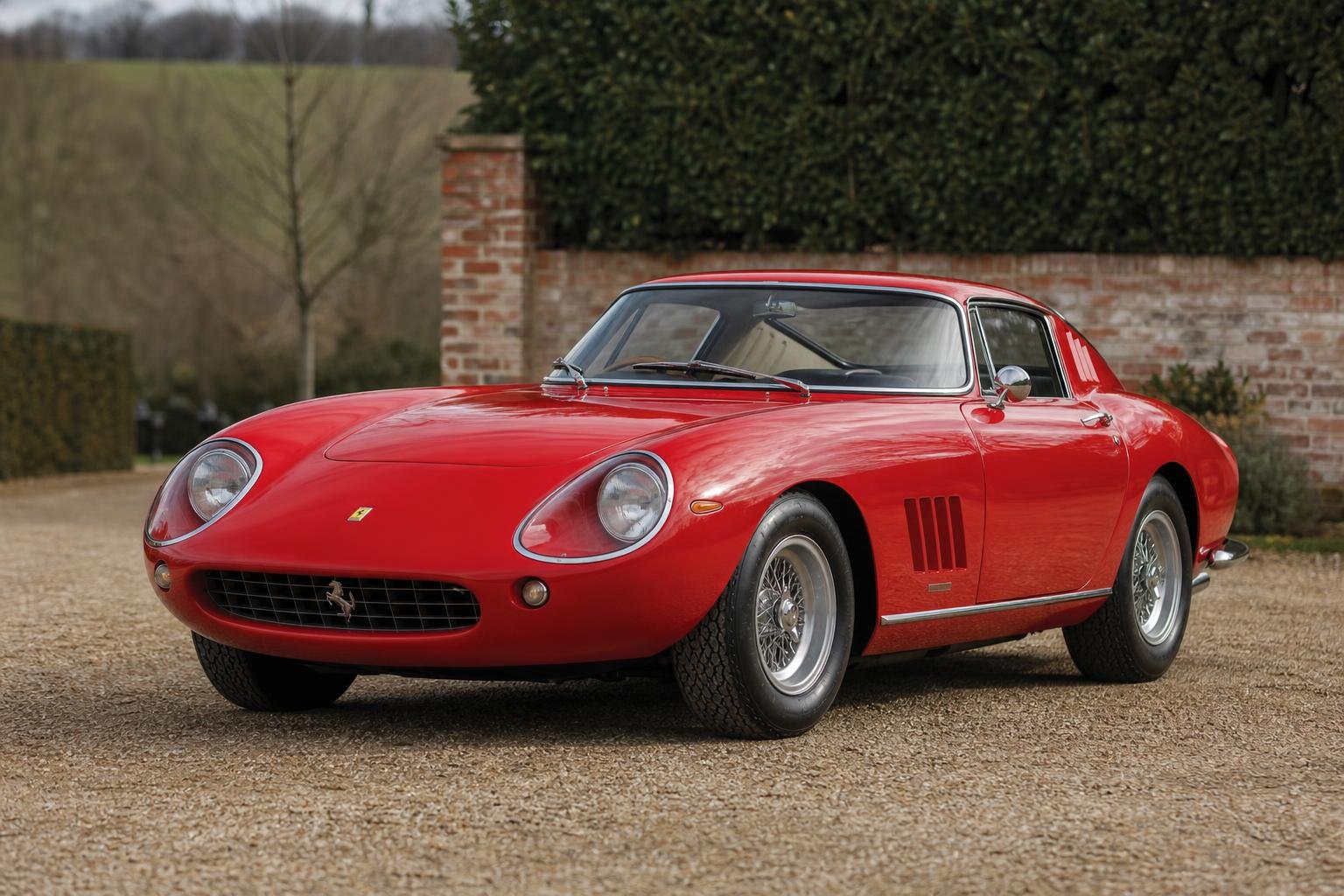

A rare 1965 Ferrari 275 GTB short-nose is being offered through Broad Arrow Private Sales for $2.09 USD million, or approximately $2.085 million. Chassis 07491 combines one of Ferrari’s most important 1960s road-car designs with documented European history, Ferrari Classiche certification and more than $175,839.63 USD in recorded mechanical work.
The car is one of approximately 250 short-nose, twin-cam 275 GTB examples produced, making its specification central to its appeal. It is not presented as an untouched matching-numbers car: the original engine, numbered 07491, survives in another 275 GTB. However, Ferrari Classiche certified the current engine as a correct-type unit built to the required specification, while confirming the originality of the chassis, bodywork and transmission.
A major step beyond Ferrari’s 250 GT series
Ferrari introduced the 275 GTB at the 1964 Paris Salon as the successor to its long-running 250 GT family. The earlier cars had established Ferrari’s reputation for combining competition-bred performance with grand-touring usability, but the 275 GTB brought a more modern technical package to that formula.
Pininfarina shaped the design and Scaglietti produced the bodywork. The result was a disciplined, low-slung berlinetta with a long hood, compact cabin and strongly defined rear haunches. Early cars such as chassis 07491 are commonly identified by their shorter nose, before later development brought the longer-nose configuration.
The 275 GTB’s importance was not limited to its appearance. Ferrari fitted fully independent suspension and, most notably, a five-speed rear transaxle. That layout helped distribute mass more effectively between the axles, improving the car’s balance compared with a conventional front-mounted transmission layout.
V12 power and a driver-focused layout
Power comes from Ferrari’s 3,286-cc Tipo 213 Colombo V12. In the specification described for this car, three twin-choke Weber carburetors help produce a claimed 280 CV at 7,600 rpm. The engine’s high-revving character, rear transaxle and independent suspension gave the 275 GTB a distinctly sporting personality, even though the model remained a road-going grand tourer rather than a stripped-down competition special.
That combination explains the model’s lasting reputation. The 275 GTB delivered the mechanical theatre associated with Ferrari’s competition program while offering the proportions and equipment expected of a fast long-distance car. Its architecture also established a template for later Ferrari grand tourers, including the continued use of a rear transaxle to pursue better weight distribution.
Chassis 07491’s documented European history
According to the history supplied with the sale, chassis 07491 was delivered in July 1965 through Crepaldi Automobili in Milan. It originally left Maranello finished in Grigio Argento with a black leather interior and Borrani alloy wheels. Although factory records initially earmarked the car for export to New York, that notation was later cancelled and the Ferrari was delivered to European specification with kilometer-calibrated instruments.
The car arrived in Belgium in 1995, and its current Belgian custodian acquired it in 2012. Since 2014, mechanical servicing has been carried out by Monza NV, Ferrari’s official Belgian dealer. The accompanying documentation records expenditure exceeding $175,839.63 USD a figure that indicates the level of attention invested in keeping a 60-year-old V12 grand tourer usable.
That distinction matters with a car of this type. A 275 GTB is valuable because of its history and originality, but it is also a complex mechanical machine with an aging drivetrain, suspension, braking system and electrical components. Documented specialist maintenance can therefore be as relevant to a prospective owner as cosmetic presentation, particularly for anyone intending to drive the car on long-distance rallies rather than keep it solely in a collection.
Classiche certification and the engine question
Ferrari Classiche issued the car’s Red Book certification in February 2017. The certification confirms that the chassis, bodywork and transmission retain their factory specifications. It also approves the installed engine as a correct-type, specification-compliant unit, despite the fact that it is not the engine originally fitted to chassis 07491.
For collectors, that is a meaningful but important qualification. The surviving original engine is a valuable piece of the car’s history, yet it is currently installed in another 275 GTB. As a result, chassis 07491 should not be described as a fully matching-numbers example. Its Classiche certification and correct-type engine provide substantial reassurance, but they do not change the distinction between an original engine and an accepted replacement.
A Ferrari intended to be driven
Despite its investment value, this 275 GTB has continued to see active use. The car has appeared at European events including multiple editions of the Zoute Grand Prix and Zoute Rally. Its current presentation retains the original Grigio Argento exterior, Borrani wheels and a dark red leather interior.
That event history gives the car a different character from an example that has spent decades isolated from the road. The 275 GTB’s significance lies partly in its engineering, and its rear transaxle, manual gearbox and naturally aspirated V12 are best understood in motion. Continued use also makes the documented servicing particularly relevant, although any buyer would still need a thorough independent inspection and verification of the accompanying records before completing a purchase.
Why this 275 GTB stands out
The $2.09 USD million asking price places chassis 07491 within the upper tier of classic Ferrari road cars, but the car’s appeal rests on more than its badge. It offers the early short-nose body style, a significant Ferrari chassis number, a documented Italian-to-Belgian history, Classiche certification and extensive maintenance by an official dealer.
The non-original engine will matter to some collectors, particularly when compared with fully matching-numbers examples. At the same time, the Classiche-approved replacement and preserved original engine may make the car a more usable proposition for a buyer who values documented authenticity and mechanical condition without requiring every major component to remain with its original chassis.
As Ferrari’s grand-touring philosophy moved beyond the 250 GT era, the 275 GTB introduced a more sophisticated chassis and drivetrain without abandoning the marque’s competition-minded character. Chassis 07491 represents that transition in particularly tangible form: a rare early berlinetta with the visual purity of the short-nose design, the technical importance of the rear transaxle and enough documented use to remain connected to the road for which it was built.
Sources: Sports Car Digest; RM Sotheby’s; Ferrari NV 2024 Annual Report.

0 Comments