
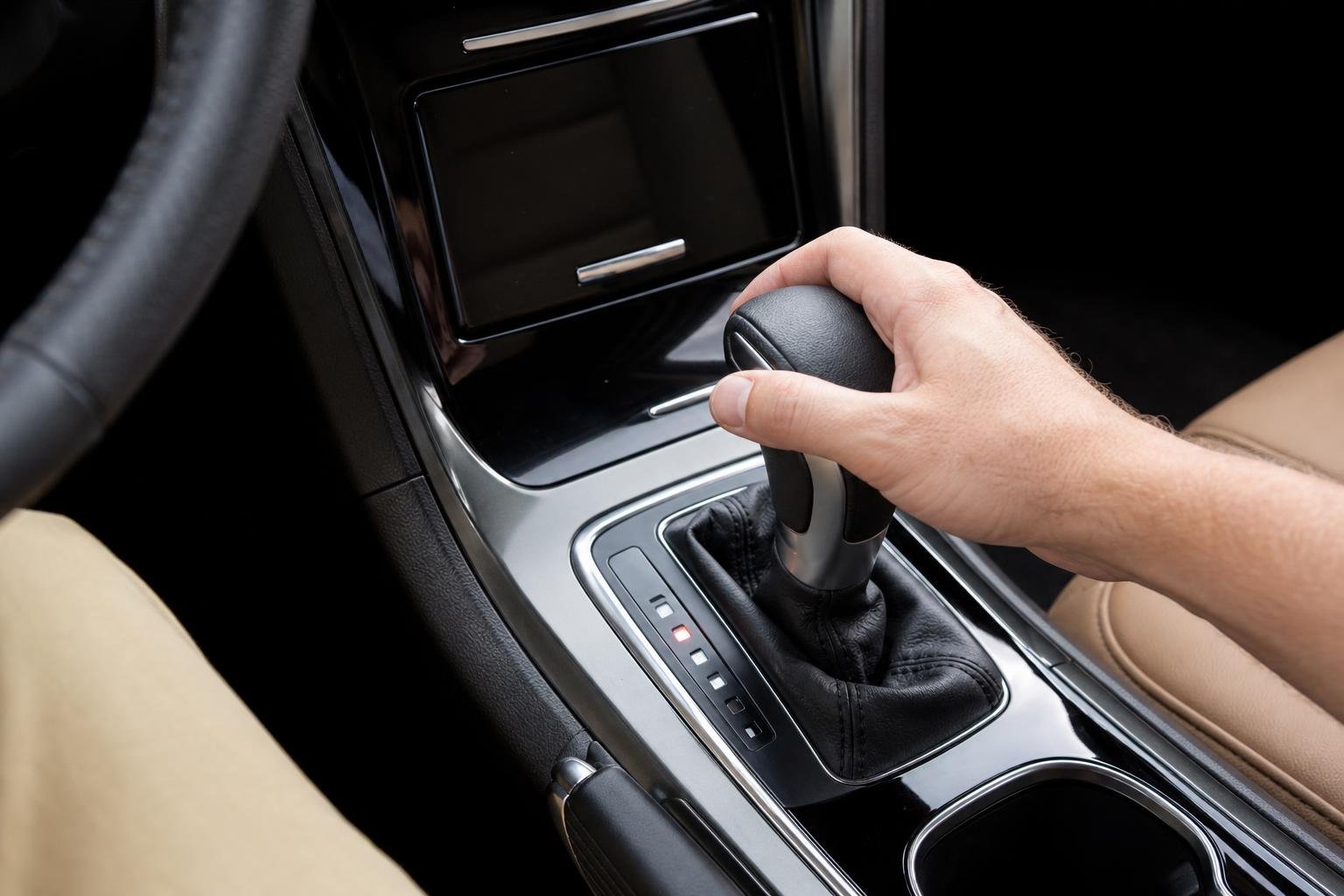

For most drivers, an automatic transmission requires little more than selecting Drive and pressing the accelerator. However, the Neutral position still serves a few important purposes, even though it is rarely needed during normal driving.
What Neutral does
Selecting Neutral separates engine torque from the vehicle’s driven wheels. That is similar to pressing the clutch pedal in a manual-transmission car, although automatic transmissions use different mechanisms to transfer power.
Traditional automatics use planetary gearsets and a torque converter. Dual-clutch transmissions operate more like manuals but use two electronically controlled clutches, while continuously variable transmissions use a belt and two cone-shaped pulleys to vary the ratio. In each case, selecting Neutral disconnects the engine’s power from the wheels.
Moving a disabled vehicle
Neutral can be useful when an automatic car needs to be moved and its engine will not start. It can allow the vehicle to roll around a workshop or help with recovering a car from a ditch.
There is an important limitation when towing, however. A traditional automatic transmission depends on fluid circulation to protect its internal components from wear. With the engine switched off, its transmission pump is not operating. As a result, a traditional automatic should not be towed a significant distance with its drive wheels on the ground and the engine off.
An emergency response to a stuck throttle
Neutral may also provide a way to regain control if the accelerator becomes stuck open. Moving the selector to N removes the engine’s drive force from the wheels, allowing the brakes to work without fighting the powertrain’s continued attempt to accelerate the car.
Switching off the engine is another possible response, but doing so can remove power assistance for the brakes and steering. Selecting Neutral can therefore help separate the immediate engine-power problem from those systems.
Why Neutral is not needed at every stop
Using Neutral while waiting at a traffic light generally offers little benefit. It saves almost no fuel, while repeatedly moving between Drive and Neutral can introduce unnecessary shifting and wear.
The same reasoning applies when traveling downhill. Selecting Neutral provides little fuel-saving benefit and reduces the control available from keeping the vehicle connected to the powertrain.
Park is the correct choice when stopping
Neutral should not replace Park when leaving an automatic car stationary. Park engages a pawl that locks the transmission’s output shaft, adding protection against the vehicle rolling away. Relying only on Neutral and the parking brake does not provide that same transmission lock.
For most drivers, then, Neutral is mainly a position used while moving between Drive and Reverse. Its less common roles involve moving a disabled vehicle, responding to a stuck throttle, or handling specific towing and recovery situations.

0 Comments