
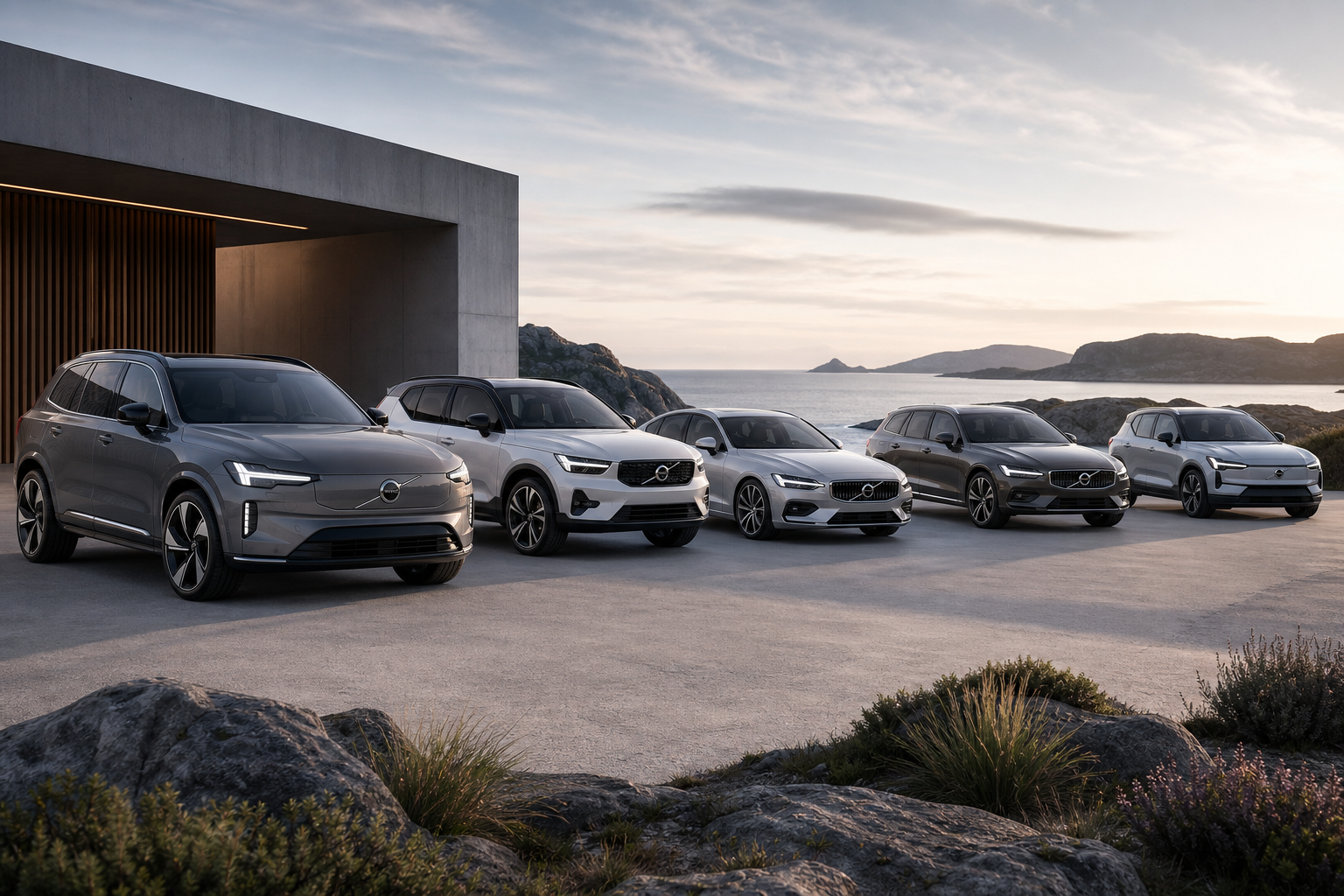

Volvo is preparing for a broad product expansion that will stretch well beyond a single new electric model or a mid-cycle refresh. The company’s next phase is expected to bring a mix of hybrids, battery-electric vehicles, and additional body styles aimed at multiple global markets, signaling that Volvo is still betting on a diversified lineup rather than an all-in shift to EVs alone.
That approach fits the realities of the market Volvo now operates in. Demand for electric vehicles continues to grow, but not uniformly across every region or customer segment. By planning for hybrids alongside EVs, Volvo appears to be building flexibility into its future product strategy, giving it room to respond to charging infrastructure differences, regulatory pressure, and varying buyer preferences from one market to another.
A broader lineup strategy, not a single-path transition
Volvo has already positioned itself as one of the more aggressive mainstream luxury brands in the electrification race, but the next product cycle suggests a more measured rollout than a pure battery-only roadmap. Rather than forcing every new model into a single propulsion formula, the brand is expanding across several technologies at once.
That means hybrids will continue to play a role, particularly in regions where EV adoption remains uneven or where consumers want the efficiency benefits of electrification without depending entirely on public charging. Battery-electric models will obviously remain central to Volvo’s future, but the inclusion of hybrids indicates the company is keeping one foot in the market that still makes up a significant share of global demand.
For Volvo, that balance matters. The company has spent years building its image around safety, clean design, and a restrained Scandinavian identity. A broader powertrain mix allows it to carry those brand traits forward without overcommitting to a timeline that might not match every market’s pace of change.
New body styles suggest Volvo wants more reach
The other notable piece of the plan is the mention of new bodystyles. That usually means more than a simple redesign of existing sedans and SUVs. It can point to added variants aimed at filling gaps in a lineup, or to entirely new applications of familiar platforms.
For Volvo, body style expansion could be especially relevant given how heavily the company’s current lineup leans on SUVs. That strategy has served the brand well, but it also leaves room for more variety if Volvo wants to appeal to buyers who still prefer lower-slung cars, estate models, or something with a more niche positioning. In markets where wagon and crossover demand remains strong, new shapes could help Volvo differentiate itself from rivals that are clustered around the same SUV formulas.
New bodystyles also give Volvo more room to adapt vehicles for different regions. A model tailored for Europe may not need the same packaging or proportions as one aimed at North America or China, and a flexible design approach can help the company serve all three without reinventing its lineup each time.
What this says about Volvo’s market position
The expansion plan comes at a time when established automakers are still trying to define how quickly they can shift toward electrification without alienating customers or overextending production and development budgets. Volvo’s answer appears to be diversity: multiple powertrains, multiple body styles, and a broader product spread across global markets.
That is a pragmatic move for a brand that sits between mainstream volume players and the more expensive end of the premium market. Volvo does not have the luxury-car cachet of some German competitors, nor the massive global scale of the biggest mass-market manufacturers. Its products need to carry a strong identity while remaining commercially flexible enough to work in different regions and under different regulations.
Seen that way, a plan built around hybrids, EVs, and new body styles is less a headline-grabbing reinvention than a sign of careful positioning. Volvo is not abandoning electrification; it is broadening the path to get there.
Why buyers should pay attention
For shoppers, the most useful takeaway is that Volvo’s future lineup should be more varied than a simple one-size-fits-all EV portfolio. Buyers who are interested in Volvo’s design language, safety reputation, and understated cabin philosophy may find more options ahead, whether they want full electric power or a hybrid alternative.
The plan also hints that Volvo expects its customers to remain split in practical terms. Some will be ready for EVs and the charging routines that come with them. Others will still want longer-range flexibility, simpler refueling, or the reduced commitment of a hybrid. Volvo’s expanded strategy appears designed to keep both groups in the fold.
For now, the company’s next phase looks less like a single product launch and more like a staged widening of the brand. If Volvo executes it well, the result could be a lineup that feels more complete without losing the design restraint and technical conservatism that have long separated it from louder premium rivals.
0 Comments