
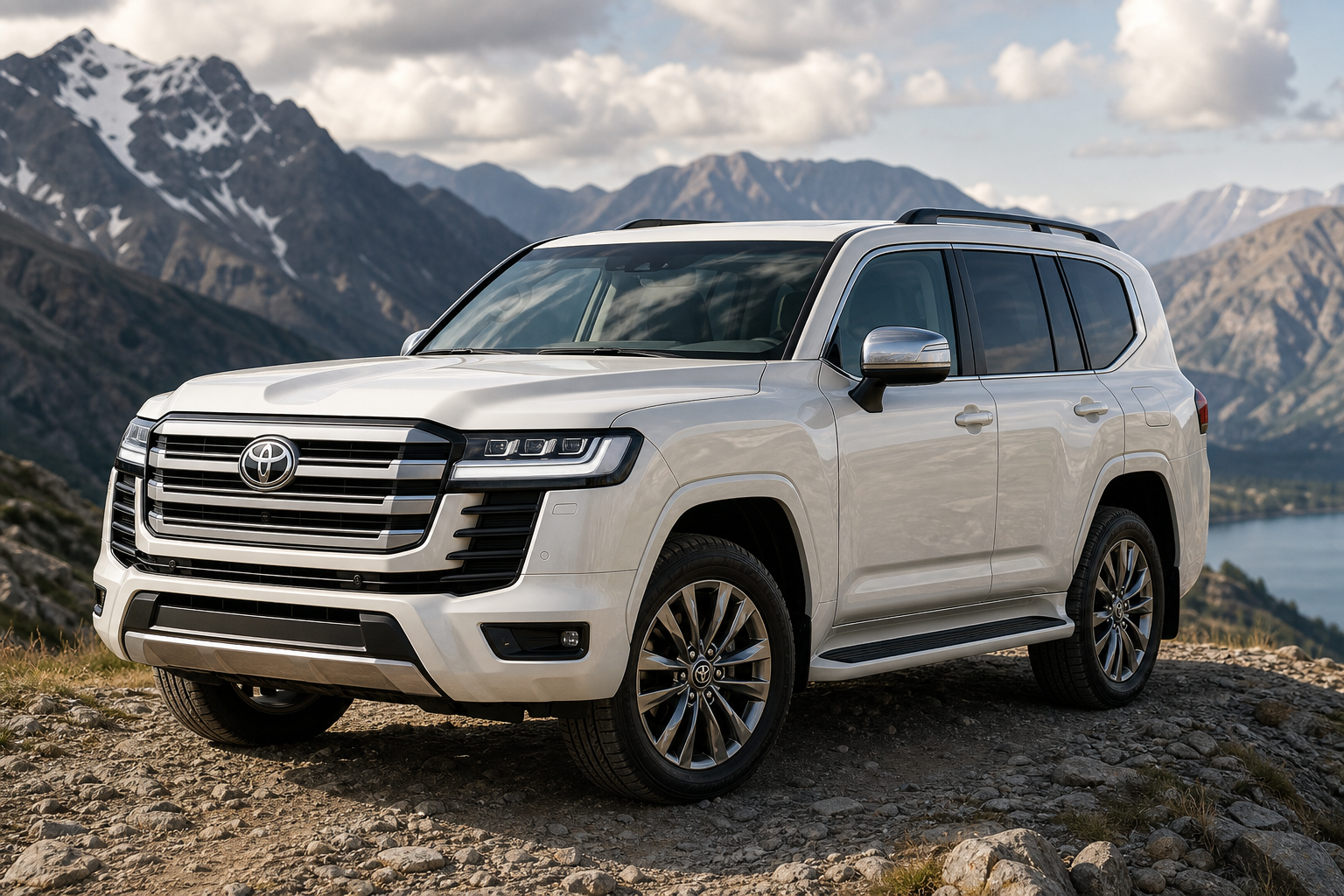

Toyota has updated the Land Cruiser 300 for the Japanese market, and while the changes are not dramatic on the surface, they matter in a segment where buyers expect long-term durability, strong performance, and increasingly, modern efficiency. The headline addition is a more powerful hybrid powertrain option, giving the flagship SUV a broader appeal as emissions rules tighten and customers demand more from large body-on-frame vehicles.
The Land Cruiser 300 already sits near the top of Toyota’s global SUV range. It is the latest in a long-running nameplate that has become synonymous with toughness, off-road capability, and long-distance comfort. In Japan, this update is more than a routine refresh: it strengthens the model’s technical offering while also adding equipment that makes the flagship feel more in step with a premium-market buyer’s expectations.
A flagship SUV with a reputation to protect
The Land Cruiser has always occupied a special place in Toyota’s lineup. Unlike many modern SUVs that lean heavily into styling and urban comfort, the Land Cruiser retains a body-on-frame construction and a serious off-road brief. The 300 Series, launched as the current generation, continues that tradition while moving the model further upmarket in refinement, safety, and technology.
That positioning is important. Buyers cross-shopping large SUVs today often have to choose between luxury-focused family vehicles, rugged utility models, and expensive off-road specialists. The Land Cruiser 300 attempts to bridge all three, offering genuine terrain capability without abandoning the kind of cabin equipment and on-road polish buyers now expect from a flagship SUV.
What changes in Japan?
The most significant update is the introduction of a more potent hybrid powertrain. Toyota has not framed this as a radical reinvention, but it does signal a clear direction for the model: more electrification, more usable performance, and a better balance between efficiency and capability.
For a large SUV like the Land Cruiser 300, hybridization can serve several purposes. It can improve low-end response, help smooth power delivery, and reduce fuel consumption in driving situations where a traditional large-displacement engine would be less efficient. That matters not only in city use, but also for drivers who regularly cover long distances or haul loads and want a broader spread of torque.
Alongside the new powertrain option, Toyota says the updated Land Cruiser gains additional features. While the exact specification details may vary by grade, updates of this type typically focus on convenience, safety, and equipment enhancements that keep the vehicle competitive in a market where even rugged SUVs are expected to feel well equipped.
Why the hybrid matters
Electrification has become increasingly important even in the off-road and full-size SUV categories. The challenge for manufacturers is to preserve the qualities that make these vehicles desirable in the first place: towing ability, usable torque, long-distance comfort, and confidence on rough roads. A hybrid system can support those goals if it is calibrated well.
In the case of the Land Cruiser 300, a stronger hybrid option should appeal to buyers who want the model’s traditional strengths but are also conscious of fuel costs and emissions. It may also improve refinement, particularly in stop-start traffic or during gentle cruising, where electric assistance can reduce engine noise and make the vehicle feel less strained.
That is especially relevant in Japan, where Toyota continues to adapt its most important nameplates to changing expectations without abandoning the core identity of the vehicle. The Land Cruiser does not need to become a crossover to stay relevant; it needs to evolve in ways that support the kind of ownership its buyers already value.
Design remains purposeful rather than decorative
The Land Cruiser 300’s design has always been more about function than fashion. Its proportions reflect its purpose: a substantial stance, a tall seating position, and bodywork that communicates durability rather than delicacy. That approach still matters in this segment, where many buyers prefer a vehicle that looks capable without needing excessive styling detail.
Model updates to vehicles like this often include subtle exterior adjustments rather than major reshaping. That is a sensible strategy for an SUV with strong brand recognition. The Land Cruiser’s visual identity is part of its value proposition, and changes that are too radical would risk diluting the familiarity that many buyers want.
Japanese-market versions wearing Modellista accessories also highlight how important personalization has become. Accessory packages can make a large SUV feel more distinctive without altering the underlying engineering, and they are particularly relevant for buyers who want their vehicle to feel premium while preserving its rugged image.
Inside the cabin: comfort, practicality, and modern expectations
The Land Cruiser 300 is expected to serve as both a family vehicle and a serious utility machine, so interior versatility remains central to its appeal. Buyers in this class typically want supportive seats, easy access to controls, generous storage, and enough room for passengers to travel comfortably over long distances.
Toyota’s flagship SUV has increasingly moved toward a more premium cabin presentation, but it remains anchored in practicality. That balance is one of the Land Cruiser’s strengths. The cabin needs to feel durable enough for hard use while still offering enough tech and comfort to justify its status as a flagship model.
Added features in the latest update are likely to improve the everyday experience rather than change it fundamentally. For many owners, that is exactly what matters. In a vehicle designed to last for years and cope with a wide range of environments, thoughtful equipment additions are often more valuable than flashy redesigns.
Where it fits in the large-SUV market
The Land Cruiser 300 is not a typical luxury SUV, even if its price and equipment levels can place it in the same shopping conversation as premium rivals. Its closest competitors are often judged less on badge appeal and more on what they can actually do. That means a combination of off-road hardware, real-world reliability, and broad usability remains central to the buying decision.
For some customers, that will make the Land Cruiser the obvious choice over softer, road-biased alternatives. For others, the trade-off will be clear: the Toyota may not prioritize sportiness or ultra-luxury trim in the same way as some rivals, but it offers a more authentic rugged character. That distinction is part of why the nameplate has remained relevant for so long.
In markets where the Land Cruiser is sold in both utility-focused and more upscale forms, Toyota has to manage a delicate balance. Updates like this hybrid expansion help keep the model competitive without forcing it to abandon its roots.
Ownership and long-term appeal
Large SUVs are expensive to buy and expensive to run, so long-term ownership value matters more here than in many other vehicle classes. A model like the Land Cruiser 300 attracts buyers who expect strong residual value, dependable mechanicals, and the ability to cope with high mileage and difficult conditions.
That is why Toyota’s decision to expand the electrified powertrain range is important. Even when outright fuel savings are modest compared with smaller vehicles, hybrid support can improve everyday drivability and make the SUV feel more modern. For owners who plan to keep the vehicle for many years, those refinements can contribute to a better overall ownership experience.
There is also a practical side to this update. A model that continues to receive meaningful technical attention is more likely to remain competitive in the used market and more appealing to buyers who want the latest specification rather than an outgoing version.
What buyers should take from this update
This is not a reinvention of the Land Cruiser formula. It is, instead, a targeted update to a vehicle that already has a very clear identity. The addition of a stronger hybrid option and new features suggests Toyota is carefully evolving the SUV for current market realities while preserving the attributes that made the 300 Series important in the first place.
For buyers, that means the Land Cruiser remains what it has long been: a serious, capability-first flagship SUV that is now being nudged further toward efficiency and modern convenience. In a category where many vehicles try to do everything but lose their character along the way, that consistency is a major part of the Land Cruiser’s appeal.
Conclusion
The updated Toyota Land Cruiser 300 shows how a well-established nameplate can adapt without losing its core identity. The new hybrid powertrain option and added features make the flagship SUV more relevant in today’s market, while its fundamental strengths — durability, capability, and everyday usefulness — remain the real selling points.


0 Comments