
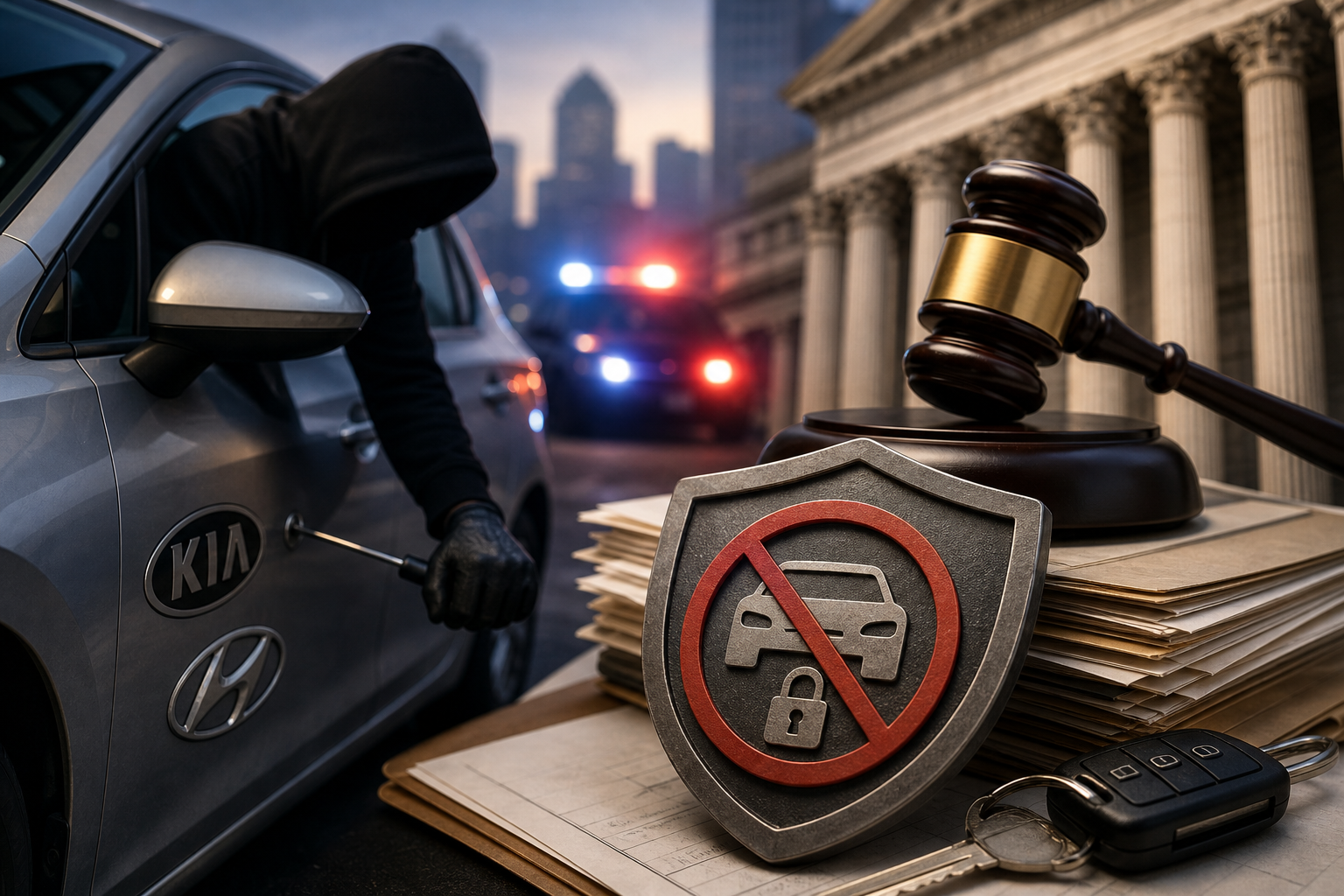

A federal appeals court has revived a closely watched insurance dispute tied to Kia and Hyundai vehicles that were sold without engine immobilizers, keeping the spotlight on one of the most disruptive theft issues to hit the U.S. market in recent years. The Ninth Circuit’s decision does not end the underlying legal fight, but it does reopen claims that had been dismissed and gives the case fresh momentum at a time when theft-related losses, insurer responses, and anti-theft technology remain under intense scrutiny.
Why the immobilizer issue became such a problem
The case stems from a wave of thefts involving certain Kia and Hyundai models that lacked immobilizers, a basic anti-theft device intended to prevent a car from being started without the proper key or electronic authorization. The omission left some vehicles unusually vulnerable, especially after social media posts spread techniques for stealing them with readily available tools.
What began as a theft spike quickly became a broader industry problem. Police departments, insurers, cities, and owners all felt the impact. For the manufacturers, the issue escalated from a technical oversight into a reputational and financial burden that has already triggered software updates, hardware fixes on some vehicles, and a long tail of legal claims.
What the Ninth Circuit changed
The appellate panel reopened insurer claims that had previously been thrown out, reviving the argument that the affected Kia and Hyundai vehicles created a greater theft exposure than insurers had anticipated when policies were written. In practical terms, that means the legal questions around how losses should be handled are still alive, rather than being shut down at an early stage.
The court’s move matters because insurance cases tied to vehicle defects or omissions often turn on how risk was disclosed, how policies were priced, and whether a pattern of losses can be linked to a specific product issue. By reopening the claims, the judges have signaled that the plaintiffs deserve another chance to argue their case.
Why insurers care about anti-theft equipment
Immobilizers are not a flashy technology, but they are central to modern vehicle security. They’ve been widely used for years because they make it much harder to steal a vehicle by simple hot-wiring or other basic methods. When a car is sold without one, the risk profile changes, particularly if the model’s theft vulnerability becomes widely known.
For insurers, that can translate into more claims, higher payouts, and a need to reassess premiums or underwriting assumptions. If a particular vehicle family becomes a theft target, the effects can spread well beyond the owners of the stolen cars themselves. Repair delays, rental coverage, total-loss payouts, and regional loss patterns all become part of the business case.
The broader fallout for Kia and Hyundai
The theft controversy has already pushed Kia and Hyundai to address the problem with software updates and, in some cases, added physical deterrents. The companies have also faced public pressure from owners who found that their vehicles had become easy targets and from cities and insurers dealing with the consequences.
That makes the legal fight especially significant. Even as the manufacturers work to close the security gap, the financial and reputational fallout continues. Cases like this one can influence how future claims are handled, how insurers assess certain model years, and how automakers think about baseline anti-theft content across their lineups.
Why this case extends beyond a courtroom filing
The real significance here is that vehicle security hardware is no longer just a specification-sheet detail. It can shape theft rates, insurance costs, and consumer trust. When a missing component becomes the center of a national theft trend, the consequences can reach well beyond the showroom.
For buyers in the affected segment, the lesson is straightforward: anti-theft equipment matters, and not all vehicles have been equipped the same way. For the industry, the case is another reminder that a relatively inexpensive part can have a much larger impact when it becomes part of a systemic vulnerability.
The Ninth Circuit’s decision does not resolve the dispute, but it ensures the insurance questions surrounding immobilizer-free Kia and Hyundai models will continue to work through the courts. Given the scale of the theft issue and the continuing attention it has received, that was always likely to draw interest far outside the legal world.

0 Comments