
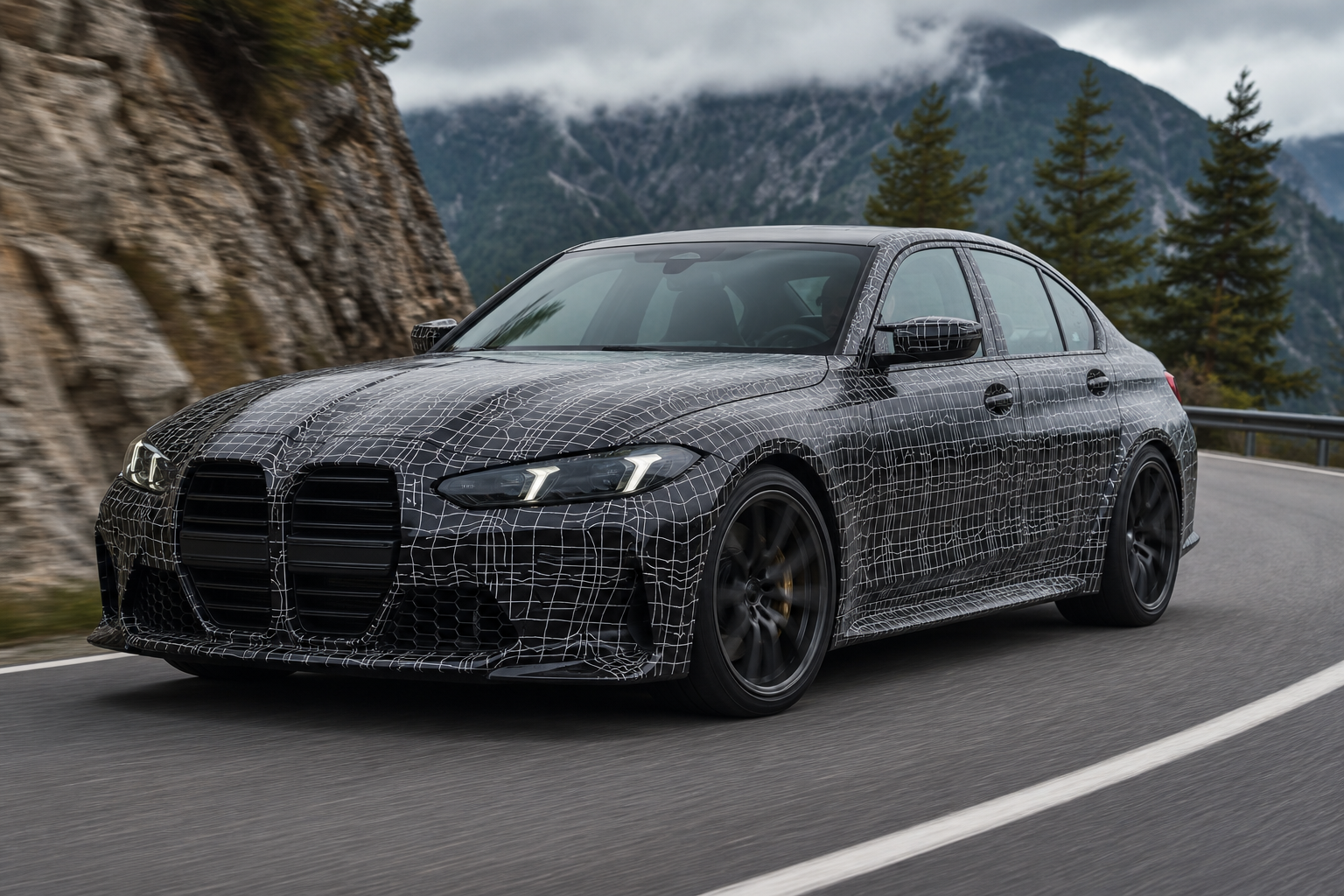

The next BMW M3 is getting closer to reality, and the latest prototype offers the clearest look yet at the car’s final surfacing. Spied in six-cylinder form with much of its disguise removed, the sedan now shows production headlights, tail lights, and bumper shapes rather than the heavy camouflage that usually hides development cars this early. For BMW enthusiasts, that matters because the M3’s visual identity is often as closely watched as its mechanical hardware.
Production details begin to show through
The prototype seen in the latest images appears to be a six-cylinder version of the next-generation M3 sedan, and the camouflage peel-back reveals several important clues. The front and rear lighting units now look to be production items, while the bumpers have also taken on their final form. That suggests BMW is moving beyond the broad shape-and-package stage and into the detail phase of development, where the focus shifts from proportions to the surfaces and signatures that will reach showrooms.
Even in disguise, the car’s stance remains unmistakably M3. The sedan sits low and purposefully, with a wider, more aggressive appearance than a standard 3 Series. BMW’s performance sedan formula has always depended on that balance: enough visual separation to signal the M car’s hardware, but not so much theatrics that the car loses its everyday restraint. This prototype appears to continue that approach.
What the six-cylinder prototype tells us
The mention of a six-cylinder version is significant because it points to BMW sticking with the engine layout that has defined the modern M3 for decades. While BMW has been experimenting aggressively with electrification across its lineup, the inline-six remains central to the M3’s identity. A prototype like this suggests that the next car will still be built around that familiar configuration, even as the broader vehicle evolves around it.
BMW M has long used the M3 to show how far a turbocharged inline-six can be pushed while still delivering everyday usability. The outgoing generation already moved the model further toward higher output and sharper response, and the next one is expected to continue that trajectory. The prototype’s development stage doesn’t confirm output figures, but it does indicate that BMW is now refining the car’s final hardware and packaging.
The M3’s design direction is coming into focus
Camouflaged prototypes can be misleading, but production lights and bumpers reveal more than most styling teasers. They establish the design language BMW intends to carry into production and show where the brand is making its visual statements. On a car like the M3, those details matter. Headlamp shape, lower intake treatment, and rear bumper design all influence how aggressive the sedan looks without needing oversized wings or track-car theatrics.
BMW has been evolving its performance cars toward a cleaner and more modern look, even as its regular models have adopted bolder front-end treatment. The M3 traditionally has to bridge two roles: a serious driver’s car and a premium executive sedan. Getting that look right is part of the job, and the latest prototype suggests the next-generation model is already moving into its final visual identity.
Why the M3 remains such an important benchmark
The M3 isn’t just another performance sedan in BMW’s portfolio. It is the car that helped define the modern sports-sedan formula, combining rear-drive dynamics, a high-revving engine in earlier generations, and enough practicality to make sense as a daily driver. The current car has expanded that formula with more power, more grip, and more technology, while still remaining one of the key references in the segment.
That puts every new M3 prototype under a brighter spotlight than most development cars. Buyers, rivals, and enthusiasts all watch closely because the M3 has always influenced the direction of the compact and midsize performance-sedan market. The latest spy shots don’t tell the full story yet, but they do show that BMW is close enough to production that the final shape is now becoming visible.
What to expect next
With the camouflage thinning, the next phases of testing are likely to focus on calibration, chassis tuning, and final integration of the powertrain and body hardware. That’s where the difference between a competent performance sedan and a true M car is established. BMW will also be validating how the car handles the demands of everyday use, from ride quality and refinement to braking consistency and thermal management under hard driving.
For now, the clearest takeaway is that BMW’s next M3 is no longer a vague silhouette. Production lighting and bumper treatments usually mean the overall shape is largely settled, and the remaining work is about execution rather than reinvention. The car may still be hidden under wrap, but the outline of the next M3 is getting harder to miss.
0 Comments