
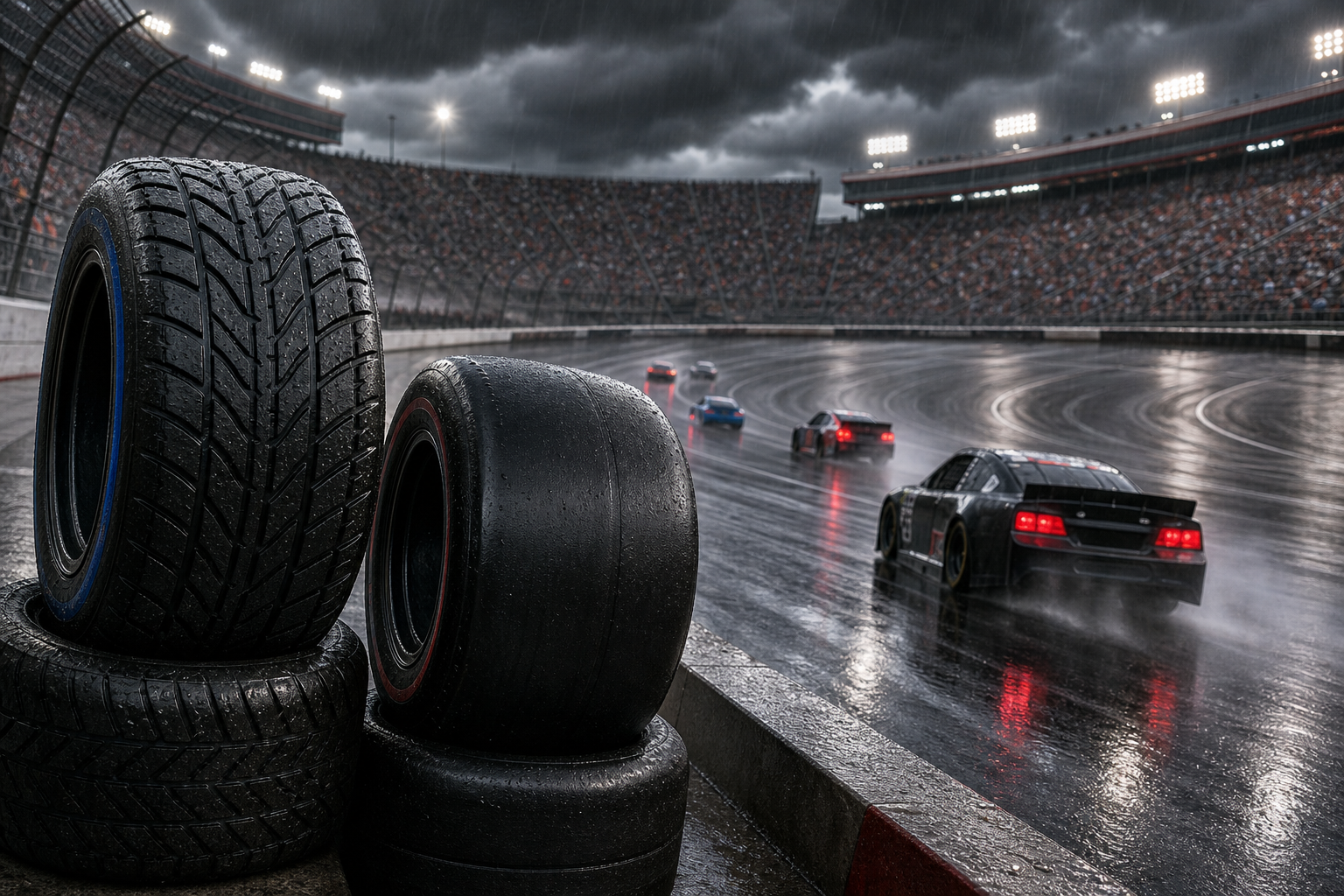

NASCAR has made a targeted change to its wet-weather tire policy ahead of a busy race weekend at Bristol Motor Speedway, refining how teams and officials will handle the switch between rain tires and slicks on short ovals.
The basic rule remains intact: wet-weather tires are still allowed on ovals one mile in length or shorter. That includes Bristol’s half-mile concrete oval, where changing conditions can quickly turn a planned race into a tire-management exercise if weather becomes a factor.
What changed in the policy
The key adjustment is not about where the tires can be used, but who controls the timing of the transition back to dry-weather tires. Previously, NASCAR officials were the only ones deciding when the wet-weather tires came off and slicks went back on. That arrangement has now been modified.
The change gives teams and officials a revised framework for making that call, rather than leaving the sanctioning body as the sole decision-maker. NASCAR has not altered the fundamental size-based eligibility of the tires, but it has changed how the process is managed once a track begins to dry.
Why Bristol is the relevant test case
Bristol is one of the most demanding venues on the schedule even in dry conditions. The short lap length, tight corners and heavy traffic already create a race environment where track position and tire behavior matter. Add moisture, and the strategic picture becomes even more complicated.
Because the track falls well within the one-mile-or-shorter category, it sits squarely inside the portion of NASCAR’s wet-weather policy that can come into play. That makes the Bristol weekend a practical place for the sanctioning body to refine its procedures.
How wet-weather tires fit into NASCAR’s current approach
NASCAR’s road-course wet tire program has been widely discussed since it was introduced, but the sanctioning body has also been careful about where and how the tires are used on oval tracks. Short ovals present a different challenge from road courses: the racing surface is compact, the speeds are high, and drying conditions can change rapidly across the lap.
That is why the policy matters. Wet-weather tires can help keep cars on track when conditions are marginal, but switching back to slicks at the right moment is just as important. Stay on rain tires too long and performance suffers; make the switch too early and teams risk sliding around on a damp surface.
What teams will be watching
For teams, the practical concern is clarity. Any change to the process for moving from wet to dry tires affects pit strategy, timing, and communication with NASCAR race control. In a race where caution periods and weather patterns can shift quickly, knowing how that decision will be made is part of the competitive picture.
At Bristol, where pit cycles and track position are always critical, a wet-weather scenario could add another layer of strategy to an already compressed race. Even a small procedural change can influence how teams prepare their tire calls and how they respond if rain enters the picture.
A small rule change with race-day implications
This is not a wholesale rewrite of NASCAR’s wet-weather tire policy. The core structure remains the same, with eligibility still tied to short ovals. But the adjustment to the decision-making process around the transition back to slicks is the kind of operational tweak that can matter once the green flag drops.
For Bristol, the timing is notable. With a packed weekend on tap, NASCAR has taken a chance to sharpen the procedure before conditions force the issue on track. If the weather stays clear, the change may pass with little notice. If moisture becomes part of the equation, the new policy could shape how the race unfolds.


0 Comments