
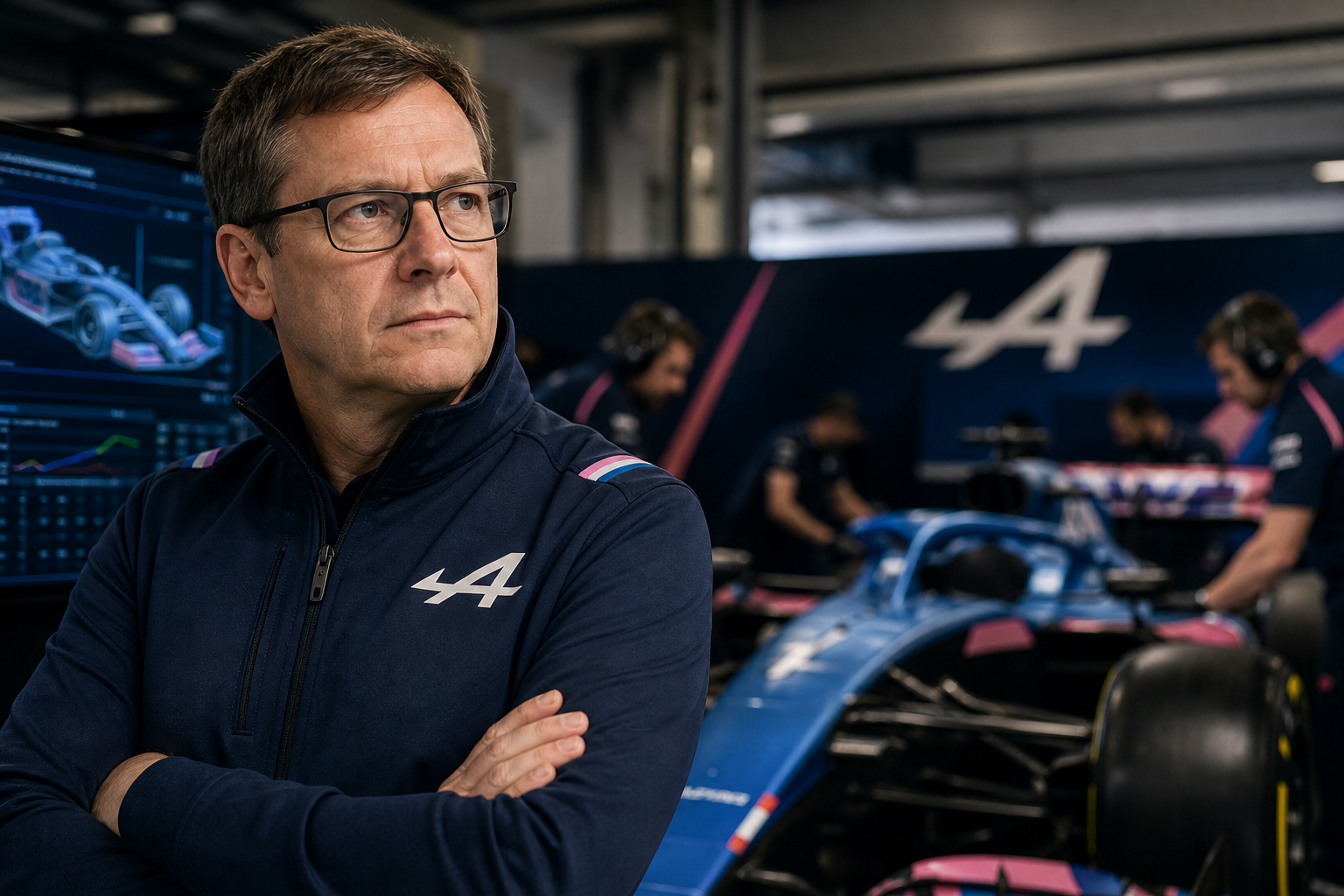

Alpine has reached outside its own organisation for one of Formula 1’s most experienced technical minds, appointing former Mercedes technical chief Mike Elliott as its new chief technical officer. The move brings Elliott back to the paddock after a three-year absence and adds another significant name to a technical department that has been under scrutiny as Alpine works to stabilise its Formula 1 project.
For Alpine, the decision is notable not just because Elliott has a long résumé, but because his arrival signals a broader effort to strengthen the team’s technical leadership. Formula 1 teams rarely make changes of this scale without a clear strategic motive, and a senior appointment like this typically reflects an attempt to tighten development direction, improve internal structure, and make better use of technical resources across the car.
A senior return to Formula 1
Elliott is best known for his years at Mercedes, where he rose through the ranks to become one of the key figures in the team’s engineering operation. His background spans an era in which Mercedes became the benchmark for technical execution in Formula 1, particularly during the hybrid era when the team built a dominant package around power unit integration, chassis efficiency, and operational consistency.
His departure from Mercedes three years ago marked the end of a long stint in the championship, but it did not reduce the significance of his experience. A technical leader with Elliott’s background brings more than design knowledge; he brings familiarity with how top teams organise development, manage car evolution across a season, and translate concepts into on-track performance under intense regulatory constraints.
That is precisely the kind of expertise Alpine appears to be seeking. In Formula 1, the gap between a promising design direction and a race-winning one is often measured in process as much as raw engineering talent. Senior technical appointments are about improving decision-making as much as they are about producing parts.
What Elliott adds to Alpine
As chief technical officer, Elliott’s remit is expected to cover the broad technical direction of the team rather than a single component or specialist area. That makes the role especially important in a modern Formula 1 organisation, where aerodynamic development, vehicle dynamics, power unit integration, simulation work, and trackside correlation all need to align if the car is to move forward.
Alpine has spent recent seasons trying to build a more coherent technical structure around its Formula 1 programme. Bringing in a figure with experience at a front-running organisation suggests an emphasis on discipline and clarity in the development process. Teams at the front of the grid generally make fewer wasted steps, and technical leadership plays a major part in making that happen.
The appointment also underlines how competitive the market for experienced Formula 1 engineers remains. Even with the series’ growing complexity, there are only a limited number of engineers who have operated inside championship-winning teams and understand how to extract performance within the sport’s tight technical and financial constraints.
Why Alpine made the move now
Alpine’s decision arrives at a time when the team has been seeking stronger long-term foundations. Like several midfield and lower-front-running squads, it has had to balance immediate race performance with the need to build a stable technical framework that can support future car programmes.
That makes Elliott’s role particularly important. A chief technical officer is not there simply to approve a few updates; the position often shapes the philosophy behind the car. Whether a team leans toward aggressive aerodynamic concepts, conservative mechanical packaging, or a more iterative development path can have a lasting effect on performance over multiple seasons.
For Alpine, the hope will be that Elliott’s experience helps sharpen those choices. Formula 1 development rarely fails because of one dramatic mistake. More often, it comes down to small inefficiencies, delayed decisions, or a lack of alignment between the design office, the wind tunnel, simulation tools, and the race team. Senior technical leadership is meant to reduce that drift.
The significance of a Mercedes-trained engineer
Mercedes has been one of the most technically influential teams of the modern era, and engineers who have worked within that environment carry a reputation that extends beyond their job titles. Their value lies partly in the systems they’ve seen, the standards they’ve worked to, and the operational habits developed in a top-level programme.
That matters in Formula 1 because progress is rarely about copying another team’s car. The real advantage comes from understanding how elite organisations function and applying those lessons within a different structure. Elliott’s background gives Alpine access to that kind of knowledge without importing a complete philosophy wholesale.
His return to the paddock also adds to the ongoing reshaping of technical departments across the grid. Formula 1 has become a highly mobile environment for senior engineers, with teams frequently looking beyond their own walls to find the people who can make a real difference in car development and operational consistency.
What to watch next
The immediate question is how Alpine will integrate Elliott into its existing technical setup and how quickly his influence will be felt. These appointments rarely deliver instant results, especially in a sport where car concepts are largely locked in long before the season begins. The more meaningful effects often show up over several development cycles, as the team’s technical direction becomes clearer and more coordinated.
Still, a move of this kind is easy to read as a statement of intent. Alpine is putting a proven Formula 1 engineer back in a senior role, and that alone suggests the team wants to be more deliberate about how it develops cars and structures its technical operation. In a championship where details decide the difference between the midfield and the front, that can be just as important as any single upgrade package.
Elliott’s appointment gives Alpine another high-level voice in the room at a crucial stage of its Formula 1 programme. If the team can make the most of his experience, the impact may be felt less in headlines than in the kind of gradual, technical progress that separates well-run teams from the rest of the grid.

0 Comments