
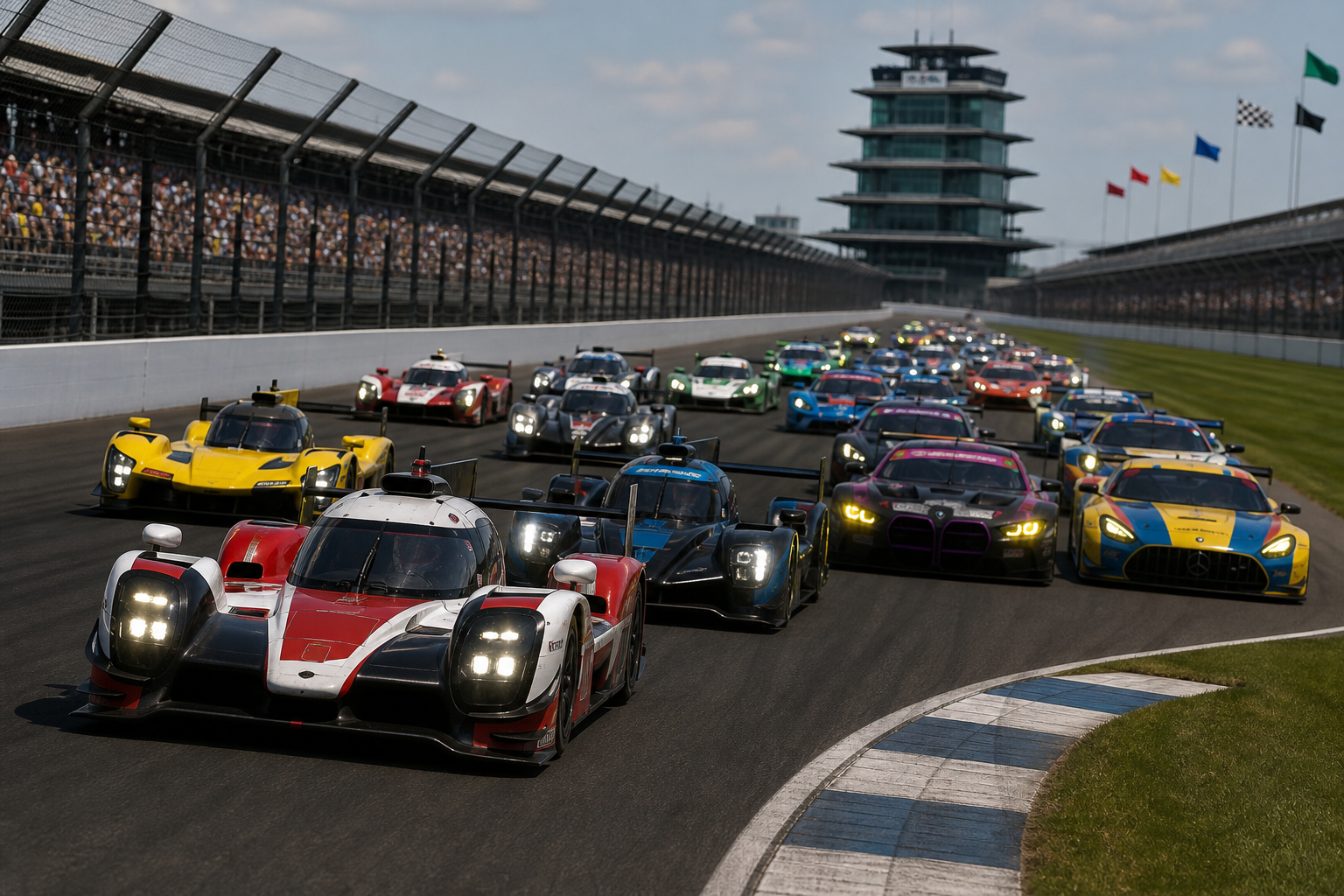

Indianapolis is not usually the first place that comes to mind when people talk about traffic, but in IMSA terms it is about to become one of the most crowded pieces of pavement on the calendar. Among WeatherTech SportsCar Championship rounds, only a pair of events are expected to pack more cars into each mile of track than the Indianapolis race.
That metric matters in sports-car racing because it shapes everything from the first-lap scramble to how race traffic influences strategy across multiple classes. IMSA’s top series routinely mixes faster prototypes with GT machinery, so a short or moderately long circuit can become a constant exercise in timing, patience and risk management. The more cars you have per mile, the more often leaders run into slower traffic and the more opportunities arise for position changes, mistakes and strategic gambles.
Why Cars-Per-Mile Matters in IMSA
Unlike single-make racing or a single-class sprint, IMSA events often unfold with different classes sharing the same track at the same time. That turns “traffic” into a technical and strategic issue rather than just a spectator’s complaint. Prototype drivers must read closing rates quickly, GT drivers must hold their lines while being lapped, and pit cycles can become just as important as outright pace.
A race with a heavy density of cars per mile tends to produce more natural compression in the field. That can make clean air harder to find, increase the likelihood of congestion at corner entries and exits, and force teams to think carefully about when to attack. It also creates a sharper premium on driver discipline, because passing a slower class car at the wrong moment can cost far more than the few tenths gained by forcing the issue.
Indianapolis Joins a Familiar IMSA Pattern
The Indianapolis race’s place among the busiest events on the schedule is less surprising when viewed through the lens of IMSA’s race format. The WeatherTech Championship regularly fields large grids, and when those grids are spread across a circuit that is not especially long, density quickly rises. That is why the Indianapolis round sits near the top of the series in cars per mile, behind only two other events.
For the teams, that means Indianapolis is likely to reward a balanced approach rather than a purely aggressive one. In heavy traffic, track position can matter as much as raw pace, but staying out of trouble matters even more. A driver who can manage the flow of slower cars without losing rhythm often gains more over the course of a stint than one who takes unnecessary risks searching for an immediate pass.
Strategy, Timing and the Challenge of Multiclass Racing
IMSA racing is rarely decided by one factor alone, and crowded races tend to magnify that reality. Fuel windows, tire management, caution periods and pit timing all interact with traffic, especially when prototypes and GT cars are running together. A well-timed pit stop can drop a car into clearer air, while a poorly timed one can trap a team in a dense cluster of competitors and traffic.
Indianapolis has long been a circuit where timing matters. Even before the race is decided, the way the field sorts itself early can shape the rest of the afternoon. That makes the opening laps especially important, because a small gain or loss in track position can influence how often a car has to deal with traffic later in the stint.
What Fans Should Watch For
For spectators, a high cars-per-mile race usually means plenty to follow at once. Leaders will be slicing through traffic, mid-pack battles can become chaotic, and pit strategy can shuffle the order repeatedly. The pace may be measured at times, but the race rhythm often isn’t.
That is part of what makes IMSA at Indianapolis appealing. The circuit and the field combine to create a race where the fastest car on paper is not always the car that controls the day. In a crowded event, consistency, awareness and timing can matter just as much as outright speed.
Indianapolis now joins the small group of IMSA events that are expected to produce the heaviest traffic relative to track length, setting up another race where managing the space between cars may be just as important as managing lap times.
0 Comments