
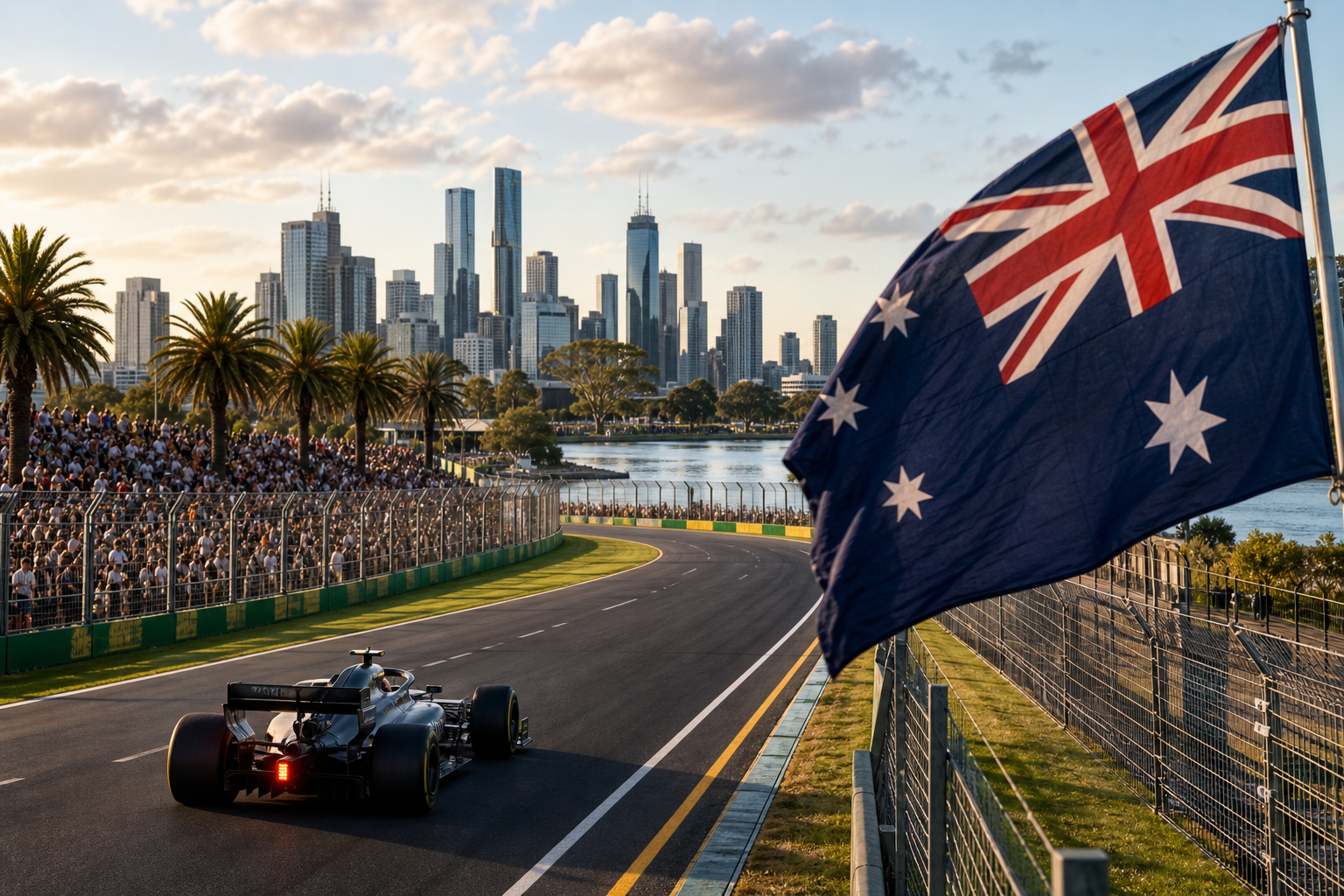

The Australian Grand Prix has drawn a line under any talk of moving to the front of Formula 1’s 2027 calendar. While the race at Albert Park remains one of the sport’s most established and best-attended flyaway events, organisers have made it clear they do not see Melbourne as a standby option for the season-opening slot.
Melbourne stays committed to its current place on the calendar
Formula 1 has been reshaping its calendar strategy in recent years, balancing traditional races with new commercial priorities and tighter logistical demands. That has inevitably triggered speculation around who might open the 2027 season if the championship decides to alter its early-calendar plans.
In that context, Australia’s position is straightforward: the event is not positioning itself as a backup choice for the first race of the year. The message is important because the Australian Grand Prix is one of the championship’s most recognisable and operationally significant events, but it is not looking to disrupt its own planning for the sake of stepping into a potential vacancy.
Why the opening race matters
The season opener carries more weight than a standard round. It sets the tone for the championship, influences travel schedules across teams and suppliers, and often becomes the first real benchmark for new cars after winter testing. For promoters, the slot also brings a level of visibility that goes beyond the race weekend itself.
That is why any discussion about who could open the 2027 season attracts attention well beyond the paddock. A race that starts the year often benefits from a larger global audience, while teams and sponsors use the event to launch campaigns, reveal new liveries, and frame expectations for the months ahead.
Melbourne, however, has long been built around its own established role. Albert Park traditionally serves as one of the first races on the Formula 1 calendar, but that is not the same thing as actively seeking the season-opening berth. The distinction matters, especially when calendar slots can affect travel, freight sequencing, and the broader rhythm of the championship.
Albert Park’s place in Formula 1
The Australian Grand Prix has become a fixture of the modern Formula 1 calendar thanks to a combination of atmosphere, venue access, and logistical convenience relative to other flyaway races. Albert Park’s semi-permanent layout gives the event a distinct identity, and the race has consistently delivered strong crowd figures and a festival-style environment that works well for the local market.
From a sporting perspective, Melbourne has also often provided an early indication of where teams stand. Even in seasons when pre-season testing has painted an incomplete picture, Australia has remained one of the first opportunities to see how a new generation of cars behaves in competitive trim.
Still, opening the championship is a different matter from hosting an early-season race. The first round is a highly specific logistical assignment, and not every promoter wants the added demands that come with it. Australia’s refusal to act as a standby option suggests the event is content to retain its own planning priorities rather than wait on Formula 1’s broader calendar decisions.
Calendar politics continue to shape Formula 1’s structure
Formula 1’s recent calendar growth has made scheduling more complicated than it once was. The championship now spans a wider geographic footprint and must account for freight movement, staffing cycles, and regional grouping of races. That has made the positioning of each event more strategic than ever.
For races like Australia, which sit at the start of the season but are not necessarily the opener, the challenge is to preserve their own value without becoming dependent on a changing calendar. Melbourne’s latest stance suggests its organisers are looking to protect that balance.
There is also a commercial dimension. The season opener can generate additional attention, but it can also come with pressure to adapt to F1’s broader schedule priorities. By declining to become a standby candidate, the Australian Grand Prix is signalling confidence in its existing role rather than chasing a title that may not align with its long-term interests.
What it means for fans and teams
For fans, the practical takeaway is simple: the Australian Grand Prix is expected to remain a key part of the Formula 1 season, but not as a fallback option for the first race in 2027. That keeps Melbourne on familiar ground and avoids unnecessary uncertainty around one of the sport’s most popular early-season events.
For teams, the decision preserves continuity. Albert Park is already well understood as a destination that demands efficient freight handling, adaptable car setup, and quick readjustment after pre-season preparation. Keeping that role unchanged avoids another layer of logistical change in a calendar that already asks plenty of the paddock.
Formula 1’s schedule will continue to evolve, and so will the debate over which race should launch each season. For now, though, Melbourne has made its position clear: it wants to be the Australian Grand Prix, not a placeholder for someone else’s opening weekend.


0 Comments