
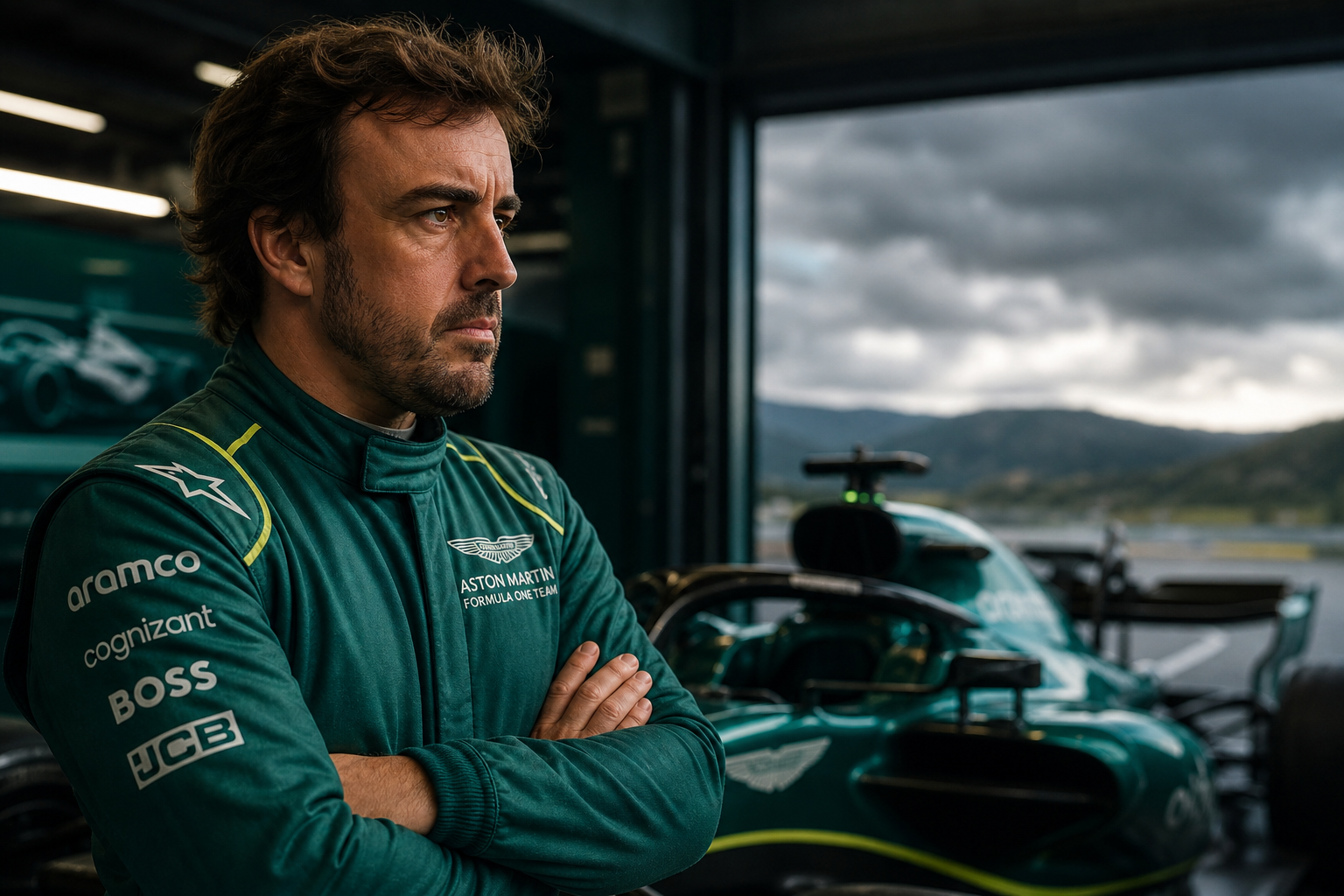

Aston Martin is heading toward one of the more delicate driver decisions of its Formula 1 era: what happens if Fernando Alonso chooses not to continue beyond 2026. The two-time world champion has yet to commit to the team’s future, and that uncertainty leaves Aston Martin facing the prospect of another late, potentially disruptive decision from a driver whose name still carries enormous weight inside the paddock.
For Aston Martin, the issue is not simply about replacing a fast driver. Alonso is central to the team’s current identity, competitive ambitions and technical direction. His experience has been a major asset since joining the squad, and with the team’s long-term project still taking shape, his presence has provided something more valuable than headline speed: a benchmark. If he decides to walk away, the timing matters as much as the vacancy itself.
Why Alonso’s next move matters so much
Alonso remains one of the sport’s most accomplished and demanding competitors. At this stage of his career, any decision about whether to stay in Formula 1 is rarely straightforward. It depends on competitiveness, motivation, and whether the package around him still justifies another season. That leaves Aston Martin waiting for a call that could reshape its driver line-up at a critical point in the team’s development.
The concern for Aston Martin is not just losing a marquee name. Alonso’s future affects planning across the organization. A team preparing for the next phase of the Formula 1 regulations needs stability, especially from its lead driver. When that driver is also one of the most analytically sharp in the field, the value goes beyond results on Sunday. His feedback informs development, race preparation and the way the team sets its priorities.
The shadow of a past retirement
The team’s hope to avoid a “dramatic” repeat of Alonso’s retirement speaks to the Spaniard’s history with the sport. Alonso has not always left Formula 1 quietly, and any future exit would inevitably draw attention. That is part of the reality of having a driver whose career has stretched across multiple eras and teams, with a reputation built as much on resilience as raw pace.
Aston Martin would prefer a clear, orderly decision rather than uncertainty hanging into the off-season. In F1, the timing of a driver announcement can be as important as the content of the announcement itself. A late call can restrict the team’s options, limit discussions with potential replacements and complicate wider planning around testing and development priorities.
Aston Martin’s longer-term considerations
The Alonso question also sits within a broader strategic picture for Aston Martin. The team has been investing heavily in its Formula 1 operation, with ambitions that extend well beyond one driver cycle. That makes continuity especially valuable. A stable lead driver can help a team maintain development momentum while engineers and management work toward the next step in performance.
At the same time, Alonso’s future is tied to a simple truth of F1: driver decisions rarely happen in isolation. They are shaped by the competitive order, by project confidence and by whether a team can keep moving toward the front. For Aston Martin, the ideal outcome is not simply Alonso staying; it is Alonso staying because he believes the project is still heading in the right direction.
What happens if he leaves?
If Alonso decides against continuing, Aston Martin would face one of the more sensitive driver searches on the grid. Replacing a proven race winner and development reference is never easy, particularly when the market is already shaped by long-term contracts and rising interest in the most competitive seats. Even before naming a successor, the team would need to define what it wants from the next driver pairing.
That choice would likely involve balancing experience, long-term potential and the ability to work within a technically ambitious organization. Alonso’s exit would not just create a gap in the car. It would change the tone of the garage and the expectations around how quickly the team can continue to progress.
For now, Aston Martin is left waiting. Alonso has not committed to 2027, and that alone is enough to keep the team alert. The coming decision may not be dramatic in a theatrical sense, but in practical terms it could be one of the more consequential calls Aston Martin has faced since returning to the Formula 1 grid under its current identity.


0 Comments