
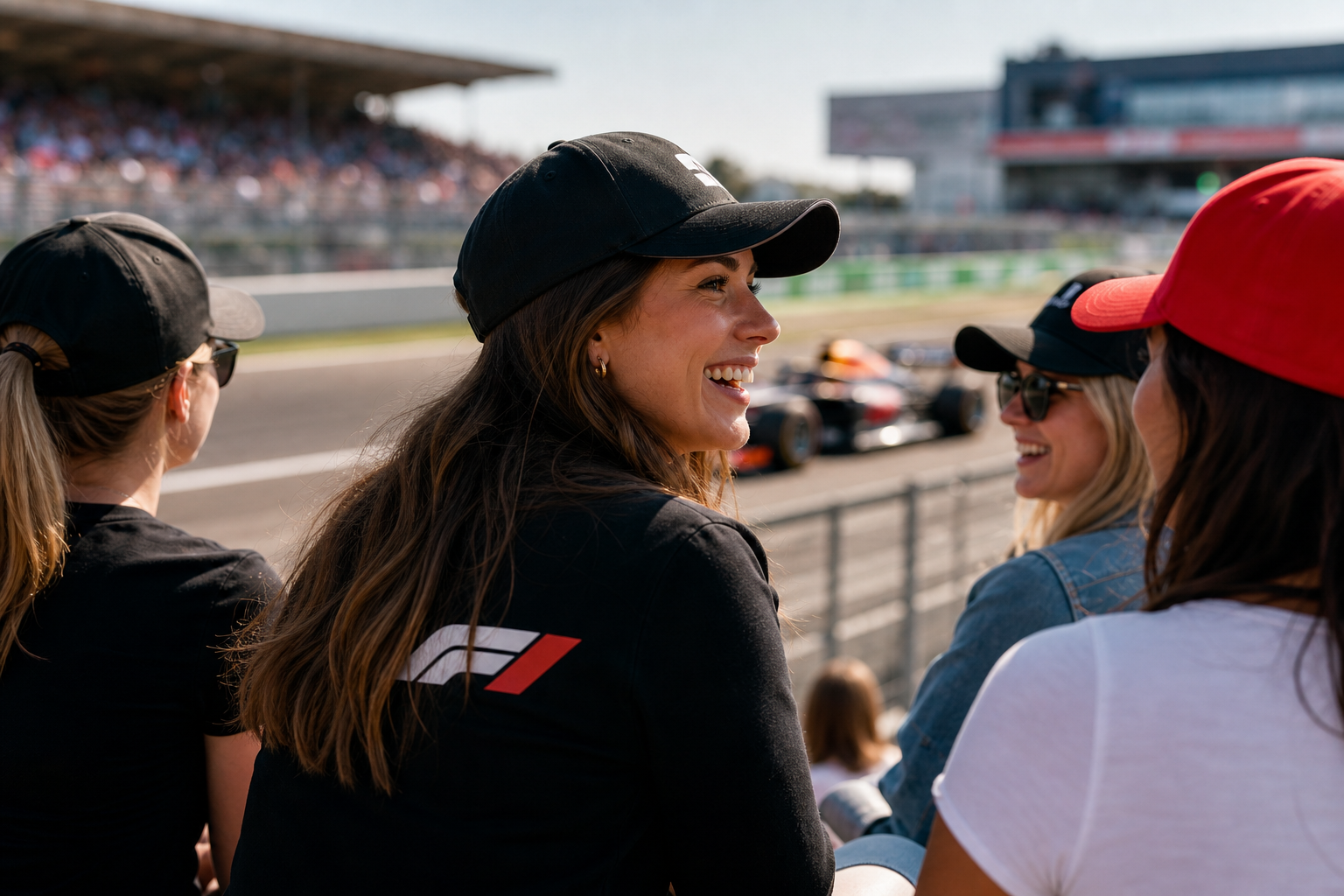

Formula 1 has never been short on speed, politics or spectacle, but one of the most interesting stories around the sport right now is happening away from the pit wall. As F1’s female fanbase continues to grow, Amy Mansell is working to make sure women who love the championship don’t have to experience it on their own.
That idea sits at the centre of Mansell’s work and reflects a broader shift in how the sport is being followed. Formula 1’s audience has changed dramatically in recent years, with social media, streaming and a more globalized fan culture creating space for new communities to form around drivers, teams and races. For many women, that has meant finding a place in a sport that has traditionally been presented as male-dominated, both in the grandstands and in the wider conversation around it.
Building a more inclusive way to follow F1
Mansell’s goal is straightforward: create a sense of belonging for women who enjoy Formula 1, whether they’re longtime followers or just getting into the series. That matters because the modern F1 experience is no longer limited to watching a grand prix on Sunday afternoon. Fans track practice and qualifying sessions, discuss strategy, follow technical updates, debate driver moves and often build friendships through online communities and live events.
For women entering that world, the challenge is often less about understanding the sport than finding a comfortable space in which to enjoy it. Mansell’s effort appears aimed at closing that gap, giving women a way to connect with others who share the same enthusiasm rather than feeling isolated in a crowd that may not always seem built for them.
The growth of the female fanbase is significant because it reflects how F1’s audience is evolving. The series has worked hard to expand its reach beyond the traditional core of motorsport loyalists, and that has helped open the door to new demographic groups. Women are increasingly visible in the fan culture around the championship, from grand prix attendance to online discussion and brand engagement.
Why this matters in the context of modern Formula 1
Formula 1 has always sold itself on technology, competition and elite performance, but the fandom around it has become just as important to the sport’s identity. Teams and promoters now pay close attention to audience growth, engagement and representation, because the health of the championship depends not only on the racing but on who feels invited to participate in the culture surrounding it.
That’s where initiatives like Mansell’s fit in. They don’t change the cars, the regulations or the results, but they can shape how the sport is experienced. A welcoming fan environment can make it easier for new viewers to stick with F1, deepen their understanding of it and become part of the long-term audience the series is trying to build.
There’s also a practical side to the issue. Motorsport has long had a visibility problem when it comes to female participation at nearly every level, from engineering and media to team leadership and driving. While Mansell’s focus is on fandom rather than competition, fan communities often influence what the sport looks and feels like as it develops. The more diverse those communities become, the more likely it is that the sport’s wider culture will follow.
A changing fan culture around the paddock
F1’s current popularity boom has been driven by a mix of factors: tighter racing at the front, a packed calendar, and the sport’s success in attracting younger audiences through digital content and behind-the-scenes storytelling. Those same tools have helped create a more social, more accessible version of Formula 1 fandom.
That accessibility is important. A fan no longer needs years of motorsport background to follow the sport. A newcomer can arrive through a driver profile, a social clip, a team video or a friend’s recommendation and quickly become invested. For women joining in that way, the experience can be much better when there’s a deliberate effort to make the community feel open rather than gatekept.
Mansell’s work speaks to that reality. The aim is not to separate female fans from the rest of the F1 audience, but to ensure they can take part without friction. That distinction matters. The most successful fan cultures tend to be the ones that build identity without exclusion, creating spaces where people can share an interest without having to defend their right to be there.
The wider implication for the sport
For Formula 1, a more inclusive fanbase is also a strategic advantage. Sponsors, broadcasters and race promoters all want an audience that is broad, engaged and growing. If more women are not only watching but actively participating in the sport’s culture, that strengthens the case for deeper investment in the ecosystem around F1.
It also creates room for the championship to present itself more accurately. Formula 1 has never belonged to one type of fan, even if the old image of the sport suggested otherwise. The rise of voices like Mansell’s shows that the audience is broader, more varied and more active than that stereotype allowed.
That evolution is already visible in the way people follow the sport. Grand prix weekends are now as much about community as competition, and the conversations surrounding them are shaped by fans who want more than lap times and podiums. They want belonging, recognition and a space where their enthusiasm is treated as normal.
Mansell’s effort is part of that shift. In a sport built on margins, the change may not show up in a timing sheet or a championship table, but it can still alter the way Formula 1 is experienced. And with the female fanbase continuing to grow, that kind of work is likely to become more important, not less.


0 Comments