
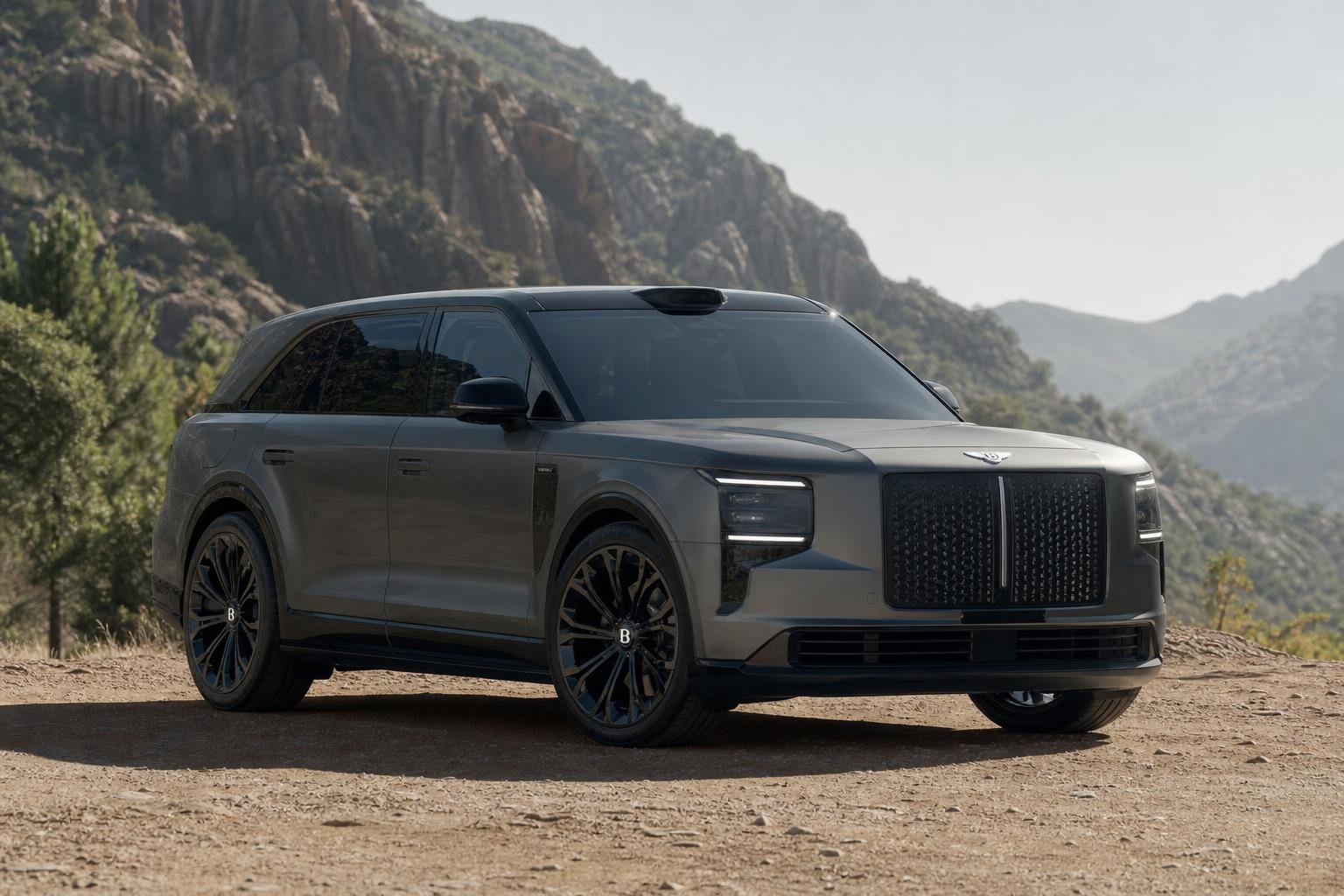

Bentley’s first electric vehicle has reportedly sold out its entire 2027 production allocation before production has started. Buyers placing an order now for the new Torcal SUV are being told to expect delivery in 2028, according to InsideEVs.
The response gives Bentley an early commercial win as it prepares to enter the battery-electric luxury SUV market. It also arrives at a difficult moment for the British manufacturer, whose global sales and profits declined during the first nine months of the year.
2027 production is already allocated
According to InsideEVs, Bentley has not disclosed how many Torcal vehicles it plans to build during 2027. However, the company has said that all available production slots for the year have been allocated. New orders will therefore move into the 2028 delivery schedule.
That distinction matters. The Torcal is not necessarily sold out indefinitely, and Bentley has not announced a permanent production limit. The allocation may reflect Bentley’s controlled approach to early production, although the company has not publicly explained how it set the initial volume. It gives the automaker an opportunity to assess demand as the model moves toward production.
“Needless to say, we’re very pleased with the response and position we’re in,” a Bentley spokesperson told Automotive News, according to InsideEVs.
A lower-priced entry point for Bentley
The Torcal is positioned below the larger Bentayga in Bentley’s SUV range and is described as the brand’s least expensive model. In the United States, the standard version reportedly starts at $222,495, while the more powerful Torcal S is listed at $262,695. The First Edition raises the price to $300,995 before personalization and other options.
Although those figures place the Torcal far beyond the mainstream luxury market, its pricing is relatively accessible by Bentley standards. The Bentayga starts at $231,150, while the Flying Spur sedan begins at $254,850 and the Continental GT starts at $288,750, according to the InsideEVs report.
That positioning could help Bentley attract customers who want the marque’s craftsmanship and status but do not require the size or traditional powertrain of a larger Bentley. Company chairman and chief executive Frank-Steffen Walliser said the smaller SUV has attracted new and younger buyers.
The success of the Torcal S is particularly notable. Despite its higher price, the performance-oriented version is reportedly the most popular derivative so far. That suggests buyers in this segment may continue to value power and specification when choosing an electric vehicle, rather than treating electrification as a reason to accept a less distinctive driving experience.
Porsche-derived electric hardware
The Torcal uses Volkswagen Group’s Premium Platform Electric architecture, the same basic electric vehicle platform used by the Porsche Cayenne EV. The shared underpinnings give Bentley access to the group’s premium electric vehicle architecture and its associated charging capability.
According to the reported specifications, the Torcal has a 113-kilowatt-hour battery and can accept charging at up to 400 kilowatts. Bentley says the battery can be replenished from 10 to 80 percent in less than 20 minutes under suitable charging conditions. Its estimated EPA range is expected to exceed 300 miles.
Those numbers place the Torcal’s charging capability among the vehicle’s key selling points. Large luxury SUVs are often used for long-distance travel, where charging time can be as important as outright range. A sub-20-minute charging window could make the transition from a gasoline or plug-in hybrid Bentley less disruptive for customers with access to compatible high-power charging stations.
The dual-motor powertrain reportedly produces 810 horsepower and 881 pound-feet of torque in the standard Torcal. The Torcal S increases those outputs to 876 horsepower and 996 pound-feet. Bentley said the new model was the most powerful and quietest vehicle produced at its Crewe factory when it debuted, although independent testing will be needed to establish how those claims translate on the road.
A major investment in Bentley’s electric future
Bringing the Torcal to production has required a substantial investment. Bentley has spent $463 million upgrading its factory in England, with at least an equivalent amount reportedly committed to supply-chain preparation and research and development.
That spending reflects the challenge of adding an electric vehicle to a factory historically associated with hand-built luxury cars and combustion engines. Bentley must preserve its traditional emphasis on materials, craftsmanship and individual personalization while integrating a new battery-electric product.
The company’s ability to charge more than $300,000 for highly specified versions will be important to the business case. Walliser said some Torcal vehicles have been configured at more than $395,950.74 USD or approximately $397,000. That indicates Bentley expects personalization to remain a significant part of the ownership proposition, even as the powertrain changes.
The Torcal will not replace the Bentayga
Bentley’s electric expansion does not mean the Bentayga is being discontinued. The company says the two SUVs can coexist, giving customers a choice between battery-electric propulsion and gasoline or plug-in hybrid powertrains.
That approach also gives Bentley flexibility while charging infrastructure and customer preferences continue to develop. The Torcal can serve buyers ready for a fully electric luxury vehicle, while the Bentayga remains available to customers who prioritize long-distance flexibility or prefer a conventional powertrain.
The early order response is encouraging, but it does not eliminate the challenges ahead. Bentley reportedly sold 5,970 vehicles globally during the first nine months of the year, a 17 percent decline from the same period a year earlier, while profit fell by more than half to $54.1 million. The Torcal therefore has to do more than generate attention: it must help broaden Bentley’s customer base and support the company’s expensive transition to electrification.
For now, the allocated 2027 production schedule gives Bentley a valuable head start. The more important test will come once production begins, when the company must demonstrate that its first EV can deliver the range, charging performance, refinement and personalization expected from a six-figure Bentley.
Sources: InsideEVs.
0 Comments