
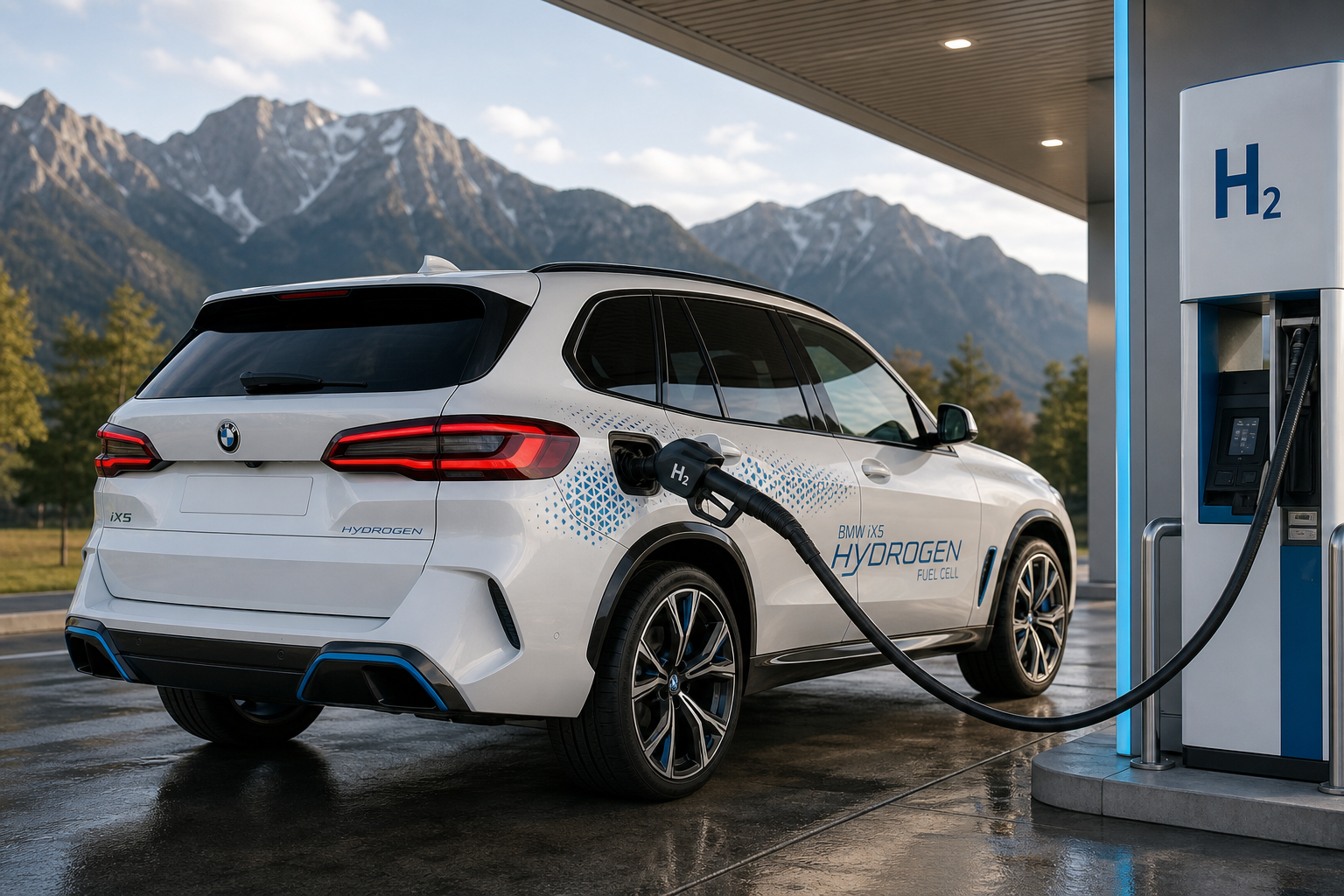

BMW is once again making the case for hydrogen as a practical alternative to battery-electric power, and the headline number is hard to ignore: the iX5 Hydrogen can be refueled in about five minutes. In a world where charging time remains one of the biggest talking points around EV adoption, that kind of turnaround puts hydrogen right back into the conversation.
The claim matters because BMW is not presenting hydrogen as a science project or a distant concept. The iX5 Hydrogen is part of the company’s broader effort to keep multiple propulsion paths open, even as most of the industry continues to pour resources into batteries and charging infrastructure. For BMW, hydrogen is not about replacing EVs outright. It is about offering another route to low-emissions mobility, especially for drivers and markets where long refueling times and limited charging access can still be obstacles.
Five-minute refueling is the headline, but the context matters more
A five-minute fill-up sounds familiar because it mirrors the experience of putting fuel into a conventional vehicle. That’s the obvious advantage of hydrogen: if the infrastructure exists, refueling time is far closer to gasoline or diesel than to even the fastest public fast-charging sessions. BMW’s point is not that hydrogen is universally superior, but that it solves a specific inconvenience associated with battery-electric ownership.
Less obvious, but just as important, is that BMW is comparing the iX5 Hydrogen to its own electric lineup. The statement that the hydrogen SUV can refuel in less time than any BMW electric model highlights the current divide between energy delivery methods. Fast chargers have improved rapidly, but they still require more time than a hydrogen dispenser, and charging speed can depend heavily on battery temperature, charger output, and the state of the pack.
The iX5 Hydrogen fits into BMW’s long-running fuel-cell strategy
BMW has explored hydrogen for years, often at a time when the technology was viewed as too niche for serious production planning. That persistence has given the company a reputation for being one of the few major automakers willing to keep fuel-cell development alive while the market consolidated around batteries.
The iX5 Hydrogen is particularly notable because it builds on an existing SUV platform rather than requiring a one-off prototype shell. That makes it easier to understand as a product, not just a technology demonstrator. It also shows how BMW views hydrogen: as something that can be integrated into a mainstream model line rather than isolated in a niche experiment.
That approach differs from the battery-electric strategy many rivals have embraced, where the focus is on maximizing range and charging speed within the EV model itself. BMW is still pursuing that path as well, but hydrogen gives it another technical answer to the same problem: how to make zero-emission driving fit real-world use patterns.
Why refueling speed still matters
Charging infrastructure has become one of the defining issues in the EV market. For many drivers, the decision between electric and internal combustion power is no longer just about range figures on a brochure. It’s about how often they stop, how long they stay stopped, and whether they can reliably refuel on long trips or in areas with limited public charging.
Hydrogen’s selling point is simple. A five-minute stop is easy to live with, especially for people who are used to combustion cars. That makes it attractive in segments where vehicles spend a lot of time in motion and downtime is expensive. BMW is clearly hoping that a fast-refueling fuel-cell SUV can appeal to buyers who want electric-style driving without planning around charging sessions.
There are still major caveats, of course. Hydrogen stations remain scarce in most markets, and availability is the main reason fuel-cell cars have struggled to break into the mainstream. A quick refuel only helps if the station network exists and is reliable enough to support everyday use. That challenge has stalled many hydrogen programs, even when the technical case for the powertrain has looked strong on paper.
What BMW’s hydrogen push says about the wider market
BMW’s willingness to keep hydrogen in the picture says a lot about how automakers are thinking about the transition away from combustion. Battery EVs are the dominant solution in most segments, but the industry is not converging on a single answer for every use case. Range, refueling time, charging access, towing, fleet utilization, and regional energy policy all influence which technology makes sense where.
That is why the iX5 Hydrogen is more than just another engineering exercise. It reflects a strategy built around flexibility. BMW is effectively arguing that the future may not be one-size-fits-all, especially for larger vehicles and for customers who cannot always plug in conveniently. The five-minute refill is the clearest expression of that argument.
It also gives BMW a useful contrast point against its own battery-electric models. Those vehicles are central to the brand’s electrification push, but the iX5 Hydrogen shows the company is not ready to treat battery power as the only viable zero-emission route. For buyers, that means BMW is testing different answers to the same question rather than betting everything on one technology.
Hydrogen remains a niche, but BMW keeps the case alive
For now, hydrogen still faces the same practical hurdles it always has: infrastructure, cost, and the difficulty of scaling production and distribution. Those are significant barriers, and they explain why the technology has not advanced as quickly as battery-electric vehicles. But BMW’s continued investment keeps the debate open, particularly for readers who care about the mechanics of energy delivery as much as the vehicles themselves.
The iX5 Hydrogen’s five-minute refueling figure is therefore less a sales pitch than a reminder of what hydrogen does well. If the network can support it, the user experience is straightforward and quick. That remains its strongest argument, and BMW is making sure it doesn’t get lost as the market continues to focus so heavily on plugs, kilowatts, and charging curves.

0 Comments