
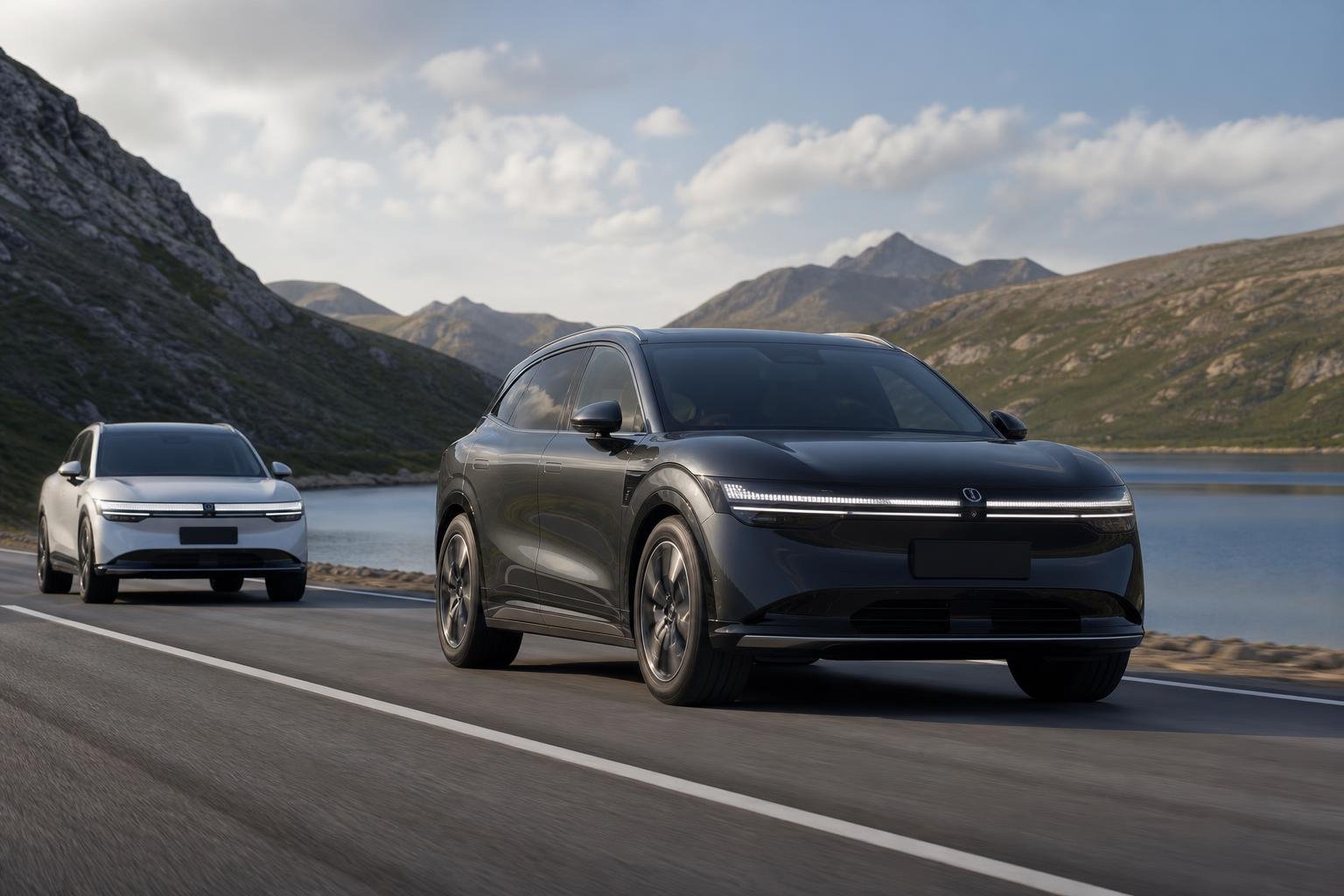

Zeekr is attempting to overcome its lack of brand heritage in Europe by offering more equipment, technology and performance for the money than established luxury automakers, according to European CEO Lothar Schupet.
The Geely-owned brand operates independently and is targeting buyers who traditionally consider BMW, Mercedes-Benz, Audi, Range Rover and Lexus. Schupet acknowledged that heritage remains important to many premium-car customers, but argued that it no longer guarantees loyalty as buyers increasingly judge vehicles on what they deliver.
Zeekr’s value-focused premium strategy
Speaking at the Paris Motor Show, Schupet said Zeekr wants its products to be evaluated on their content and capabilities rather than simply on their pricing. The company’s pitch includes additional features, technology, performance and craftsmanship while maintaining what it describes as a strong price-to-value proposition.
“Value isn’t the same as cheap,” Schupet said, explaining that Zeekr wants customers to feel they are receiving a more innovative and premium experience than expected at a particular price point. He pointed to the 9X as an example of the company’s approach, saying the model is intended to stand on what it offers rather than simply undercutting rivals.
The source describes Zeekr’s higher-end models as feeling more luxurious than current-generation BMW and Audi products while costing significantly less. However, the company’s stated strategy is not limited to selling vehicles at lower prices than European competitors.
Growing European presence
Zeekr currently operates in 22 European countries and expects to have approximately 200 sales and service locations across the region by the end of the year. The brand’s local sales have reportedly increased 200 percent year over year.
At the Paris Motor Show, Zeekr expanded its European lineup with the facelifted 7X and the flagship 9X. The latter is known as the “Hangzhou Bay Cullinan” in China and is expected to play an important role in attracting additional demand for the brand.
Schupet described Zeekr as a high-end challenger with a European design and development presence. The company’s vehicles are designed in Gothenburg and tuned for European roads, while Geely Auto Group provides global scale and technology support.
Residual values remain a concern
Zeekr is also addressing concerns about the depreciation of Chinese electric vehicles and EVs more broadly. The company says it wants to establish the conditions for stronger residual values over time rather than relying only on an attractive new-car price.
Schupet argued that residual values are influenced by the fundamentals of a vehicle. He cited Zeekr’s focus on quality and safety, as well as over-the-air updates that can keep vehicles current throughout their ownership cycle. He also said the brand does not offer stripped-back, low-specification versions that could later flood the used-car market and dilute values.
Five-year warranties, a growing service network and investment in the brand’s European infrastructure are also part of Zeekr’s effort to build customer confidence. The company says its European commitment includes design and research and development operations in Gothenburg, expanding market teams and continued investment in sales and aftersales support.
Competing in an established market
Zeekr faces a difficult task in Europe, where buyers have historically favored established local brands. During the first half of the year, the Volkswagen Group sold 1.8 million vehicles in Europe, while Stellantis sold 1.09 million. Renault, Dacia and Alpine together recorded 683,137 sales, and BMW and Mini sold 510,639 vehicles.
Toyota was the leading non-European brand during the same period, with 479,382 vehicles sold. The Geely Group, however, delivered 225,350 vehicles in Europe in the first six months, ahead of Ford, Tesla, Nissan and Mazda.
Those figures suggest that Chinese automakers are gaining ground, although Zeekr still needs to persuade buyers that its products offer more than a lower purchase price. Its strategy combines premium positioning, European operations, extended support and a focus on long-term vehicle values as it attempts to build recognition in the region.
0 Comments