
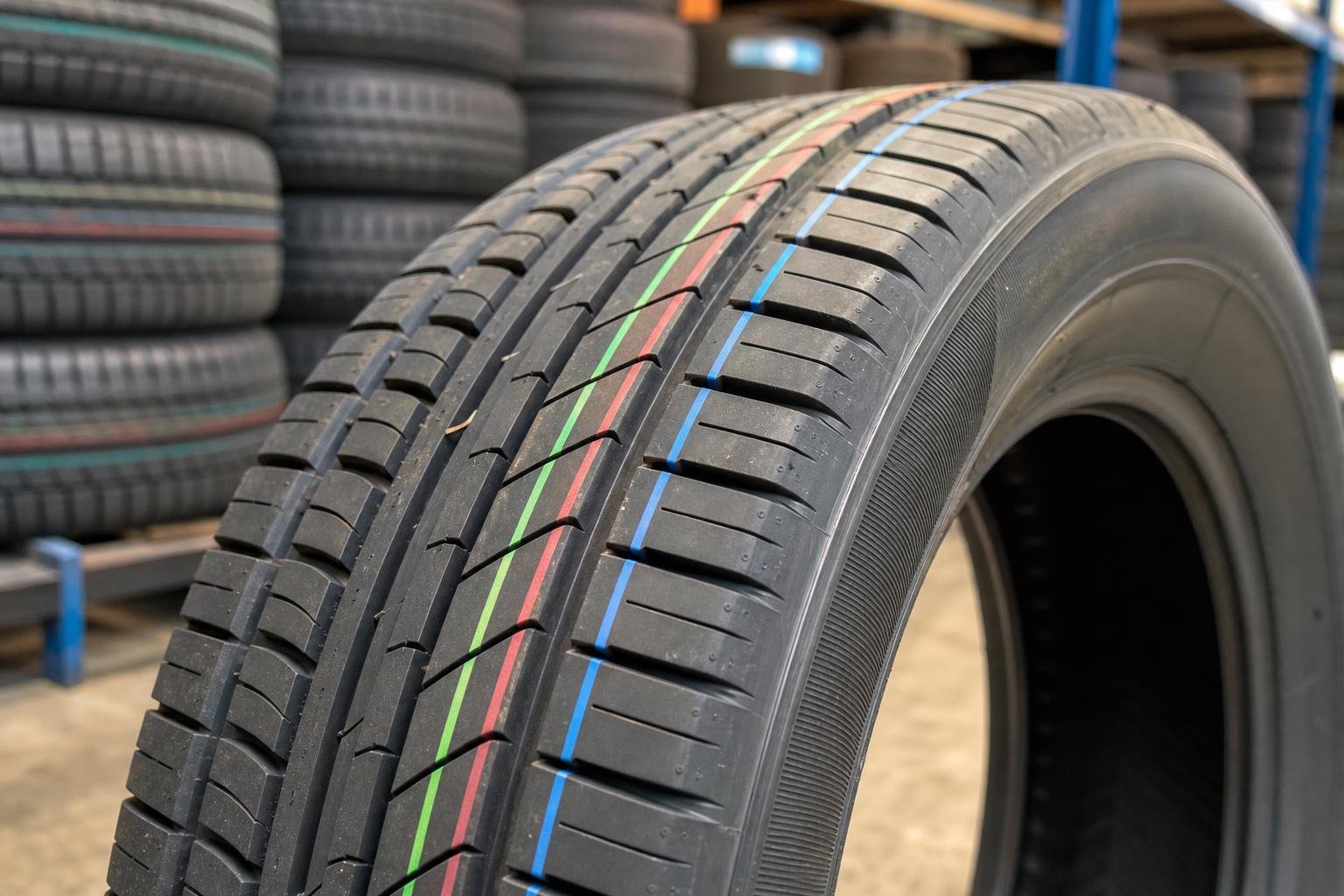

The bright colored stripes found on the tread of some new tires are production markings, not information intended to help shoppers choose a tire. They help manufacturers identify materials, rubber compounds, and finished products as they move through the factory.
Markings used during production
REA, a German company that supplies marking equipment to the tire industry, says automated color lines can be applied to rubber components and completed tires. The markings allow factory workers and machinery to distinguish one material or product from another during manufacturing.
Once a tire reaches a retailer and is fitted to a vehicle, the stripes have generally completed their intended job. They are temporary and gradually disappear as the tread wears during normal driving.
Colors are not standardized for consumers
A color on one manufacturer’s tire cannot be assumed to have the same meaning on another brand’s product. The markings are part of each manufacturer’s internal identification system, so a blue, red, or other colored stripe does not reliably indicate a tire’s performance, compound, or intended use without the relevant factory’s coding system.
The markings may also work as a combination rather than as individual indicators. In the patented process described by the source, two colors are used together to identify a tread compound. Reading a single stripe in isolation could therefore leave out part of the information encoded by the manufacturer.
What buyers should check instead
Consumers should use the information molded into the tire’s sidewall when selecting or inspecting a product. Important details include the tire size, model, load index, and speed rating. Directional tires also have a sidewall arrow showing the required direction of rotation, which is an installation instruction for the fitter.
The sidewall also includes a date code. For example, a code of “2125” indicates that the tire was produced during the 21st week of 2025. That information can help buyers verify how recently a tire was made, including whether a supposedly new tire has already spent a year or two in storage.
Most tire manufacturers recommend replacing tires after five or six years, even when substantial tread remains. In that context, the production date is more useful to an owner than the colored lines around the tread, which are primarily factory identifiers rather than consumer-facing tire information.


0 Comments