
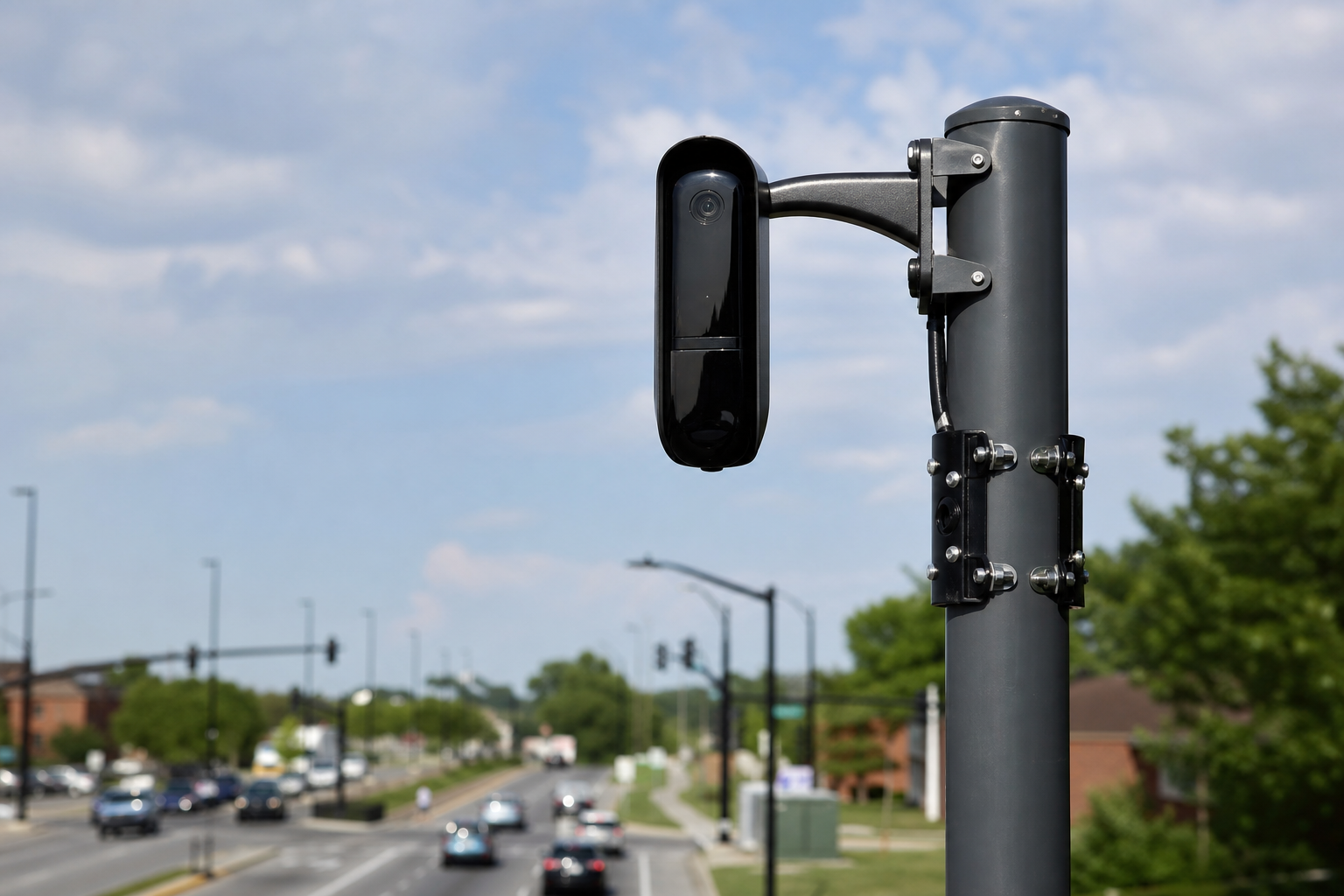

A cybersecurity researcher has published a map that he says was created from a December 2025 snapshot of Flock Safety’s own records, identifying roughly 300,000 devices connected to the company’s network. The figure includes more than cameras and prompted a takedown request from a company acting on Flock’s behalf.
Joshua Michael’s project, published at FlockSurveillance.org, differs from crowd-sourced camera maps that rely on people locating and reporting devices in the field. Michael says he obtained the data after finding an access token on a publicly available Flock website. The token reportedly allowed him to query an ArcGIS system containing device-location information without logging in.
Michael says he notified Flock about the access issue in November 2025. After multiple attempts to reach the company, he says Flock acknowledged that it was reviewing the findings, although he did not receive a substantive follow-up. The access was later closed.
What the 300,000-device figure includes
The database does not represent 300,000 license plate readers. According to the reported breakdown, more than 170,000 entries are cameras, while approximately 130,000 others consist of networking equipment, hardware used to connect third-party cameras and other devices. That total reportedly includes about 27,000 acoustic detection devices.
Flock currently describes its automated license plate reader network as comprising more than 120,000 cameras across 49 states. Comparing that number with the full 300,000-device database would therefore combine different categories of equipment. The more direct comparison is between Flock’s stated camera count and the database’s reported total of more than 170,000 cameras, though differences in methodology and how cameras are classified could account for some of the discrepancy.
Some entries in the database reportedly correspond to detention facilities. Another is labeled “FBI Pilot Camera” near the J. Edgar Hoover Building in Washington, D.C. The source material does not establish the purpose or operational status of those individual devices.
Flock proxy requests removal of map
Michael published the map on September 23, the day the Senate Judiciary Subcommittee on Crime and Counterterrorism held a hearing titled “Always Watching: Flock’s Nationwide AI Surveillance Network.” The hearing focused on privacy and oversight issues related to automated license plate readers.
The following day, Michael received a trademark complaint from Doppel, an AI security company that said it was acting for Flock. The complaint reportedly argued that Michael’s use of the Flock Safety name could create customer confusion and sought removal of the website.
FlockSurveillance.org states that it is independent and is not affiliated with or endorsed by Flock. The map’s future remains unclear, but the information published by Michael provides a reported look at a network that appears broader than Flock’s publicly described license plate reader count.


0 Comments