
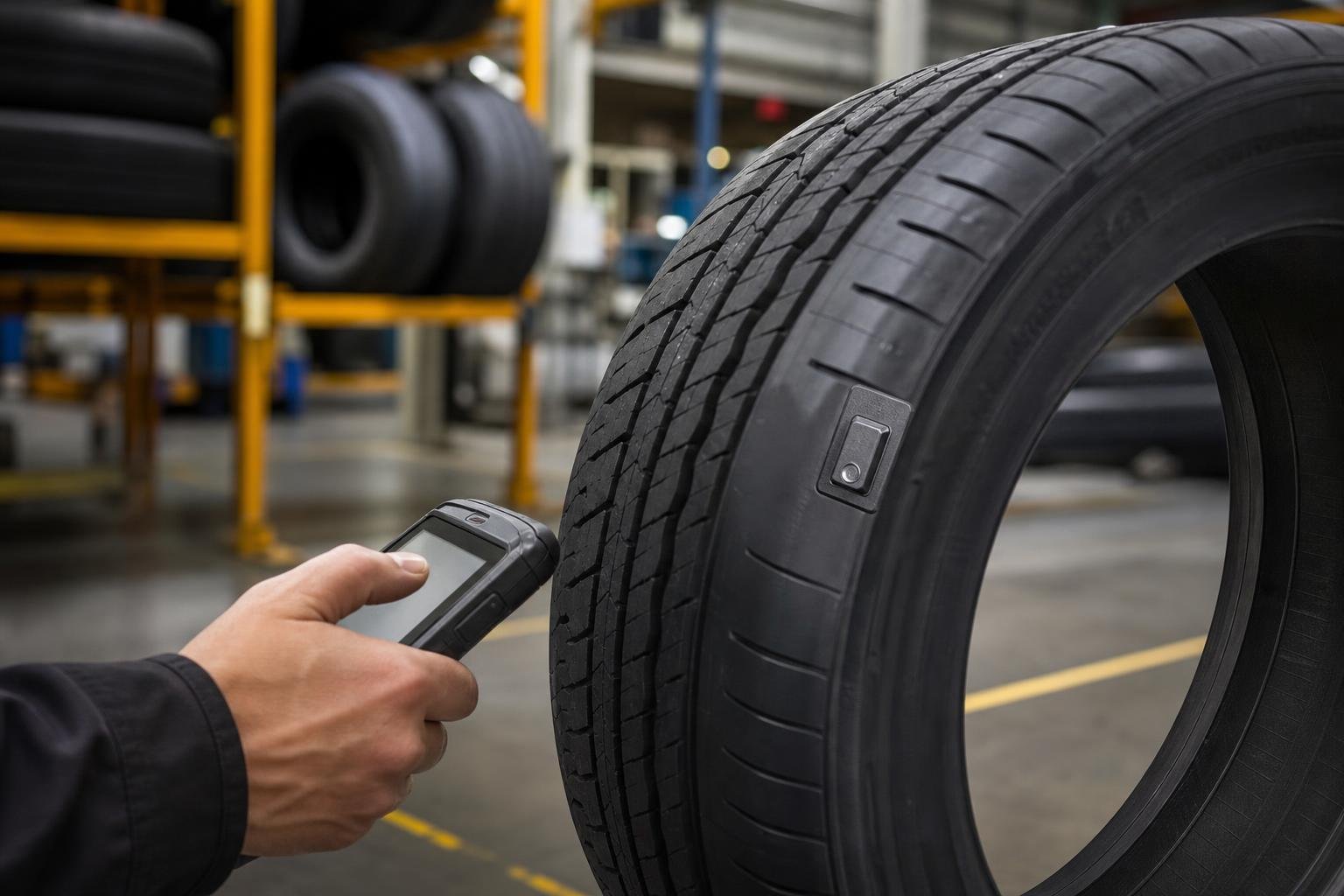

Michelin is adding passive radio-frequency identification, or RFID, tags to some of its tires to give each one a permanent digital identity. The system is designed to track the tire through manufacturing, distribution, servicing, and recycling rather than monitor the driver or vehicle.
What the RFID tag records
The chip and antenna are embedded between protective rubber layers during tire production. Once programmed, the tag’s identifier is permanently locked and includes a company prefix, product reference, and serial number.
Michelin’s tire data service can associate that identifier with details such as the brand, product description, and tire size. Scans made at different points in the tire’s life can then connect the same individual tire to manufacturing, inventory handling, delivery, maintenance, and end-of-life processing.
Why the tags cannot track drivers
The RFID hardware is passive, meaning it has no battery and does not continuously transmit a signal. Information is returned only when a nearby reader sends radio waves that provide the small amount of energy needed for the tag to respond.
That requirement separates Michelin’s RFID system from technologies designed to monitor tire conditions. A passive RFID tag by itself cannot report tire pressure, temperature, or remaining tread depth. Those functions require separate sensors and communication hardware.
Michelin describes tire-mounted monitoring sensors as distinct equipment that measures conditions such as pressure and temperature and communicates using Bluetooth Low Energy. An ordinary tire fitted only with an RFID tag does not gain those capabilities.
Limited information from a tire scan
Because each tag has a permanent identifier, it is theoretically possible to recognize a particular tire if it is scanned more than once. However, using that information to identify or follow a person would require specialized scanning equipment and access to Michelin’s records, or to a comparable database containing the tire’s previous scan history.
Even then, the result would be limited to a potentially incomplete series of locations and dates where the tire was scanned. A tag scan would not directly provide the owner’s personal information.
A study by the National Highway Traffic Safety Administration also found that electronic tire identification does not directly reveal an owner’s identity. In practical terms, Michelin’s RFID system identifies the tire itself, while connecting that identifier to a vehicle or person would require additional records and access that are not generally available.


0 Comments