
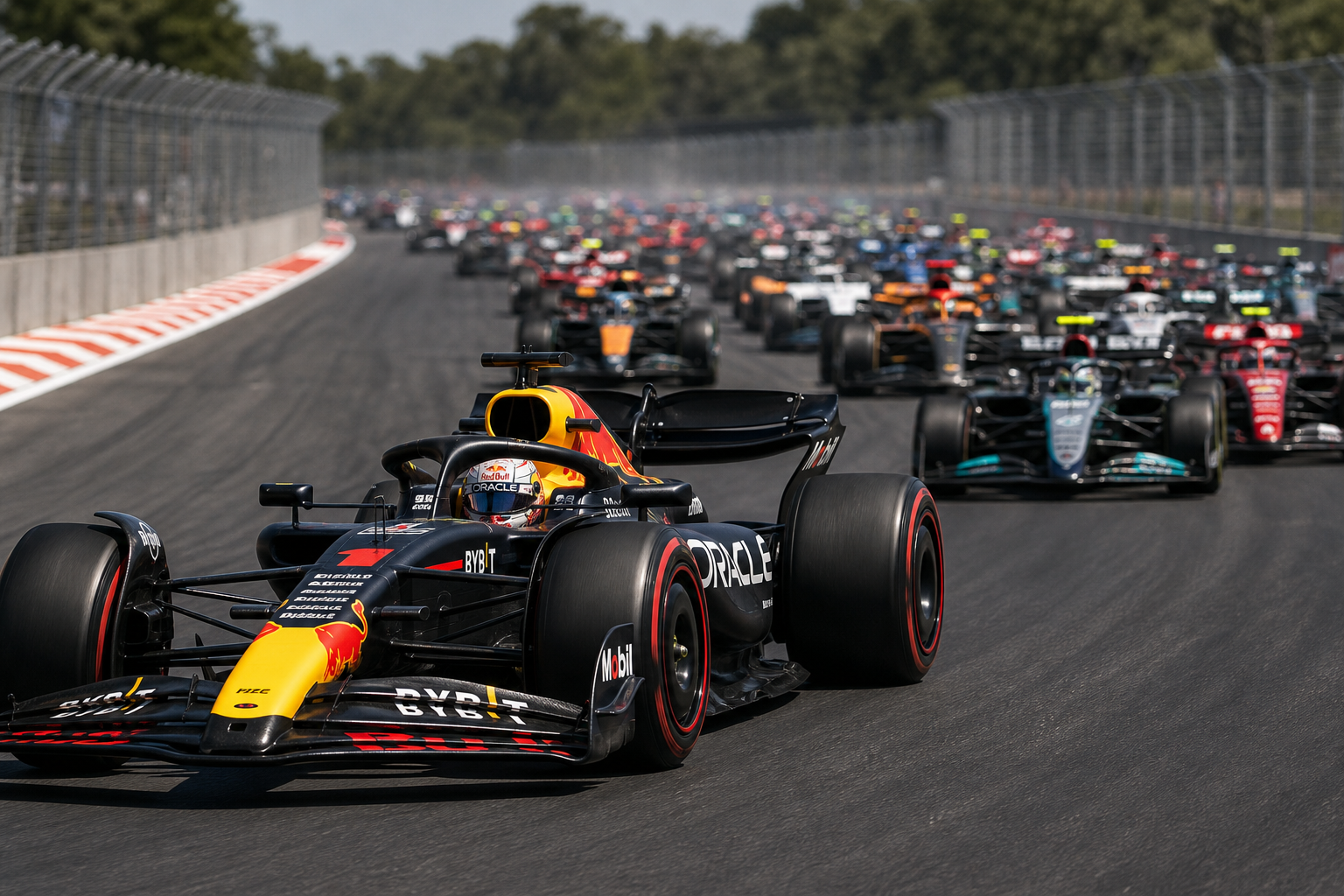

Red Bull’s Max vs 100 concept put Max Verstappen into one of the more unusual pieces of Formula 1 theatre: the reigning world champion starting 101st and trying to work his way through a field of 100 cars. The format was built around a simple question with a very complicated answer — how quickly can an elite F1 driver cut through traffic when the deck is stacked against him?
Verstappen answered it in emphatic fashion. He cleared the 100-car field in just 14 laps and completed the task in 35 minutes, turning what could have been a gimmick into a demonstration of pace, precision and racecraft. The headline number is the lap count, but the more interesting part is how little time it took for the champion to reach the front.
A format designed to make an F1 driver work
Red Bull has leaned into spectacle before, but Max vs 100 was built around a particularly clean motorsport premise: take a driver known for relentless speed, drop him deep in traffic, and see how efficiently he can recover. Starting 101st meant Verstappen had no luxury of a clean opening lap or an easy run to the front. Every pass had to be earned in close quarters.
That kind of exercise is useful because it strips away the usual advantages of running at the front of a Formula 1 field. Clear air, strategy calls and tire management are all central to a standard grand prix. In a stunt like this, the emphasis shifts to judgment, timing and commitment in traffic. A driver can be very fast alone; the harder part is making that speed count while navigating a swarm of slower cars.
Why 14 laps matters
Fourteen laps might not sound like much in isolation, but covering 100 cars that quickly points to how decisive Verstappen was once the run began. Overtaking in Formula 1 is rarely just a question of raw pace. It depends on identifying the right line, using the outside of a braking zone when necessary, and avoiding time loss while still staying within the limits of the car and track.
The 35-minute total adds another layer. It suggests a run that was not only fast, but sustained at a very high level from the first move to the final pass. In a real race, time spent behind slower cars can define the entire afternoon. In this setup, Verstappen’s progress showed how a front-running F1 car, in the hands of a driver operating at the top of his game, can carve through traffic with remarkable efficiency.
What the stunt says about Verstappen and Red Bull
Verstappen’s performance fits the image Red Bull has built around him: a driver who can combine aggression with control and make difficult situations look routine. The team has long positioned its current era around his ability to deliver under pressure, and a project like this plays directly to that reputation.
It also serves Red Bull’s broader media strategy well. The team has become one of Formula 1’s most effective promoters outside traditional race coverage, using controlled, high-production-content to keep its star driver in front of fans. A concept centered on a 101st-place start is the sort of thing that works because it is easy to understand and immediately impressive when the driver produces the expected result.
Why fans respond to this kind of experiment
There’s a straightforward appeal to this type of showcase. It isolates one of the simplest and most recognizable motorsport ideas: the chase. Fans don’t need a championship table or a complicated strategy explanation to follow it. They can see the challenge immediately, then watch whether the driver can do what he’s expected to do.
That simplicity is part of why Verstappen’s 14-lap run stands out. In a sport often defined by tire models, pit windows and race control decisions, Max vs 100 offered a direct measure of pace. The result wasn’t a statistical curiosity so much as a compact illustration of what separates a leading Formula 1 driver from the rest of the field.
For Red Bull, the exercise delivered exactly what it set out to create: a memorable piece of motorsport content built around one of the sport’s most dominant modern drivers. For Verstappen, it was another reminder that when he’s given a clear target and a fast car, the gap between the back of the field and the front can disappear very quickly.

0 Comments