
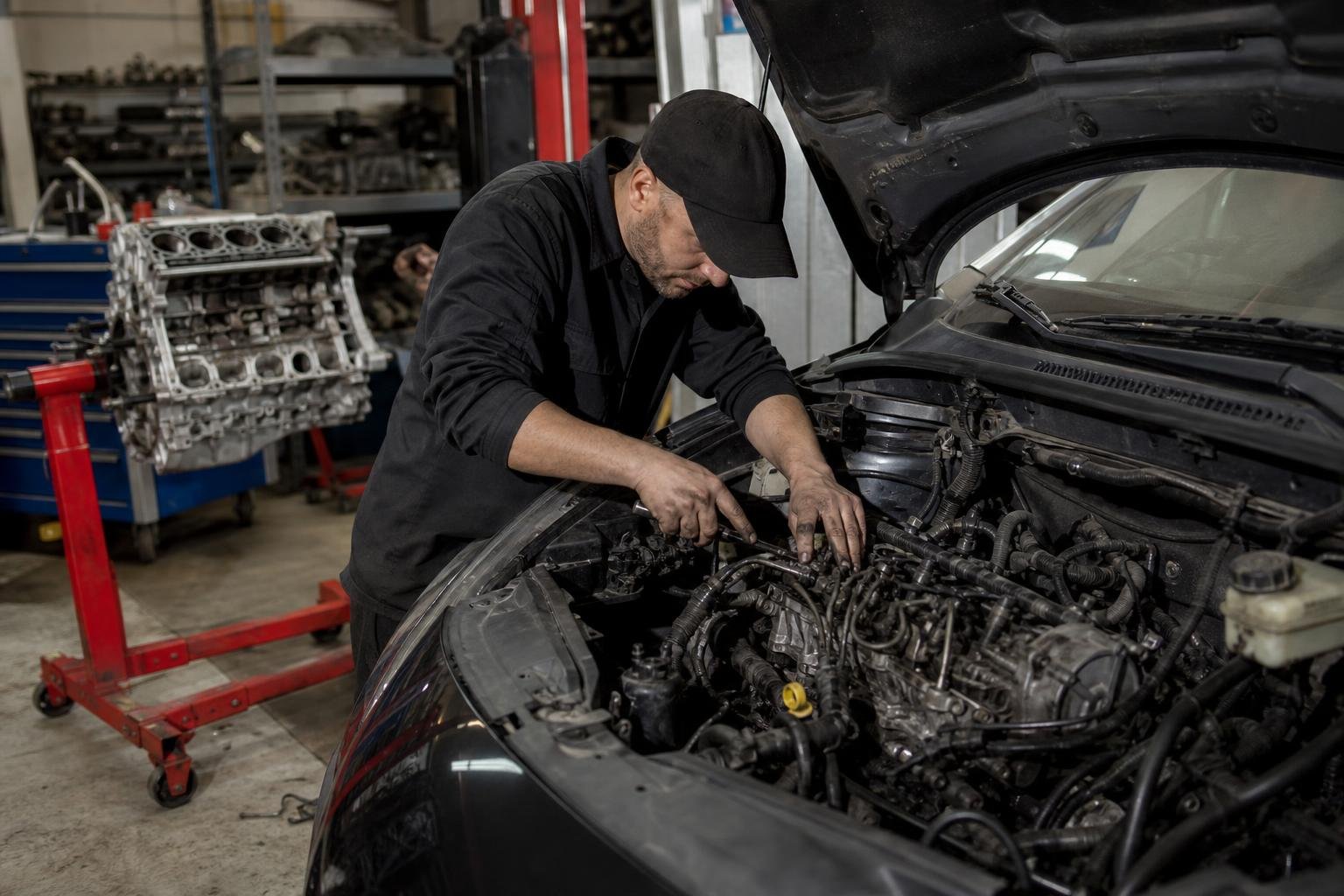

Engine overhauls and engine rebuilds are often treated as interchangeable terms, but they describe different levels of repair. The right option depends on the engine’s condition, its service history, and whether its major structural components remain usable.
What an engine overhaul involves
An overhaul is generally carried out with the engine still installed in the vehicle, although removal may occasionally be necessary. The work can range from a top overhaul to a more comprehensive overhaul, and overhaul kits are commonly available for the required parts.
Typical replacement items can include gaskets, piston rings, washers, pistons, and connecting rods. The cylinder head and block may also be cleaned, while oil and coolant passages and auxiliary tanks can be flushed.
Because an overhaul is selective, it is generally considered a maintenance procedure rather than a complete engine renewal. The rotating assembly and cylinder heads are not normally replaced as a whole. Maintenance records also typically continue from the engine’s existing history.
What an engine rebuild involves
A rebuild requires the engine to be removed from the vehicle and placed on a workbench. Each component is inspected and cleaned, then repaired or replaced as necessary. The objective is to return the engine to standards closer to those of a new powerplant.
Rebuilding can involve installing new parts throughout the engine, with little more than the block necessarily retained. Depending on the condition of the components, the process may also include machining work such as reboring and regrinding.
The larger scope and greater number of replacement parts generally make a rebuild more expensive than an overhaul. Because the work effectively creates a renewed engine, a full rebuild is also typically significant enough to justify beginning a new maintenance record.
When each option may be appropriate
An overhaul may be sufficient when the engine’s history is known, maintenance has been documented, and the underlying components are still in serviceable condition. It can address worn or damaged parts without replacing the engine’s entire internal assembly.
A rebuild, or potentially a complete replacement, may be necessary when a vehicle has little or no service history and the engine’s condition is uncertain. Serious damage to the block, crankshaft, or connecting rods can change the repair decision. Severe heat damage may also be beyond what a rebuild can correct.
Neither repair guarantees new-engine performance
Neither an overhaul nor a rebuild guarantees the exact performance of a brand-new, zero-mileage engine. However, replacing the engine outright may not make economic sense, and a new replacement may no longer be an option for some classic vehicles.
In many cases, either repair can restore a meaningful amount of performance and fuel efficiency. Achieving performance closest to that of a new engine generally requires a comprehensive rebuild or the installation of a new powerplant.

0 Comments