
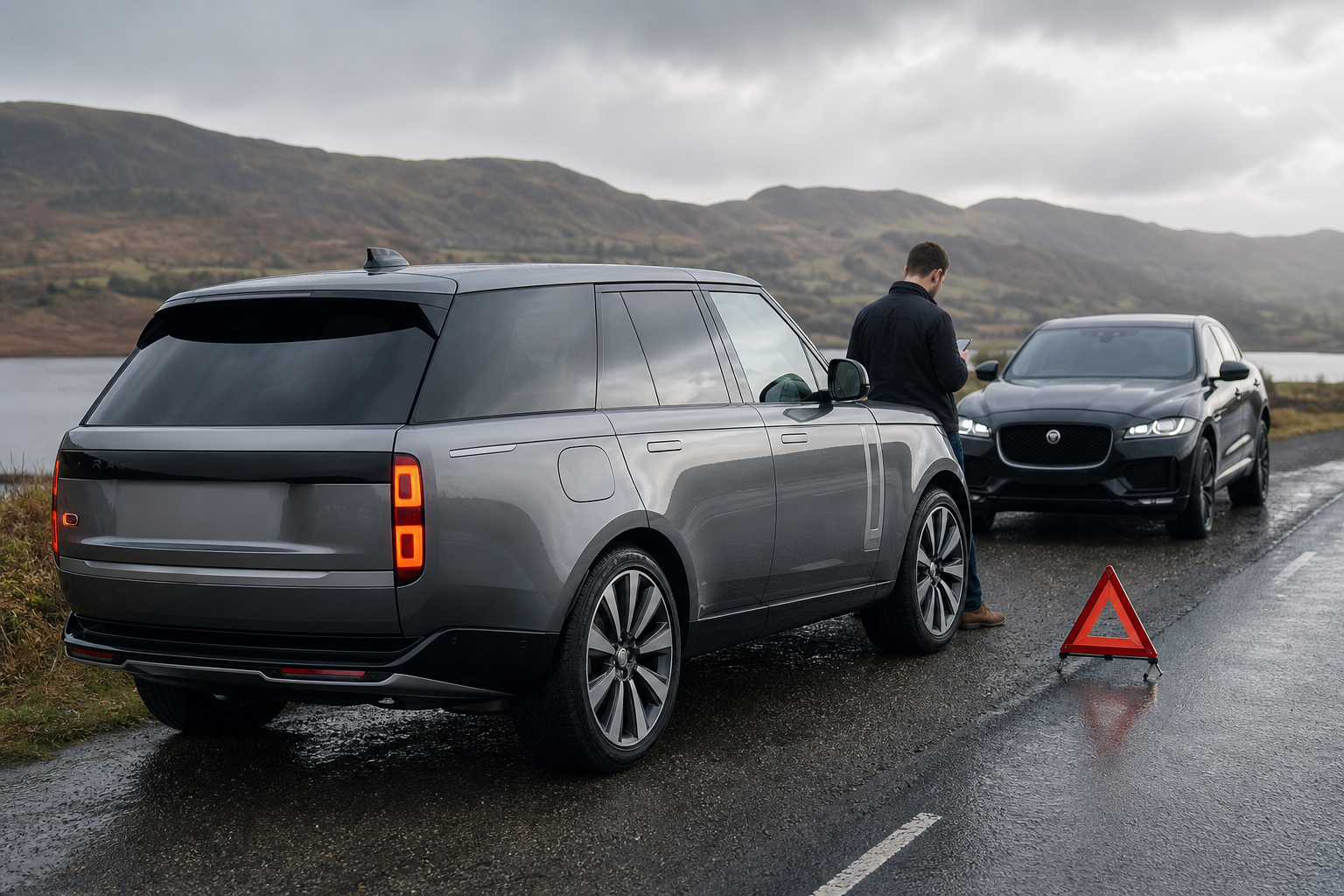

A fault in the electrical system could cause some Jaguar and Land Rover vehicles to lose drive power without warning, turning an ordinary trip into a roadside recovery exercise with remarkably little notice. The available information does not identify the specific models, model years, production numbers, or the exact electrical component involved, so owners should avoid assuming that every Range Rover or Jaguar is affected.
What the Fault Could Mean
The important detail is the potential loss of drive power. That does not necessarily mean the engine itself has mechanically failed. An electrical fault can interrupt communication between control modules, affect power management, or prevent the vehicle from delivering propulsion even when the engine and other systems appear to be operating normally. Without a confirmed technical description, it would be unwise to diagnose the exact failure from the brief notice alone.
For the driver, however, the practical concern is straightforward: the vehicle may no longer respond normally to the accelerator. A sudden reduction or loss of propulsion can be dangerous in moving traffic, during a highway merge, or when pulling into an intersection. Modern luxury SUVs contain enough electronic architecture to make a Victorian railway timetable look refreshingly simple, and a fault in one part of that network can have consequences far beyond a single warning light.
Which Vehicles Are Included?
The notice refers broadly to “some” Range Rover and Jaguar vehicles, but it does not list the affected model names, model years, vehicle identification numbers, or market-specific recall information. That distinction matters. Jaguar and Land Rover have sold numerous vehicles under both brands, and a general reference to the manufacturers does not mean every Range Rover, Jaguar sedan, or Jaguar SUV is involved.
Owners should wait for the official vehicle-specific information rather than relying on social media posts or assumptions based on the brand alone. The VIN is normally the most reliable way to determine whether an individual vehicle is subject to a safety campaign or service action. Dealers and the relevant national vehicle-safety authority can provide the definitive answer once the applicable campaign information is published.
What Owners Should Do Now
If a vehicle experiences an unexpected loss of propulsion, the driver should concentrate on getting out of traffic safely. Turn on the hazard lights, use available momentum to move toward the shoulder or another safe location, and call roadside assistance if the vehicle cannot be driven normally. Repeatedly cycling the ignition or attempting to continue the journey may not solve an electrical fault and could leave the vehicle in an awkward position if the problem returns.
Owners should also record any warning messages, dashboard lights, unusual behavior, and the circumstances in which the power loss occurred. A photograph of the instrument panel can be useful, provided it is taken only after the vehicle is safely stopped. That information may help a dealer identify whether the incident matches the reported fault.
Even if the vehicle has not lost power, a driver who receives an official notification should follow the instructions supplied by Jaguar Land Rover or the dealer. If the notice says to stop driving, that advice takes priority over convenience. A luxury SUV is expensive enough without adding a tow bill and a preventable collision to the ownership experience.
Why the Missing Details Matter
A proper safety notice should eventually clarify the affected vehicles, the failure mechanism, the risk to occupants and other road users, and the remedy. It should also explain whether dealers will inspect the vehicle, update software, replace a component, or carry out another repair. None of those details are available in the brief information currently provided.
That means the sensible response is neither panic nor complacency. Range Rover and Jaguar owners do not need to assume their vehicles are about to shut down, but they should pay attention to official communications and check their vehicle’s status through an authorized channel. The difference between a general warning and a confirmed campaign is the VIN-specific information that has not yet been supplied.
For now, the central issue is simple: an electrical fault may cause affected vehicles to lose drive power without warning. Until Jaguar Land Rover identifies the exact models and remedy, owners should treat any unexpected propulsion loss as a safety problem, not merely an irritating electronic glitch.

0 Comments