
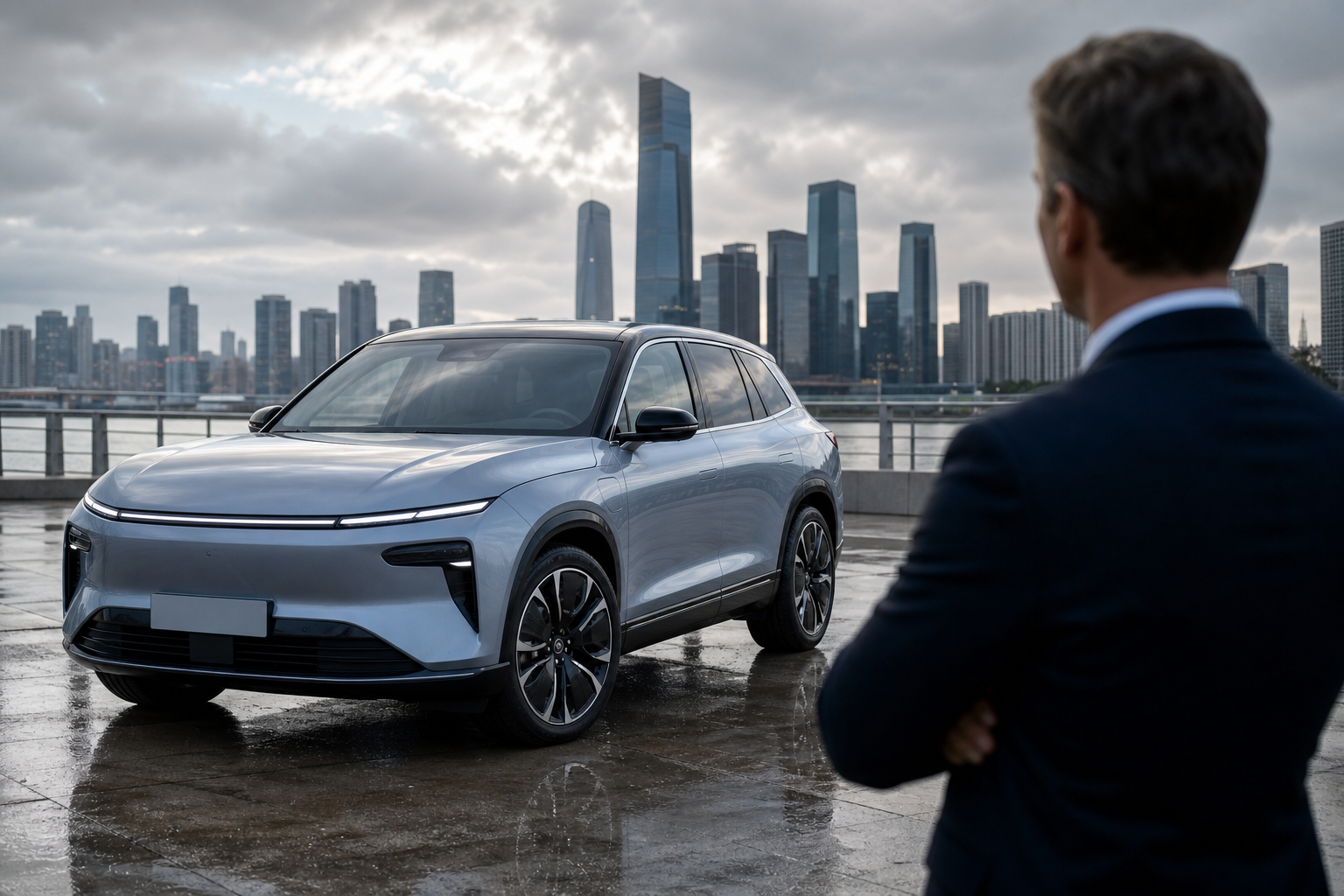

Some Chinese cars are arriving in Europe with prices that appear so aggressive they risk confusing the market rather than conquering it. That is the warning from BMW’s top executive, who says “incomprehensible pricing is dangerous” and argues that certain price points “make no business sense.”
It is a short remark, but a pointed one. The BMW boss did not identify specific models, manufacturers, or prices, so this is not a formal accusation aimed at one particular rival. It is instead a criticism of a pricing strategy that may look attractive in a showroom while raising awkward questions about how the business is meant to work over time.
Low Prices Can Be Powerful—and Peculiar
Price is one of the fastest ways for a new manufacturer to get noticed. A relatively unknown brand can spend years trying to build trust, or it can arrive with a vehicle offering more equipment than established rivals at a lower price. The latter approach tends to produce headlines, showroom traffic, and a great many uncomfortable meetings in the offices of incumbent automakers.
There is nothing inherently wrong with aggressive pricing. New companies often accept slim margins while they establish distribution networks, build brand awareness, and persuade customers to take a chance on an unfamiliar badge. The trouble begins when the advertised price seems disconnected from the costs involved in developing, building, shipping, supporting, and warranting the vehicle.
A car is not merely a collection of batteries, motors, steel, software, and fashionable lighting signatures. It also requires factories, logistics, regulatory compliance, dealer operations, service facilities, parts supply, customer support, warranty reserves, and a substantial amount of corporate overhead. None of those items becomes free simply because a vehicle is being introduced by a new entrant.
That is the apparent contradiction behind the BMW executive’s warning. A low price may be excellent news for the buyer in the short term, but it can become harder to explain if the company is expected to maintain the same price, support the vehicle for years, and expand its sales operation across multiple European countries.
Why “Incomprehensible” Pricing Can Be Dangerous
Automotive pricing is usually built around a ladder. Entry-level models bring customers into the brand, better-equipped versions carry higher margins, and premium products provide the financial justification for expensive engineering and marketing programs. Buyers may grumble at the numbers, naturally—car shoppers have been doing that since the first salesman offered an optional radio—but they generally understand the structure.
A price that appears dramatically lower than expected can disrupt that logic. It may force competitors to cut their own prices, reducing profitability across the segment. It may also make customers question whether a more expensive rival is genuinely better or merely wearing a more familiar badge.
There is another problem. A discounted launch price can create an expectation that becomes difficult to reverse. Customers who buy into a brand because it undercuts established competitors may not react kindly when prices rise later to reflect normal operating costs. The manufacturer then faces an unpleasant choice: preserve an unsustainable price, or risk losing the buyers it worked hardest to attract.
Residual values could also become part of the calculation. New-car pricing influences what used examples are worth, and repeated discounts can make owners nervous about depreciation. A buyer may be delighted to save money on the day of purchase, only to discover that the same aggressive pricing has weakened the value of the car when it is time to trade it in. That is not a problem unique to Chinese brands, but it is especially important for companies still trying to establish long-term confidence.
Europe Is Not a Single, Simple Market
Pricing a car across Europe is a complicated exercise. Taxes, incentives, import arrangements, equipment requirements, labor costs, financing conditions, and consumer preferences vary from one country to another. A vehicle that appears attractively priced in one market may be less compelling elsewhere once local charges and ownership costs are taken into account.
Support infrastructure matters, too. A manufacturer entering Europe must provide parts, technical training, software support, warranty administration, and repair capacity. Electric vehicles add their own demands, including battery diagnostics and high-voltage service capability. These are not glamorous subjects, but they are the difference between a promising product launch and a customer discovering that a minor fault has turned into a long-distance expedition.
That makes the relationship between price and support particularly important. A vehicle can be excellent value if the company behind it has the resources and commitment to stand behind the product. The same price can look less reassuring if buyers are uncertain about how quickly repairs will be completed, where parts will come from, or how the brand will behave five years from now.
What the BMW Warning Reveals
BMW has obvious reasons to watch pricing closely. It operates at the premium end of the market, where customers are paying not only for transportation but also for engineering, perceived quality, brand reputation, dealer support, and resale confidence. A rival offering a large amount of equipment for substantially less money challenges that entire formula.
That does not mean every lower-priced Chinese vehicle is a threat, or that every established automaker deserves its traditional premium. Buyers are perfectly entitled to ask whether a familiar badge justifies a higher price. Established manufacturers cannot complain about competition while treating their own pricing as sacred.
Still, there is a difference between competitive pricing and a price that appears detached from the economics of selling and supporting the vehicle. BMW’s warning seems aimed at that distinction. The concern is not simply that Chinese brands are cheap. It is that some prices may be difficult to reconcile with a sustainable business model.
The manufacturers involved may have perfectly rational explanations. They could be prioritizing market share, using temporary launch incentives, benefiting from production advantages, or accepting lower margins while they build a customer base. Without specific model-level information, it would be wrong to assume that an aggressive price automatically means the vehicle is being sold at a loss.
But the question remains useful: how long can that price last, and what happens after the first wave of buyers has signed on?
Buyers Will Notice More Than the Sticker Price
For shoppers, the immediate appeal is obvious. A lower price can make advanced driver-assistance systems, generous standard equipment, and electric powertrains more accessible. It can also pressure older manufacturers to stop charging extra for features that have been standard elsewhere for years, a habit that has produced some truly imaginative option sheets.
The sensible response is to look beyond the monthly payment. Buyers should examine warranty coverage, service locations, parts availability, charging support where relevant, software update policies, insurance costs, and expected resale value. Those details may not create the same showroom sparkle as a panoramic display screen, but they have a habit of becoming important later.
BMW’s chief executive has not declared that Chinese cars are poor value. He has raised a narrower and more consequential concern: prices that do not appear to make commercial sense can unsettle the entire market. If those prices prove durable, competitors will have to respond. If they do not, early customers may discover that the cheapest part of ownership was the moment they signed the paperwork.

0 Comments