
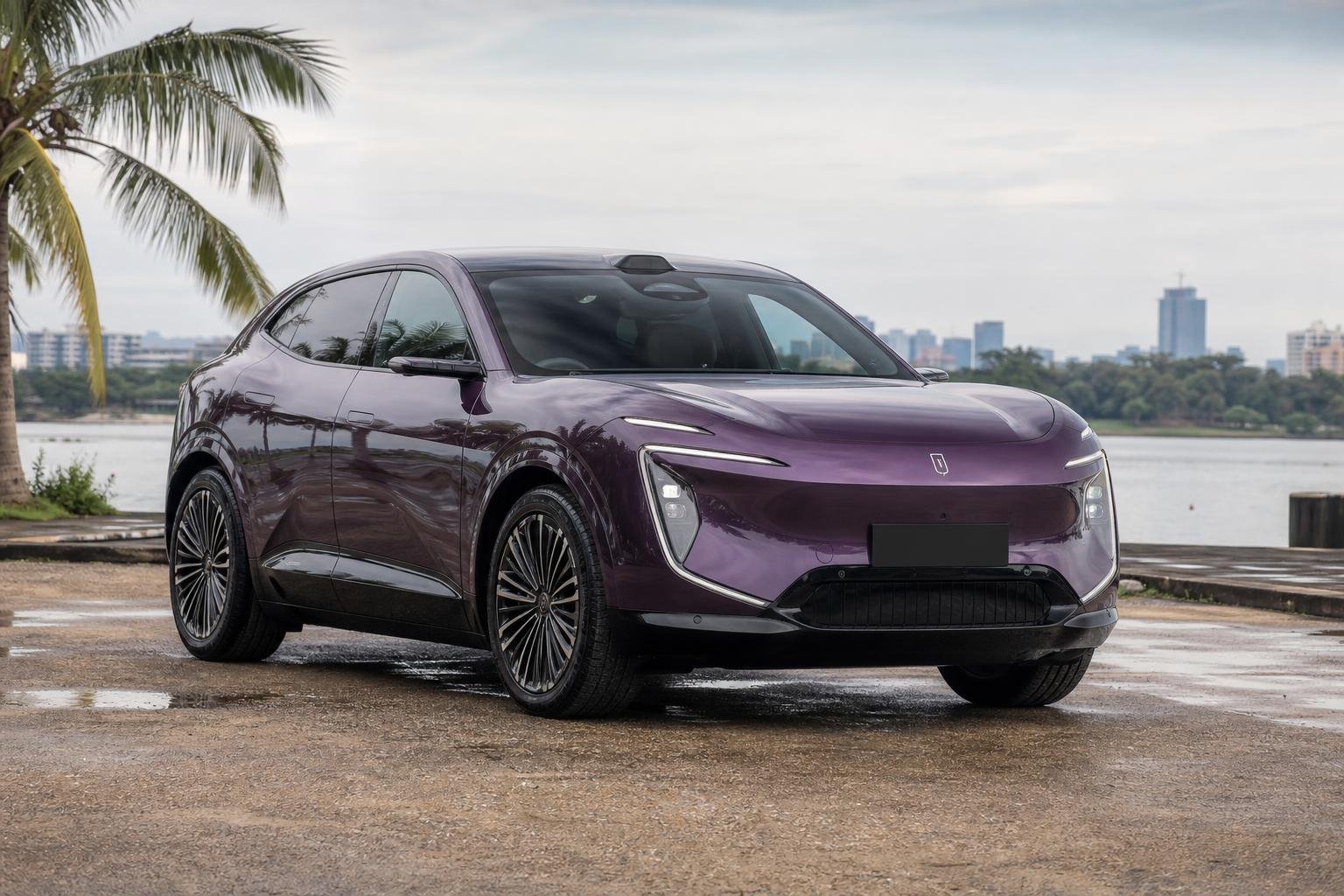

The Avatr 07 shows how quickly China’s electric-vehicle market is advancing. Positioned as a smaller sibling to the Avatr 11, the 07 combines distinctive styling, premium materials, advanced connected systems, and improved driver-assistance functions in a package that feels considerably more mature than its larger counterpart.
Avatr is a joint venture involving Changan, Huawei, and CATL. The brand has also invested in design, including a studio in Munich led by chief designer Nader Faghihzadeh, known for designing the BMW i8. That effort is visible in the 07, which avoids closely following the styling of established rivals.
A Distinctive Exterior
At 4,825 mm long, the 07 is slightly shorter than the 4,880-mm Avatr 11. Its design follows the same general theme as the larger model, but uses a lower waistline and a more rounded rear profile. Large wheel arches and sculpted side panels add visual interest, although the tested car’s black 20-inch wheels made it appear somewhat underwheeled against its purple bodywork.
The 07 is intended to appeal to a broader audience than the 11 while retaining a clear design identity. Its appearance is not built around a collection of familiar styling cues from other SUVs, giving it a more individual character.
A High-Quality Cabin With Some Frustrations
Inside, the 07 makes a strong impression with Nappa leather seats, Dinamica microfiber suede, and extensive use of carefully finished materials. The cabin includes a thin, 35.4-inch display stretching across the base of the windshield. It can show information such as tire pressure, temperatures, power, and multimedia data.
Both front seats offer heating, ventilation, and massage functions. A reclined “zero gravity” mode is available, while other cabin scenarios include a fireplace effect and a pet mode that maintains the interior temperature and displays a message for people outside the vehicle.
Some of the minimalist solutions are less successful. Airflow direction is adjusted through the touchscreen rather than directly at the vents, and the steering wheel uses a yoke design that becomes awkward during parking maneuvers. Steering-wheel and mirror adjustments are also accessed through the screen, while push-button interior door releases add another unconventional touch.
Rear-seat space is a particular strength. The tested 07 provides substantial legroom, and rear controls can move the front passenger seat forward, adjust the outboard seatbacks, operate seat heating, and control the full-length moonroof sunshade. Folding the rear seats expands cargo capacity from 735 liters to 1,645 liters, with an additional 90-liter front trunk.
Different Powertrains for Different Markets
The car tested in Sri Lanka used a 99-kW rear motor because of the market’s punitive vehicle taxes. With a 2,360-kg curb weight, it reached 62 mph in 13 seconds. Despite that modest acceleration, its 365 Nm of torque helped the 07 feel less strained than the figures suggest.
Chinese-market versions include a 305-kW rear-wheel-drive model priced at the equivalent of $34,300. A tri-motor all-wheel-drive variant produces 712 kW and 996 Nm, with a claimed 0-to-62-mph time of 3.7 seconds and an equivalent price of approximately $41,755.
The tested version handled well with its double-wishbone suspension, but its firm ride transmitted potholes and smaller imperfections more noticeably than expected from such a premium-feeling cabin. Air suspension and continuous damping control are available in other markets, but not on the test vehicle.
Connected Driving Systems
The 07 uses millimeter-wave radar alongside cameras for its semi-autonomous systems, supported by Huawei processors and related technology. In the tested region, it could not perform the same self-driving functions available through Tesla’s FSD system, but it did offer self-parking and connected parking features.
The vehicle can park itself centered in a space or closer to one side, which can help when parking beside a wall. Walk-away parking allows the driver to leave the vehicle while it completes the maneuver, and the car can also be summoned through its connected app. Compared with the older Avatr 11, these functions operated more smoothly around pedestrians and busy traffic.
The Avatr 07 is not without compromises, particularly in its ride comfort, yoke steering wheel, and screen-based controls. However, its quality, space, technology, and more cohesive execution make it a strong demonstration of the rapid development taking place among China’s leading EV manufacturers.
0 Comments