
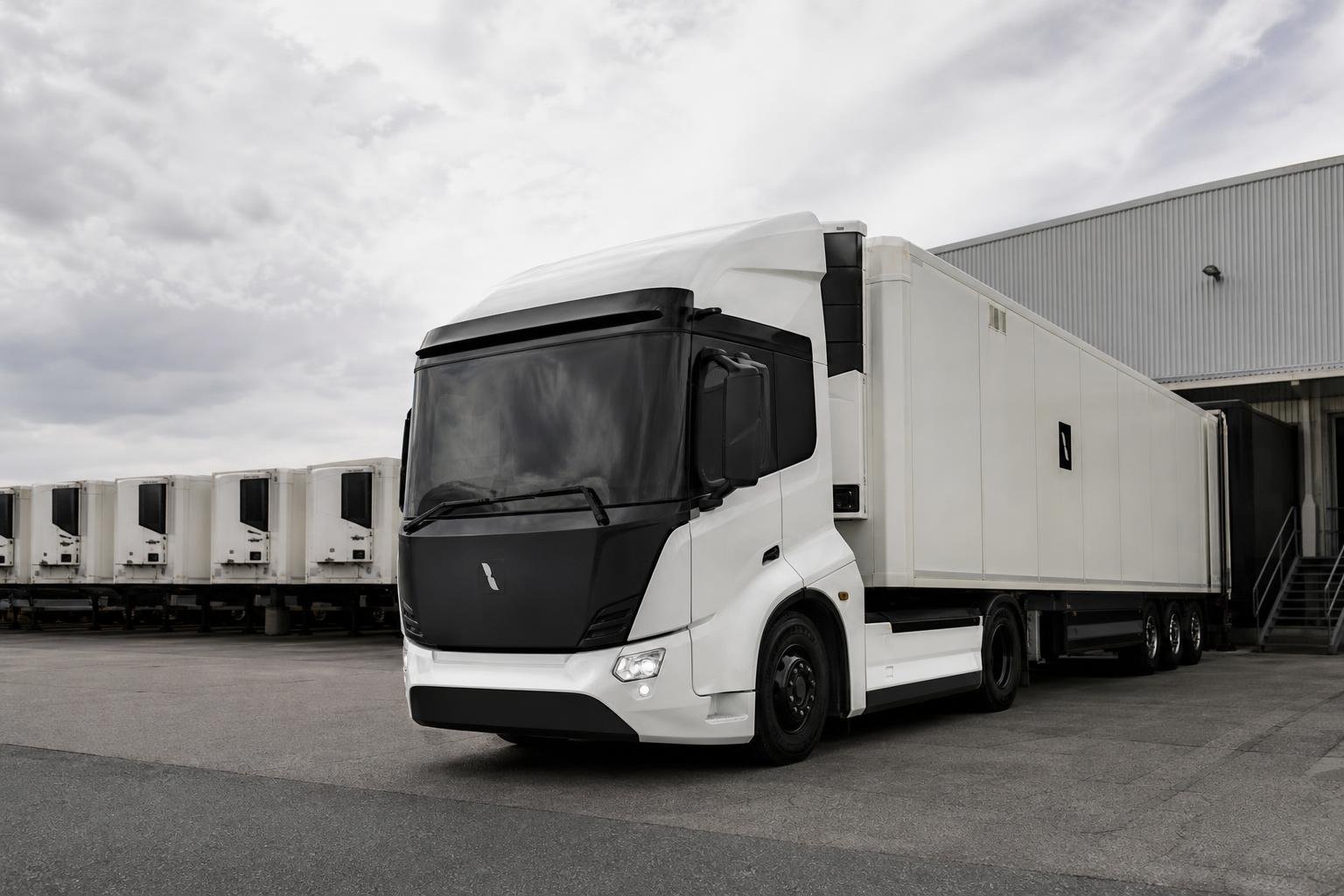

Electric trucks have long faced a difficult sales pitch: their operating costs can be lower than diesel vehicles, but their purchase prices and charging requirements are usually higher. A sharp rise in diesel prices is changing that calculation for some freight operators, particularly fleets running predictable, heavily used routes.
Roozbeh Charli, CEO of electric freight and autonomous-technology company Einride, told InsideEVs that customer interest in electric trucking has increased as fuel prices have climbed. Customers that previously planned to revisit electrification later are now asking how quickly they can begin.
Diesel volatility is changing the fleet calculation
Diesel is one of the largest variable expenses for a trucking company. When prices rise suddenly, carriers can sometimes recover part of the increase through fuel surcharges, but those mechanisms may lag behind pump prices and do not eliminate the underlying exposure.
The U.S. Energy Information Administration tracks weekly on-highway diesel prices, which have moved substantially higher during the current period of market disruption. Supporting reporting has also described trucking companies facing fuel-cost increases of roughly 40% or more in some operations. Those increases affect not only long-haul carriers, but also delivery companies, private fleets and manufacturers that depend on regular freight movements.
For fleet managers, the appeal of an electric truck is therefore not simply an environmental argument. Electricity prices can also fluctuate, but charging at a depot can offer greater cost predictability than purchasing diesel on the open road. That predictability becomes more valuable when a company is trying to commit to freight rates months in advance.
Einride says its sales pipeline is growing
Einride, founded in 2016, combines electric freight services with software intended to help customers manage transportation operations. According to the company, its sales pipeline tripled year over year during the first half of 2026, while its conversion rate doubled.
Those figures are company-reported rather than an independent measure of the entire electric-truck market. Still, they indicate that higher fuel costs may be turning general interest into commercial discussions. Charli said some potential customers are no longer treating electric trucks as a distant option and are instead asking to start deployments earlier than planned.
Einride has announced plans to deploy 500 Tesla Semis for Amazon and other North American customers, a move that would reportedly triple its fleet. The scale of that plan is important because electric trucking economics often depend on utilization. A truck that spends most of its day moving freight and returns to a known depot is easier to charge efficiently than one operating unpredictable long-distance routes.
Why middle-mile routes are the early opportunity
Charli identified “middle-mile” work—often involving repeated journeys of roughly 100 to 200 miles—as a particularly promising application. These routes can allow a truck to return to base at the end of a shift, where it can recharge before its next assignment.
That operating pattern addresses one of the central challenges of battery-electric heavy trucks. The vehicle does not need to depend entirely on public charging infrastructure, and the fleet operator can plan charging around loading, unloading and driver schedules. High utilization also gives the truck more opportunities to offset its higher upfront cost through reduced energy and maintenance expenses.
Electric trucks are not automatically cheaper in every duty cycle. Purchase prices, chargers, utility upgrades, financing and potential downtime all have to be included in a total-cost-of-ownership analysis. A truck that travels long distances without reliable charging access may still be difficult to electrify, even when diesel is expensive.
Weather, payload, terrain and charging speed also influence the result. Heavy loads and highway speeds can increase energy consumption, while a depot may require substantial electrical work before multiple trucks can charge simultaneously. The strongest business cases are therefore likely to begin with routes that are repetitive, well understood and compatible with existing depot operations.
The Tesla Semi adds visibility and capability
Einride’s CEO also described the Tesla Semi as a major development for the U.S. electric-truck market, citing its expected range, performance and pricing position. The vehicle’s delayed arrival has attracted considerable attention because battery-electric Class 8 trucks require both vehicle technology and an ecosystem of charging, service and financing support.
Large fleet commitments could help build that ecosystem. In addition to Einride’s planned deployment, a coalition of shippers including PepsiCo and Microsoft has been associated with an order for 2,500 electric trucks. Fast Company reported that the arrangement is designed to reduce the upfront barrier by using financing and leasing structures, rather than requiring every shipper to purchase trucks outright.
That approach addresses an important weakness in early electric-truck adoption. Even if energy savings eventually justify the investment, a company may not want to absorb the full cost of the truck and charging equipment on its balance sheet. Leasing, grants and other financing mechanisms can spread the expense over the vehicle’s working life.
Fuel prices alone will not complete the transition
High diesel prices can accelerate fleet interest, but they are not a guarantee of widespread electrification. If diesel prices fall sharply, some operators may delay purchases, particularly where electric trucks still carry a substantial upfront premium. Incentive programs and charging investments can also influence whether a promising pilot expands into a large fleet order.
The emissions case remains significant. Heavy-duty trucks represent a relatively small share of the total vehicle fleet but consume large quantities of fuel and contribute heavily to roadside pollution. The International Council on Clean Transportation has argued that eliminating diesel exhaust exposure is an important public-health benefit of zero-emission commercial vehicles.
The immediate significance of the current fuel-price shock is that it is forcing operators to examine their routes more closely. Electric trucks do not need to replace every diesel tractor at once. For fleets with high-mileage, depot-based operations, they can begin as a targeted hedge against fuel volatility and as a way to reduce local emissions.
That makes the business case more practical than a broad promise that every truck will soon become electric. As vehicle availability improves and financing models mature, the question for many fleet operators is shifting from whether electric freight is possible to which routes can support it profitably.
Sources: InsideEVs; Fast Company; Marketplace.



0 Comments