
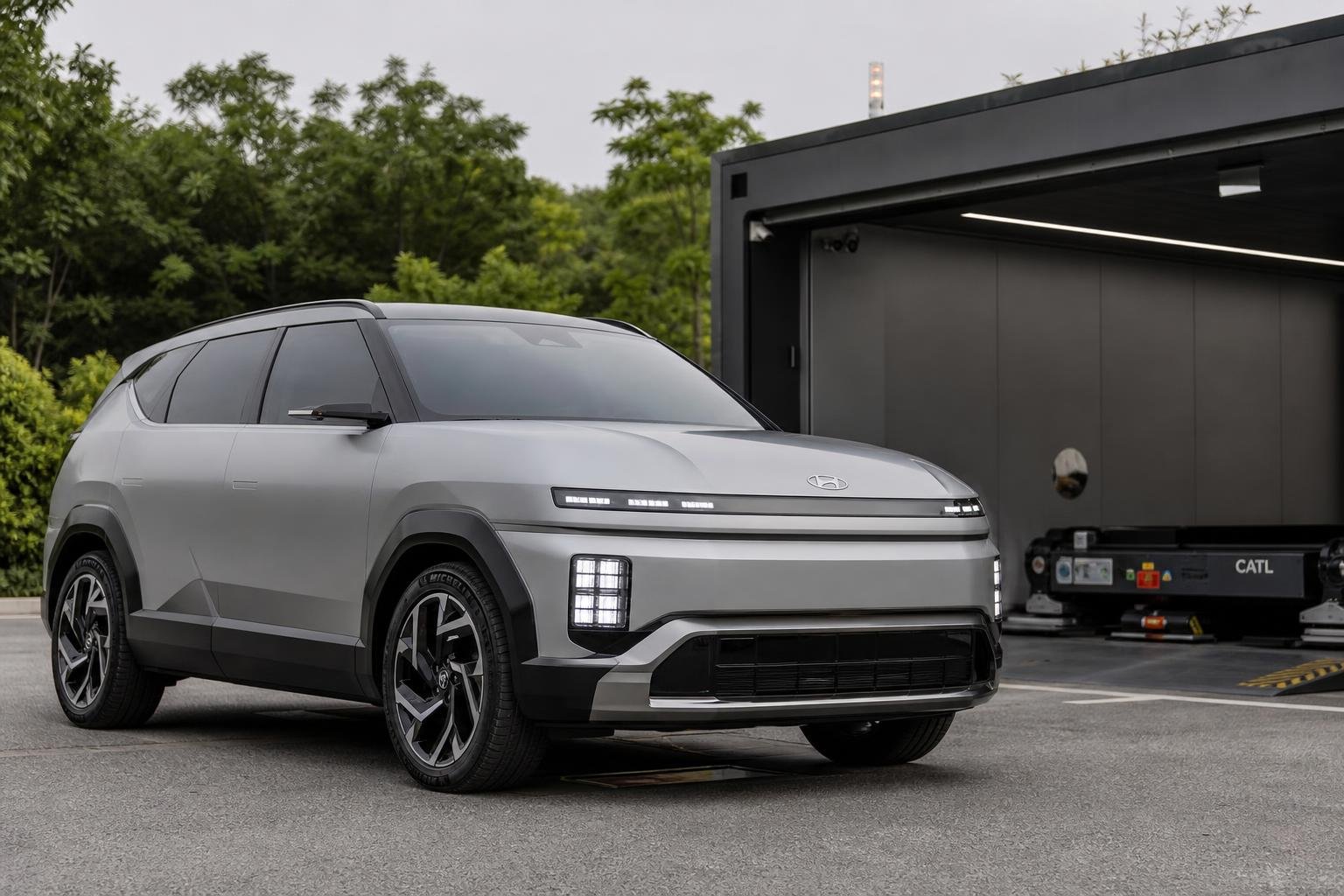

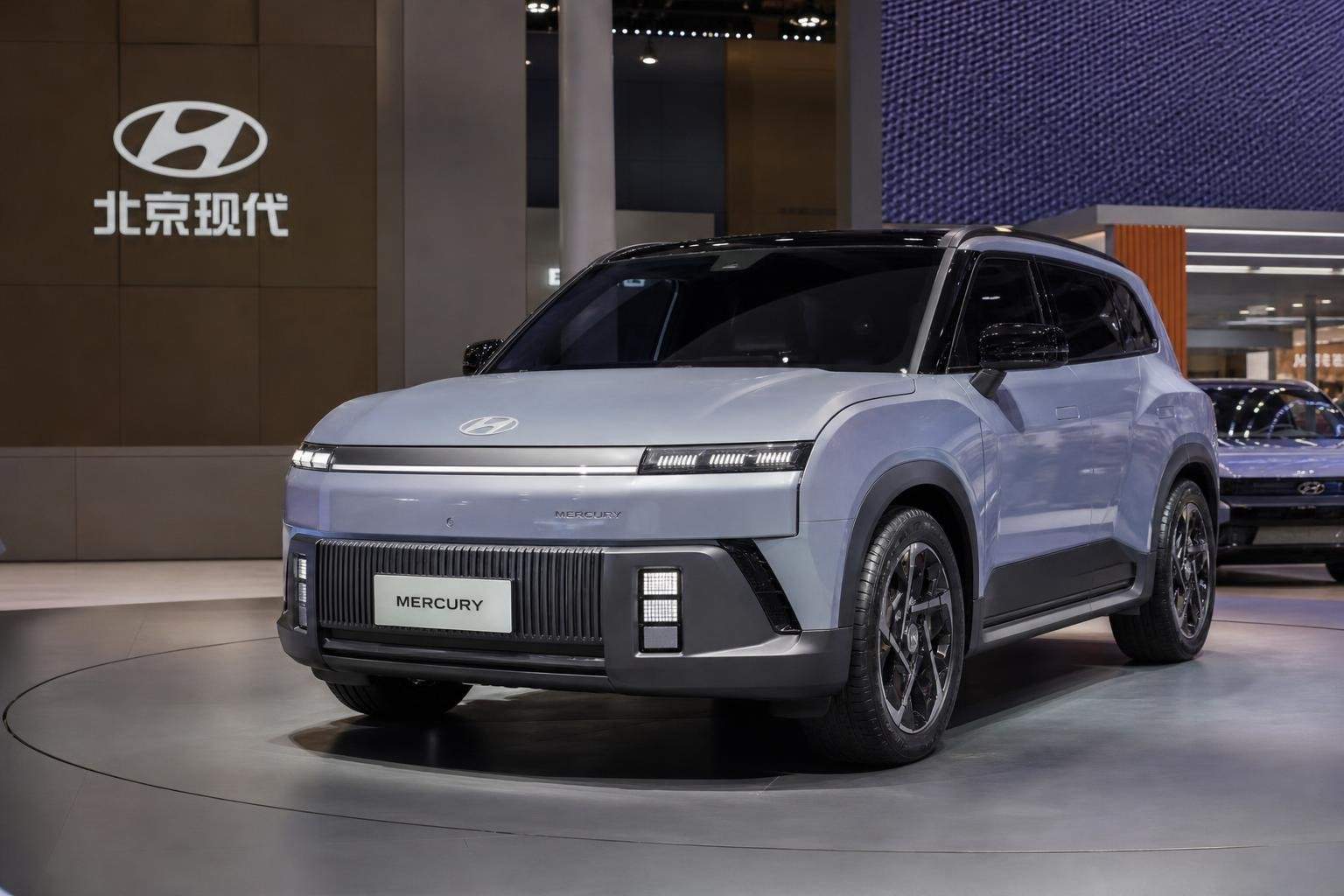
Hyundai is bringing an unexpected name back to the automotive world. The Mercury concept, unveiled at Auto Guangzhou 2026, is a small electric SUV designed specifically for China—and it may eventually offer something more consequential than an unusual badge: a battery-swapping option developed with CATL.
The name has no connection to Ford’s discontinued Mercury brand, which disappeared in 2011 after more than seven decades. Hyundai selected Mercury as part of its celestial naming strategy for the China-focused Ioniq Planet lineup, using the name of the planet closest to the Sun for its third model.
More importantly, the concept shows Hyundai adapting both its products and its technology strategy to a Chinese market where electric vehicles are evolving quickly and battery swapping is gaining traction alongside conventional charging.
A China-specific Hyundai with a sharp design
Hyundai describes the Mercury as a subcompact SUV, although its styling is considerably more dramatic than that description might suggest. The concept has a sharply tapered front end that the automaker calls a “shark nose,” a broad stance and a distinctly angular body. Finished in Citrine Neon, it appears designed to stand apart from Hyundai’s more familiar global products.
The show vehicle rides on 20-inch black wheels fitted with Michelin Pilot Sport tires and has elevated ground clearance. A large two-piece rear diffuser and chunky roof spoiler give the rear a more performance-oriented appearance. The spoiler incorporates a two-piece vertical brake light, adding another sharp-edged detail to the design.
One less obvious feature is the absence of pop-out door handles. The design reflects a new safety regulation in China that effectively bans this setup, rather than simply representing a styling preference. It is another example of how local regulations can influence exterior design, even on an attention-grabbing concept vehicle.
The battery-swapping idea changes the ownership equation
Hyundai has not released the Mercury’s battery capacity, electric-motor output, driving range or charging performance. The small electric crossover is intended for launch in China next year, but its technical specifications remain undisclosed.
Hyundai has, however, confirmed that a second version is being developed with battery-swapping capability in cooperation with CATL. Instead of connecting the vehicle to a charger and waiting for the battery to replenish, the driver would enter a dedicated station where the depleted pack is automatically removed and replaced with a charged unit.
The appeal is straightforward: speed. Replacing a depleted battery with a fully charged one takes around 100 seconds, making the process comparable to a conventional refueling stop. For drivers without convenient home charging, or for those who regularly travel long distances, that difference could matter more than improvements in peak charging power.
Battery swapping also requires more than a compatible vehicle. The station network must maintain an inventory of compatible charged packs, while the vehicle and battery system need to support automated removal and installation. Swapping is therefore a different infrastructure model from conventional charging, requiring coordination between the vehicle manufacturer, battery supplier and station operator.
CATL is building the infrastructure Hyundai needs
The Mercury’s proposed swap version is arriving as CATL expands its Choco-Swap network in China. The battery manufacturer has already built more than 2,500 swapping stations and plans to exceed 3,000 by the end of the year. CATL expects the network to reach 6,000 locations in 2027 across 297 Chinese cities.
That scale is important because battery swapping only becomes useful when drivers can depend on station availability along the routes they actually use. A single station can make the technology convenient for a limited local area. A large network can turn it into a practical alternative to charging, particularly for urban drivers and high-mileage users.
There are still unanswered questions. Hyundai has not said whether the swap-capable Mercury will use the same battery options as the standard vehicle, how battery ownership would be handled or whether customers would purchase the pack outright. Those details could affect the technology’s cost, resale implications and long-term appeal.
Hyundai is reshaping its China EV strategy
The Mercury is part of a wider China-specific product plan rather than an isolated design exercise. Hyundai is also preparing a range-extending version of the Ioniq V for next year, followed by a production version of the Earth concept in 2028. Two additional new-energy vehicles are scheduled for 2029.
In China, the term “new-energy vehicle” includes battery-electric vehicles as well as range-extended EVs, fuel-cell vehicles and plug-in hybrids. That broad definition reflects the variety of powertrain solutions included in the country’s new-energy vehicle category.
Hyundai’s decision to create vehicles specifically for China acknowledges that a global product strategy may not be enough in the country’s crowded EV sector. Local consumers are being offered an unusually wide range of body styles, digital features and energy solutions, while manufacturers are moving quickly to tailor vehicles to local regulations and infrastructure.
A concept with a practical engineering question behind it
The Mercury’s styling may attract attention first, but its potential battery-swapping system is the more important development. The concept could become a test of whether Hyundai can combine a China-specific vehicle, CATL’s battery technology and a growing swap network into a coherent ownership experience.
Battery swapping will not automatically replace conventional charging. It depends on compatible vehicles, station coverage and a business model that customers understand. But with CATL expanding its network and Hyundai preparing a compatible SUV, the idea is moving beyond a theoretical alternative. The Mercury could give the system a more mainstream vehicle application—provided the production model preserves the concept’s compatibility without turning the technology into an expensive novelty.
Sources: Motor1.
0 Comments