
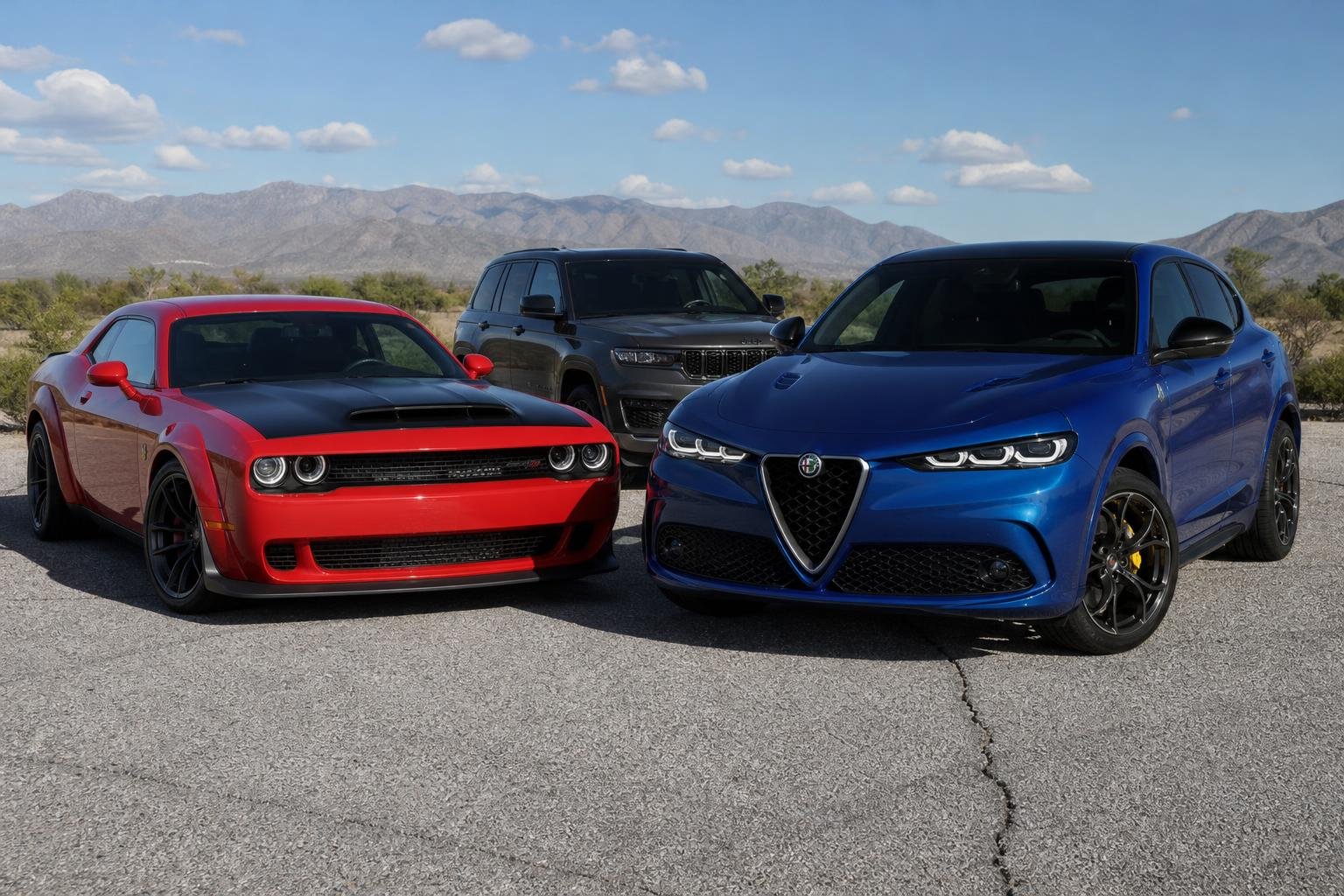

Stellantis is pulling most of its European factory racing programs out of the world championship spotlight, but the company says enthusiasts will get something in return: more performance-focused road cars.
Peugeot will end its FIA World Endurance Championship effort after the 2026 season, while Citroën and Opel will complete their Formula E commitments through Season 13, which concludes in the summer of 2027. The move shifts Stellantis away from expensive manufacturer-led programs and toward customer racing and production-car development.
That is a reasonable business decision on paper. It is also a promise that will be judged in showrooms, not in a corporate presentation. If Stellantis wants buyers to accept fewer Peugeot 9X8s at endurance races and fewer Citroën and Opel entries in Formula E, the resulting road cars need to offer more than familiar badges and aggressive marketing.
Why Stellantis is changing its motorsport priorities
Factory racing is valuable, but it is rarely a simple advertising expense. A top-level program requires engineering staff, logistics, testing, race operations and years of financial commitment. The return can be difficult to measure, particularly when the road-car connection is indirect.
Stellantis says it can generate more direct value by redirecting those resources into customer competition and high-performance vehicle development. According to Hagerty’s reporting, the company also plans to use the shift to support new products, quality improvements and broader market coverage.
The distinction matters. Customer racing does not mean motorsport disappears. Stellantis Motorsport can continue supplying turnkey rally cars and supporting private teams without carrying the full cost of a factory entry in a global championship. That approach also puts the company closer to customers who actually buy, operate and maintain competition cars.
It is a more practical model, although it offers less prestige. A manufacturer can point to a factory WEC or Formula E program as proof of ambition. Supporting customer teams is harder for casual observers to notice, even when it may be more commercially useful.
The performance brands now have to justify the trade-off
Stellantis has identified a broad group of performance nameplates that could benefit from the change. The company says it will continue developing exclusive high-performance models for Alfa Romeo and Maserati, along with Veloce, GTi, HF and GSE derivatives for Alfa Romeo, Peugeot, Lancia and Opel, respectively.
Those badges already carry different expectations. Alfa Romeo’s Quadrifoglio models have traditionally represented serious chassis and powertrain engineering. Peugeot’s GTi name is associated with compact performance cars, while Lancia’s HF identity has deep rally roots. Opel’s GSE line is newer, and Maserati’s challenge is to make its more expensive vehicles feel distinctive in a crowded luxury market.
The opportunity is obvious: racing expertise can influence suspension tuning, braking performance, thermal management, aerodynamics and software calibration. But those lessons only matter to customers if they produce a vehicle that is enjoyable and dependable on ordinary roads. A road car does not need a prototype racing drivetrain to benefit from competition engineering. It does need a coherent balance between speed, comfort, usability and price.
Stellantis’ FaSTLane 2030 strategy calls for 50 product launches and updates in Europe over five years, including 25 new models. That is a substantial pipeline, but a large number of launches does not guarantee a strong enthusiast portfolio. The important question is how many of those products will receive genuine mechanical development rather than an appearance package and a software mode.
Less racing means less proof
The loss of Peugeot’s WEC program will be particularly visible. Endurance racing provides a demanding laboratory for efficiency, durability and high-speed system integration. Formula E tests electric powertrains, energy management and software under a different set of constraints.
Stellantis can still use the knowledge developed in those programs, but leaving the championships reduces the public evidence that the company is applying it. Racing creates a measurable competitive environment: lap times, reliability, energy use and race results provide context. A production car launch offers manufacturer claims, specifications and eventually independent testing, but not the same immediate credibility.
That does not make the road-car strategy misguided. It simply means the company will need to explain the technical connection honestly. Customers should be told what transferred from racing and what did not. A Formula E-derived control strategy or endurance-racing approach to thermal management may be meaningful even if a street car shares no obvious hardware with its race counterpart.
Stellantis also says employees affected by the racing withdrawals will be retained and redeployed in customer competition, performance development and other parts of the business. Keeping that expertise inside the company could make the transition more credible, provided those engineers receive the resources and authority to influence the vehicles being sold.
America is taking a different route
The European retreat is not a withdrawal from every factory-backed racing effort. Dodge is preparing to return to the NASCAR Cup Series in 2027 with Kaulig Racing fielding two Charger entries. Hagerty reported that Stellantis North America’s motorsport programs are unchanged.
That contrast reflects different commercial realities. NASCAR has a direct connection to Dodge’s American performance identity, while the Charger gives the brand a recognizable product around which to build its racing message. For Dodge, a NASCAR return can support showroom positioning in a way that a European endurance or electric single-seater program may not.
Still, American buyers should not assume that every promise of more performance means a return to unrestricted horsepower. Dodge’s future product strategy will have to contend with emissions rules, safety requirements, fuel costs and the realities of daily use. The same practical test applies to Jeep, Ram and Chrysler products: a performance variant must deliver meaningful capability, not simply a higher-output specification.
What buyers should watch for next
The most useful evidence will come from the vehicles themselves. Buyers should look for stronger brakes, better cooling, properly calibrated steering and suspension, usable seats, durable driveline components and performance hardware that works outside a marketing photo shoot.
Pricing will matter just as much. Exclusive Alfa Romeo and Maserati models may support higher margins, but GTi, HF and GSE derivatives need to remain attainable enough to build an audience. Customer racing can survive on a relatively small number of committed teams; a performance road-car program needs enough buyers to justify its development and continued support.
Stellantis is making a defensible trade: fewer costly European factory programs in exchange for products with a more obvious connection to customers. But the company has removed one of the clearest ways to demonstrate its engineering ambition. The replacement must therefore be tangible—cars with real mechanical substance, clear purpose and enough character to make enthusiasts believe the compromise was worthwhile.
Sources: Motor1; Hagerty Media; TorqueCafe.
0 Comments