
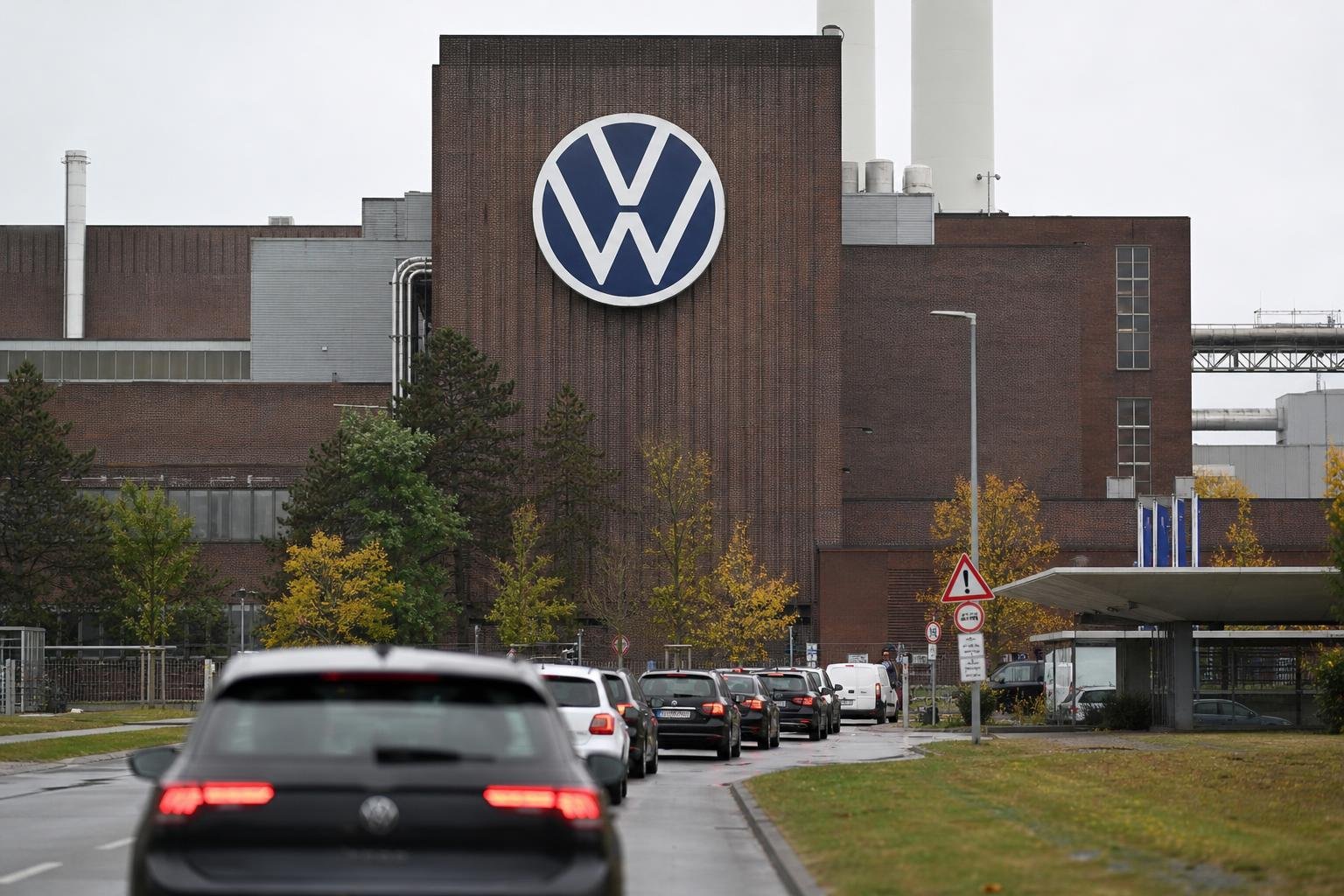

A German economist’s suggestion that Volkswagen could be sold to a Chinese buyer sounds deliberately provocative. Yet the underlying issue is less far-fetched: Chinese automakers are already being linked to underused German factories, while Volkswagen is cutting jobs, reducing production complexity and reconsidering the future of several domestic sites.
Moritz Schularick, president of the Kiel Institute for the World Economy, reportedly said at a Berlin industry conference that selling “a certain corporation in Wolfsburg” to Chinese interests would not necessarily be a bad idea if Germany continued to retain value creation and manufacturing. The comments, reported by Handelsblatt, reportedly prompted a reaction from a room that included Volkswagen’s Berlin office chief.
Schularick had made an even more direct argument in an interview with Süddeutsche Zeitung, suggesting that Volkswagen could eventually be acquired by a Chinese automaker such as BYD. There is no evidence that BYD has made an offer or that Volkswagen is pursuing a sale. This is an economist’s warning about Germany’s industrial position, not a takeover announcement.
Why the idea is no longer completely absurd
Volkswagen remains a vast industrial group with brands including Audi, Porsche and Skoda, as well as manufacturing operations and joint ventures around the world. Selling the entire organization to a Chinese competitor would face major financial, political and labor obstacles. Germany’s federal and state governments, Volkswagen’s workforce representatives and the company’s own supervisory structure would all have an interest in such a decision.
That does not mean Chinese ownership of individual assets is impossible. A Reuters report carried by Yahoo Finance said Chinese officials and automakers had shown interest in German factories facing closure or repurposing. Volkswagen’s Osnabrück facility was identified as a site that could potentially attract a Chinese buyer, while the Dresden plant was also being considered for an alternative future.
The distinction matters. A Chinese company operating one former Volkswagen plant is very different from China owning Volkswagen Group. Factory-level investment could preserve some employment and keep industrial capacity in Germany, while a group-wide acquisition would raise questions about technology, corporate control, national security and the future of German decision-making.
Volkswagen’s immediate problem is competitiveness
The argument for considering outside investment rests on a difficult commercial reality. Volkswagen has lost ground in China as domestic automakers have improved their electric vehicles, software and pricing. Chinese brands are also expanding in Europe, where they increasingly compete not only with Volkswagen’s electric models but with the broader mass-market range.
Volkswagen’s challenge is not simply that Chinese vehicles can be cheaper. Chinese automakers have built capabilities across batteries, electronics, software and high-volume manufacturing. That gives them more control over the systems that increasingly define an electric vehicle. Traditional automakers, meanwhile, must manage expensive factories, established labor agreements, large dealer networks and a wide product portfolio.
The result is a cost problem that cannot be solved by changing a grille or adding another trim level. Volkswagen needs to reduce development and manufacturing expense while improving the products themselves. The company’s restructuring plans include major job reductions, a smaller lineup and reviews of German facilities including Emden, Zwickau, Hanover and Neckarsulm. Its effort to simplify shared components is another attempt to reduce the complexity that has accumulated across a sprawling group.
Would Chinese ownership actually protect German jobs?
Schularick’s condition—that Germany must continue to capture value through production and employment—gets to the practical question. Ownership alone does not determine whether a factory remains useful. A new owner could provide fresh products, investment and access to competitive technology. It could also decide that German production costs are too high once political commitments and labor guarantees are included.
Chinese manufacturers have shown interest in European production partly because building cars inside the region can reduce exposure to import duties on vehicles made in China. Local manufacturing can also improve delivery times and make a brand appear more established to European buyers. For Germany, that creates a chance to attract investment, but not necessarily a guarantee of long-term industrial strength.
Labor representatives would be central to any deal. Reuters reported that German unions would seek firm guarantees on sites and jobs, while one Osnabrück representative said workers could imagine producing vehicles for a Chinese joint-venture partner under Volkswagen standards. That position illustrates the trade-off: employees may accept new ownership if it preserves meaningful work, but they are unlikely to support a transaction that merely delays closure.
Europe’s proposed bargain with China
Schularick’s broader policy proposal is to let Chinese automakers sell vehicles in Europe while requiring them to manufacture within Europe to receive subsidies or other advantages. In effect, Europe would use access to its market as leverage for local investment. He argued that Germany must recognize its weaker position in some industrial technologies, a blunt assessment for a country whose economic identity has long been tied to automobiles.
There is a practical logic to that approach. Chinese investment could bring capital, production volume and new suppliers to European sites that legacy automakers no longer need. It could also expose European companies to stronger competition on their home turf, which would benefit consumers if the resulting vehicles are affordable and reliable.
The risks are just as real. Mandatory joint ventures or local-production requirements could discourage investment, create new disputes over technology and turn factories into political bargaining chips. European governments would also need to decide which technologies and data must remain under European control. Attracting a factory is easier than ensuring that its most valuable engineering work, supplier relationships and future product decisions stay in Europe.
A sale of Volkswagen is the wrong benchmark
The most useful part of Schularick’s argument is not the idea that BYD might buy Volkswagen. That scenario remains extraordinarily difficult to imagine. The useful question is whether Germany would rather see Chinese companies invest in existing industrial capacity or watch those facilities disappear without replacement.
Volkswagen still has the opportunity to fix its competitiveness through its own restructuring. But that process will involve uncomfortable choices about products, factories, labor costs and technology. If the company cannot generate enough value from every site, selling or leasing selected facilities may be more realistic than preserving them indefinitely.
For buyers, the ownership question matters less than the outcome. A Chinese-owned factory could create jobs and produce competitive vehicles, but only if investment is sustained and the products meet European expectations. Germany’s priority should not be preserving a badge at any cost. It should be ensuring that the country’s manufacturing expertise, skilled workforce and industrial infrastructure remain economically useful.
Sources: Motor1; Reuters via Yahoo Finance.
0 Comments