
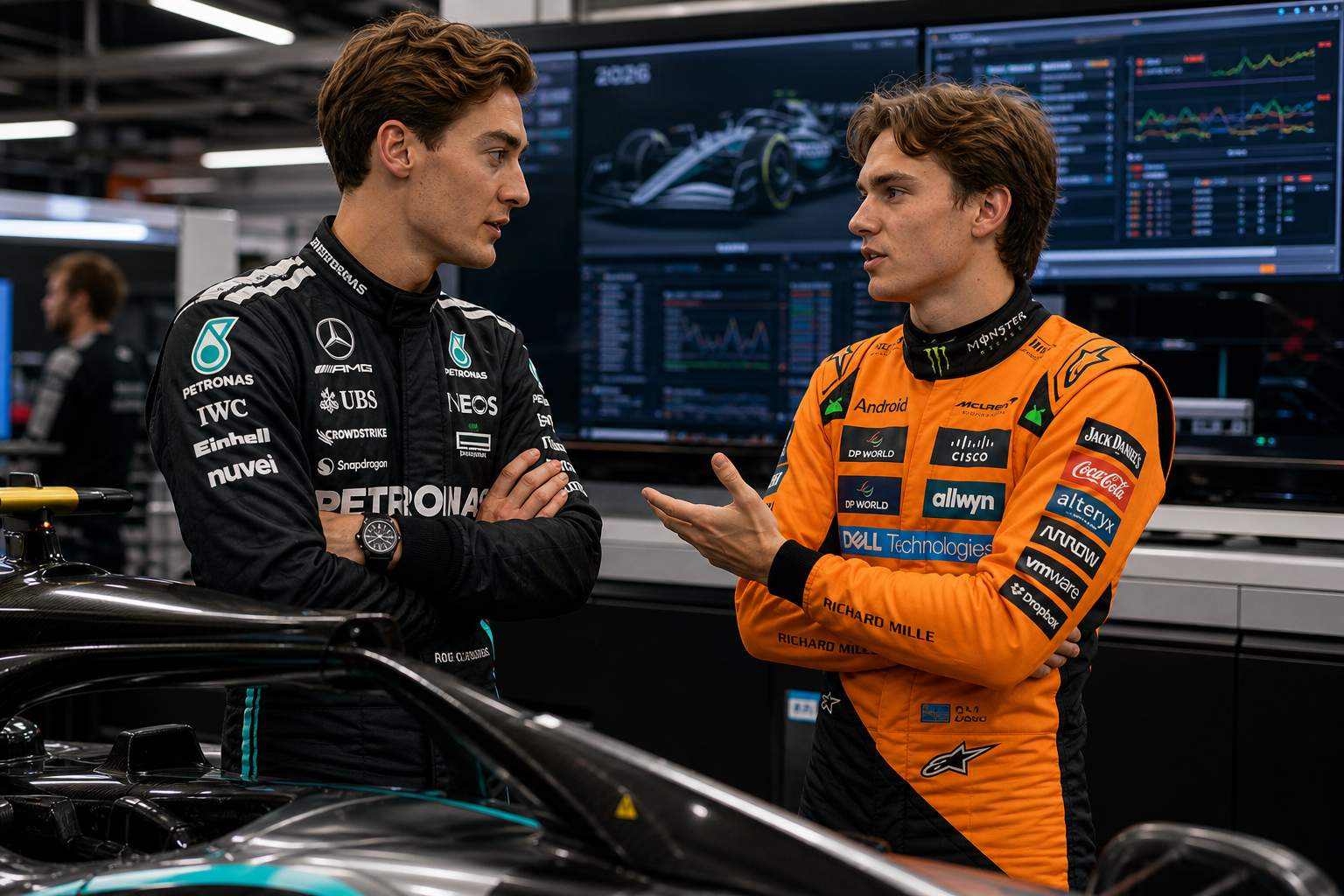

The first thing to understand about the 2026 Formula 1 cars is that they are not simply “the next version” of what we have now. They are a proper reset: new power units, new aerodynamics, active front and rear wings, a very different energy deployment philosophy, and a regulation set that has sent engineers and drivers rummaging around in the dark with a flashlight and a mild sense of panic.
So when the early talk turns to certain drivers appearing happier than others, it is tempting to reach for the easy explanation: some driving styles suit the new cars, some do not. That tidy little story has a nice ring to it. It also misses most of the point.
The Habit Of Blaming Driving Style
Formula 1 loves a neat narrative. A driver has a “front-end style,” another prefers a more stable rear, and suddenly the entire 2026 picture is reduced to a personality test with carbon fiber. It is the sort of explanation that sounds authoritative in a paddock conversation and collapses the moment you ask a few awkward questions.
Yes, style matters. Of course it does. Drivers are not interchangeable mechanics in race suits. But with a regulation set as radical as 2026, what matters just as much is how quickly a driver can adapt to the new balance window, new energy delivery, and the new behavior of cars that will use active aero to trim drag and manage downforce on the fly. That is not a small detail. That is the whole game.
The real issue is that the 2026 cars are likely to reward drivers who can cope with a machine that changes character through a lap, through a corner phase, and through the deployment cycle. The driver is no longer simply balancing a car with the throttle and steering input. He is managing a moving target with more variables than a preseason marketing presentation has buzzwords.
Why The New Cars Are Such A Nasty Puzzle
The headline changes are well known. The cars will rely on a different split between combustion and electrical power, and the aero package will be far less reliant on the sort of high-downforce stability drivers have grown used to in the current era. Active aero will alter the front and rear wing profiles, changing drag and downforce depending on the phase of the lap and the need for efficiency.
That means the old habits of carrying enormous minimum-speed confidence into a corner may not transfer cleanly. A driver who likes a planted front end and immense mid-corner bite may find the new car more elusive. Another who is comfortable improvising with shifting grip, braking balance, and power deployment may look oddly at home. Or not. Because this is Formula 1, and the only thing more unreliable than preseason certainty is a driver’s confidence after two bad runs in testing.
There is also the matter of the new power unit behavior. The 2026 cars will be far more dependent on energy management than the current generation, which means the way a driver attacks a lap is tied to how and when the battery is being used, replenished, and conserved. That can change the feel of the car dramatically. A machine that feels sharp in one sector may feel like a reluctant shopping trolley in the next if the energy state and aero configuration are not cooperating.
Russell, Piastri, And The Trouble With Early Readings
This is where the discussion around George Russell and Oscar Piastri gets interesting. On the face of it, both are polished, intelligent, modern Formula 1 drivers with the sort of technical control teams adore. Neither is some wild-eyed throwback flinging the car into every corner like he has a grudge against the steering column.
But early impressions about who is or is not “working well” with the 2026 concept should be treated carefully. Drivers can appear strong or weak in these circumstances for reasons that have little to do with raw talent and everything to do with how the simulation environment, development direction, and car concept are aligning with their preferences.
Russell is widely regarded as a precise, analytical driver, the kind who tends to understand a car’s behavior quickly and communicate cleanly with engineers. Piastri has built a reputation for calmness, adaptability, and a very tidy technical approach of his own. If either is struggling to mesh with 2026 concepts at this stage, it would be a mistake to jump straight to the conclusion that the rules have suddenly exposed a fatal flaw in their natural style. More likely, they are dealing with a car that is asking different questions from the ones asked by the current generation.
And those questions can be irritatingly specific. Does the car rotate cleanly when the front wing is in one configuration and the rear wing in another? How stable is the platform under braking when energy deployment changes? Can the driver trust the rear when aerodynamic load is being peeled away to reduce drag? The answer to any of those may differ from track to track, and from simulation to reality, which is why offhand judgments made this early are often worth less than the paper they are not printed on.
It Is Not Just About “Style”
The phrase “driving style” is handy because it sounds like a fixed trait, something clean and measurable. In reality, top drivers are usually better described by how wide a range of car behaviors they can tolerate while still going quickly. The great ones do not merely suit a specific machine; they bend themselves toward what the car needs.
That is why the 2026 regulations may be less about exposing a driver’s one preferred technique and more about revealing who adapts fastest to a more complicated operating window. A car that behaves differently depending on energy state, wing mode, and speed will reward mental flexibility. There will still be preferences, naturally. There always are. But the margin between “suited” and “not suited” may be tiny compared with the gap created by engineering decisions, correlation issues, or a team simply taking the wrong path during development.
In other words, the early talk about style may be a little too neat for such a messy technical reset. Formula 1 seldom hands out tidy answers. It tends to produce expensive confusion instead.
What Teams Will Actually Be Watching
The smart teams will not be sitting around with a mug of tea and a clipboard deciding whether Russell or Piastri has the “correct” temperament for 2026. They will be looking at more useful things: how a driver deals with rapidly changing aero balance, how he handles deployment strategy, how he manages tire behavior while the car’s platform is in flux, and how clearly he feeds back what is happening when the stopwatch gets nasty.
That feedback loop may be the real separator. A driver who can explain a car’s limitations in precise, technical language gives engineers a better chance of fixing them. A driver who can adapt on the fly and keep lap time alive while the package is being refined is even more valuable. The great skill in a regulation transition like this is not simply being fast. It is being fast while the whole thing is still a work in progress, which is rather like trying to tune a piano while someone is moving the house.
For Russell and Piastri, that means any perceived difficulty in the early stages should not be mistaken for a permanent handicap. If anything, both have the sort of composure and technical intelligence that usually gives them a decent chance of working through a difficult regulation set. But whether a driver looks comfortable in 2026 will depend as much on the quality of the team’s interpretation as on the driver’s preferences. F1, inconveniently, remains a team sport.
The Sensible Takeaway
So, yes, some drivers may appear to click sooner with the first wave of 2026 concepts than others. But reducing that to a simple matter of driving style is a bit lazy. The more accurate view is that the new rules create a moving target, and the drivers who thrive will be the ones who adapt quickest to a car that changes its behavior with aero mode, power deployment, and energy management.
That is why early judgments around Russell, Piastri, or anyone else should be made carefully. The 2026 cars are not just different. They are different in several interlocking ways that will make first impressions slippery at best. The drivers who look best right now may not be the ones who look best when the real racing starts. And the ones who look awkward early on may simply be working through a concept that has not quite found its feet yet. Formula 1 has a habit of laughing at the certainty of winter headlines.
0 Comments