
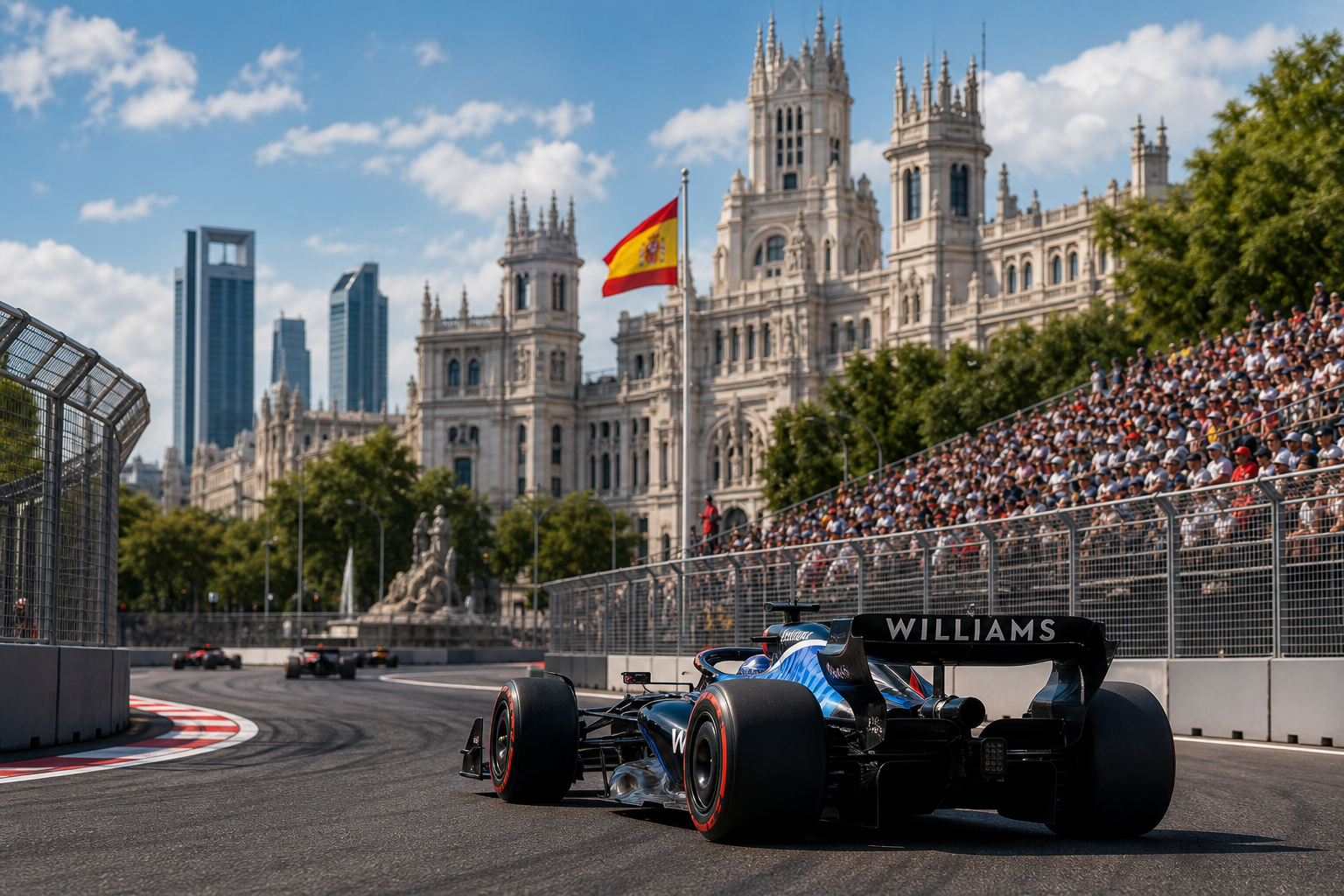

Williams team principal James Vowles believes Madrid can grow into one of Formula 1’s key destination events, even after a difficult first weekend for the new Spanish Grand Prix venue. The debut running at the Madring circuit last weekend brought the usual pressure that comes with a new street-style F1 layout: tight schedules, unfamiliar logistics and plenty of scrutiny over how the track works in real racing conditions.
Vowles was quick to acknowledge that first editions of new venues rarely unfold perfectly, but he also made clear that he sees long-term potential in the event. His comments point to a broader truth about modern Formula 1 calendar additions: the first race is only the start of the evaluation. How a circuit develops, how it handles the demands of the championship, and how teams and fans respond over time often matter more than the opening weekend itself.
A new Spanish Grand Prix venue under the spotlight
F1’s visit to the Madring marked a significant moment for Madrid and for Spain’s place on the championship calendar. New circuits always arrive under intense examination, especially when they are designed as street venues or semi-street venues that have to accommodate Grand Prix traffic, paddock operations, hospitality, security, and broadcast infrastructure alongside the racing itself.
That combination tends to expose every weakness immediately. Access roads, pit-lane flow, marshal posts, spectator movement and support-event logistics all become part of the story. Even when the racing product is promising, the operational side can dominate the headlines after an opening race weekend.
Vowles’ support for the organisers matters because team principals are usually well placed to judge how much of a challenge a new event really is. Williams, like every team, would have had to navigate the usual disruptions associated with a fresh venue: revised garage procedures, route planning, tyre and equipment handling, and all the unknowns that come with an inaugural Grand Prix.
Why Formula 1 keeps investing in new city events
The Madring debut also fits a wider pattern in Formula 1. The championship has steadily expanded its roster of major city-based and purpose-built street events because they offer a strong commercial proposition, a large built-in audience and a distinct atmosphere compared with traditional permanent circuits.
For Formula 1, a successful new venue can strengthen the calendar commercially while broadening the sport’s reach. For local organisers, the prize is a global platform that can transform a city’s motorsport profile almost overnight. The trade-off is the level of complexity involved in staging the race. Every first-year event must prove not only that the circuit can produce competitive racing, but that the entire weekend can be delivered at the standard Formula 1 demands.
That is why reactions from team leaders such as Vowles carry weight. Teams are the ones living through the practical realities of the event, and their feedback often shapes how a venue is refined for future editions. A new Grand Prix does not have to be perfect on day one, but it does need to show it can improve.
Vowles sees long-term potential despite the teething problems
According to Vowles, the quality of the opening effort from the organisers deserved recognition even if the weekend exposed areas that need work. That distinction is important. The challenge for a new race is rarely a single obvious issue; it is usually a collection of small problems that add up under the intensity of Formula 1’s schedule.
Street-circuit events can be especially unforgiving because there is little margin for error. Temporary infrastructure has to be assembled and removed quickly, the layout can limit overtaking opportunities, and there is less room to absorb delays. When the race weekend is brand new, organisers are learning on the job while the entire F1 world watches closely.
Vowles’ comments suggest he believes Madrid can move beyond that first-event uncertainty. If the venue can address the issues identified during the debut and refine the operational side, it could establish itself as a regular and highly regarded stop on the calendar.
What makes a new Formula 1 venue successful?
A debut Grand Prix is usually judged on several layers, not just the race result. Teams look at how efficiently the paddock functions, how safe and workable the circuit is, and whether the event schedule holds together without major disruption. Fans tend to notice the atmosphere, viewing areas, access, and whether the racing feels worth the trip.
The long-term survival of a venue often depends on its ability to improve after year one. Some circuits arrive with strong ideas but need adjustments to traffic flow, marshal positioning, track limits, or event infrastructure before they feel fully settled. Others take longer to discover the best racing characteristics from their layout.
Madrid’s challenge now is to turn the debut into a foundation rather than a one-off. If the organisers and Formula 1 can build on the lessons from the inaugural weekend, the event may mature into a fixture that teams respect and fans look forward to.
Why the Williams boss’s view matters
Vowles is not speaking from the outside. As team principal at Williams, he is part of the group that has to make new venues work from an operational standpoint while also assessing whether they add value to the championship. His endorsement is therefore more than a courtesy. It suggests the debut was difficult enough to generate criticism, but not so flawed that the event’s future should be questioned after one race.
That is a meaningful distinction in Formula 1, where expectations are high and patience is limited. New venues are often judged harshly in their first appearance, especially if operational issues overshadow the racing. Vowles’ position is that Madrid deserves a chance to evolve.
If the Madring can respond to the first wave of feedback, the Spanish Grand Prix in Madrid could become one of those events that improves noticeably from its launch version. Formula 1 has seen enough first-year rough edges to know that a debut does not define a circuit forever. For Madrid, the opening act was only the start.

0 Comments