
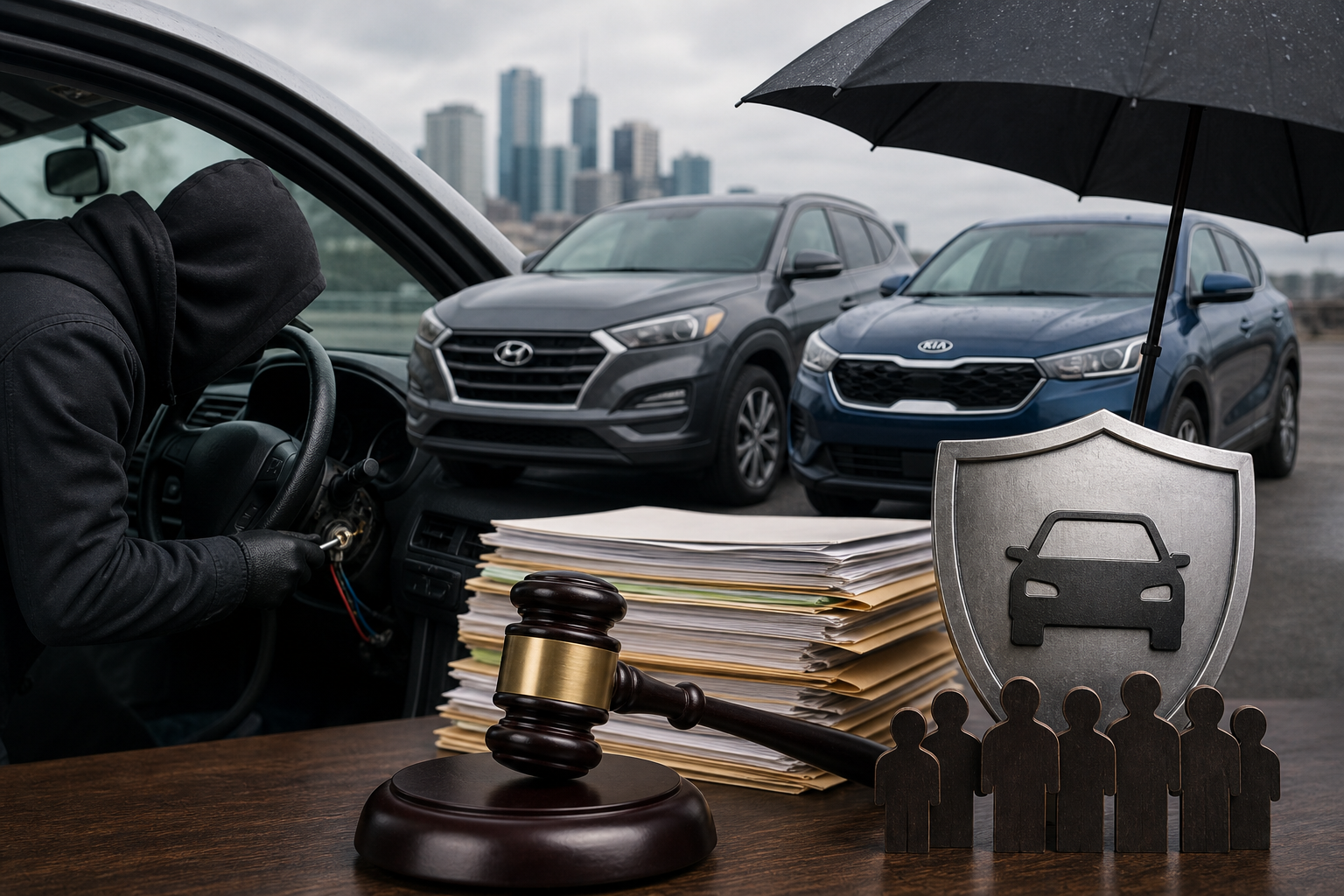

More than 200 insurers have been given a new opening to pursue claims tied to the Hyundai and Kia theft epidemic that spread across the United States over the past several years. A federal appeals court has revived their effort to recover payouts made after a wave of thefts that exposed a major anti-theft weakness in certain Hyundai and Kia vehicles.
The decision matters because the insurance industry has already paid out significant sums for stolen vehicles, repairs, and related losses. By sending the case back into play, the court has kept alive a broad legal fight over who should bear the financial consequences of a problem that affected owners, insurers, and automakers alike.
How the theft crisis escalated
The Hyundai–Kia theft problem became a national issue after thieves began targeting vehicles that lacked an immobilizer, a security feature that helps prevent the engine from starting without the correct key or electronic signal. In many cases, the cars could be stolen using simple, widely shared techniques that spread through social media and drew the attention of law enforcement across the country.
The impact went far beyond the stolen cars themselves. Owners faced broken windows, damaged steering columns, towing bills, higher insurance premiums, and the inconvenience of suddenly living with vehicles that were viewed as vulnerable. Insurers, meanwhile, absorbed the costs of theft claims on a massive scale.
Why insurers are pursuing the automakers
The latest court ruling gives insurers another chance to argue that Hyundai and Kia should help cover the losses tied to the theft surge. The companies are seeking reimbursement for payouts they say were driven by the automakers’ security shortcomings rather than ordinary theft risk.
That argument has been central to the broader fallout surrounding the affected vehicles. The dispute is not just about individual claims, but about whether the manufacturers’ design and equipment decisions created a risk large enough to shift part of the financial burden onto the companies themselves.
The legal case now moves forward
The appeals court’s decision does not resolve the dispute, but it does reopen a path for the insurers to continue pressing their case. For Hyundai and Kia, that means the theft crisis remains a legal and financial issue even as the companies have already made changes to address vehicle security and reduce exposure to future thefts.
For the insurance industry, the ruling keeps alive the possibility of recouping some of the losses associated with one of the most widely publicized automotive theft problems in recent memory. The size of the plaintiff group — roughly 200 insurers — also makes the case notable, since it reflects just how broadly the theft issue spread through the market.
What this means for owners and the market
While the case itself is being fought in court, the underlying theft crisis continues to shape perceptions of certain Hyundai and Kia models. Security equipment has become a much more prominent concern for buyers, insurers, and fleet operators evaluating vehicles from those brands, especially used examples from the period when the theft vulnerability became widely known.
The legal challenge also illustrates how a vehicle security problem can ripple well beyond the showroom. A design decision that once seemed like a cost-saving or packaging choice can end up affecting resale values, insurance costs, and manufacturer reputation long after the initial cars are sold.
For now, the important development is simple: the appeals court has kept the insurers’ claims alive, and the financial aftermath of the Hyundai-Kia theft crisis is still working its way through the legal system.
0 Comments