
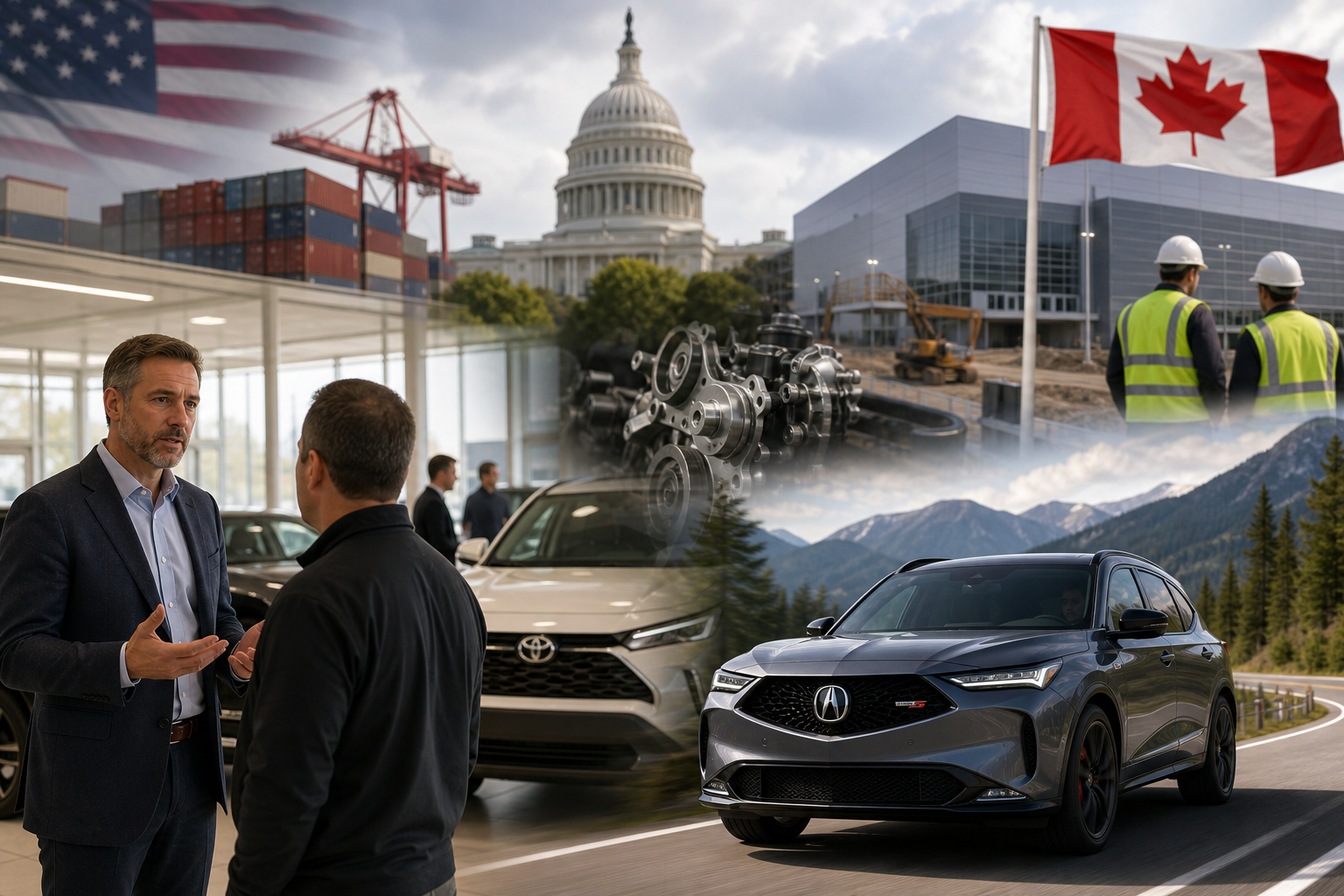

Toyota is asking its U.S. dealer body to help push back against tariffs, a move that shows how automakers are trying to broaden the political fight beyond their own lobbying teams. The same business pressures that are rattling pricing, supply chains, and investment planning are also forcing manufacturers to lean on retail networks that depend on stable inventory and predictable margins.
Toyota’s dealer network becomes part of the tariff conversation
The idea behind Toyota’s approach is straightforward: dealers are influential local businesses, and their concerns about tariff-driven cost increases can carry weight with lawmakers. A tariff on imported parts or vehicles doesn’t stay buried in a balance sheet for long. It can ripple through showroom pricing, inventory decisions, and customer demand, especially in a market where affordability already matters more than ever.
For Toyota, involving dealers also makes practical sense. Dealers sit closest to buyers and are the ones most likely to field questions about higher sticker prices, slower deliveries, or changes in vehicle availability. If tariffs remain a threat, manufacturers need more than corporate statements. They need a broader coalition that can make the case that added costs don’t simply hit executives—they reach consumers, employees, and local economies.
Why tariffs matter so much to automakers
Tariffs are rarely just a Washington policy issue for automakers. They affect vehicle planning, supplier contracts, and the delicate balance between domestic production and imported content. Even brands with strong North American manufacturing footprints often rely on global supply chains for components, tooling, and specialized parts. When tariffs are layered on top of that system, the result can be uncertainty that spreads well beyond a single model line.
That uncertainty matters most when automakers are trying to decide where to allocate future investment. A tariff regime can make a plant expansion, new-model assignment, or sourcing decision harder to justify. Dealers are not the ones negotiating those contracts, but they are exposed to the downstream effects if the numbers stop penciling out for the manufacturer.
Canada’s Stellantis warning adds a different kind of pressure
While Toyota is looking to dealers for help in the tariff debate, Canada is taking a harder line with Stellantis over a government-backed plant investment. According to the information provided, the Canadian government says it will get its money back if Stellantis doesn’t build a car at the plant that received the investment. That condition underscores how closely public funding and product commitments are tied together in modern auto manufacturing.
Governments often use incentives to keep vehicle assembly and related jobs in-country, but those deals usually come with strings attached. If a company receives support to secure a plant or retain production, officials typically want assurances that the facility will actually be used for the purpose it was funded. Canada’s stance suggests that public investment won’t be treated as a blank check if Stellantis fails to follow through.
For automakers, the message is clear: government support can come with firm expectations about product allocation and long-term industrial commitments. A plant that doesn’t get a vehicle assignment is more than a missed opportunity—it can become a political and financial liability.
Acura’s MDX Type S heads out under emissions pressure
The Acura MDX Type S is also on the way out, with emissions compliance cited as the reason for its departure. That fits a broader pattern in which performance-oriented trims, especially those with more demanding engine and calibration setups, can become harder to justify as regulations tighten. Even when a model isn’t a volume seller, it still has to meet the same certification hurdles as the rest of the lineup.
The MDX Type S has occupied an interesting place in Acura’s portfolio: it offered the brand a more aggressively tuned three-row crossover with a performance focus, while still remaining a family vehicle at heart. Losing it doesn’t erase Acura’s Type S branding, but it does show how difficult it can be to keep enthusiast-leaning variants alive in a market increasingly shaped by emissions requirements and efficiency targets.
For buyers, the disappearance of a trim like this usually means one of two things: either the brand is preparing a replacement that fits new rules better, or the model’s niche simply no longer justifies the engineering effort needed to keep it legal. In either case, the pressure comes from regulation rather than a lack of interest in the vehicle’s concept.
A snapshot of where the industry stands
Put together, these three developments point to a common reality in the auto business. Manufacturers are dealing with policy from multiple directions at once—tariffs, government investment conditions, and emissions standards—and each one can reshape product plans in a hurry. Dealers, governments, and brands are all being pulled into the same conversation, whether the topic is pricing, jobs, or compliance.
Toyota’s dealer outreach shows how automakers are trying to build political support from the ground up. Canada’s warning to Stellantis shows that public money is increasingly tied to enforceable outcomes. Acura’s MDX Type S exit shows that even attractive performance trims can be vulnerable when regulations tighten. Together, they capture a business environment where strategy is being shaped as much by policy as by product planning.

0 Comments