
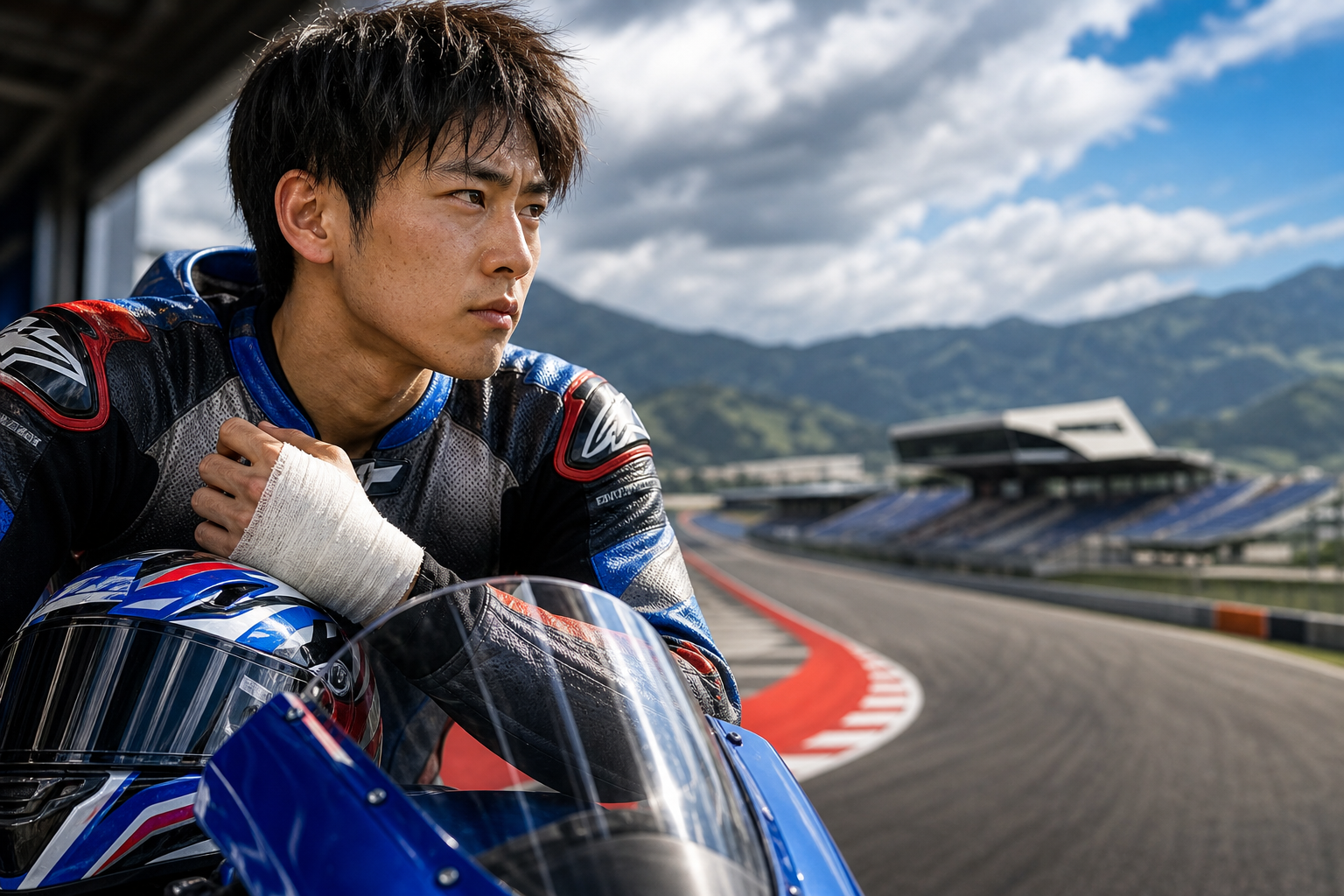

Ai Ogura is set to return to MotoGP action this weekend at the Austrian Grand Prix at Spielberg, ending a brief but frustrating spell on the sidelines. The Japanese rider has been out since a training crash after the British Grand Prix left him with a broken thumb, forcing him to miss the Aragon and San Marino Grands Prix.
Ogura’s comeback is now pending the final medical clearance that riders typically undergo on Friday of a race weekend. If he passes that fitness check, he will be back on the grid at the Red Bull Ring, a circuit that often punishes riders who are less than fully fit because of its hard braking zones and repeated acceleration demands.
From British Grand Prix injury to race-weekend clearance
The injury came after the Silverstone round, when Ogura suffered a training accident that resulted in a broken thumb. Surgery before the Aragon weekend ruled him out of that event, and the recovery timeline also kept him from the subsequent San Marino Grand Prix. For any MotoGP rider, even a relatively small hand injury can be enough to compromise control, braking force, and throttle precision, all of which are critical in modern grand prix racing.
That kind of interruption is particularly inconvenient during the middle of the season, when riders and teams are trying to preserve momentum and collect points. Missing two race weekends also means losing valuable time on the bike, something that matters in a class where track time is scarce and adaptation to the machine, tires, and electronics never really stops.
Why Spielberg is a demanding place to return
The Austrian Grand Prix is not the easiest venue for a rider making a comeback. The Red Bull Ring is short, fast, and heavily biased toward stop-start riding, with severe braking into the key corners and rapid launches onto the straights. That places a premium on upper-body strength and the ability to repeatedly attack the brakes without losing consistency.
For a rider recovering from thumb surgery, the workload is especially relevant because the right hand is constantly managing the throttle and front brake, while the left hand also has an important role in lever control and stability during the race. Even if a rider is declared fit, the first weekend back is rarely straightforward.
What Ogura’s return means for his season
Ogura’s absence has been short, but in MotoGP even a couple of missed rounds can affect a rider’s rhythm and a team’s development cycle. Returning at Spielberg would allow him to rejoin the season before the calendar moves on to the next run of races, giving him a chance to rebuild speed and comfort before the gap widens further.
The final decision rests with Friday’s check, but the fact that Ogura is being evaluated for a return suggests his recovery has progressed well enough for him to attempt a race weekend again. For the team, getting him back matters not just for points, but for continuity in a championship where every session carries development value.
If he does make the grid, the Austrian Grand Prix will serve as his first test since the injury and surgery sequence that began after Silverstone. The coming weekend will show whether he can immediately settle back into the intensity of MotoGP racing or whether the return itself becomes another part of the recovery process.


0 Comments