
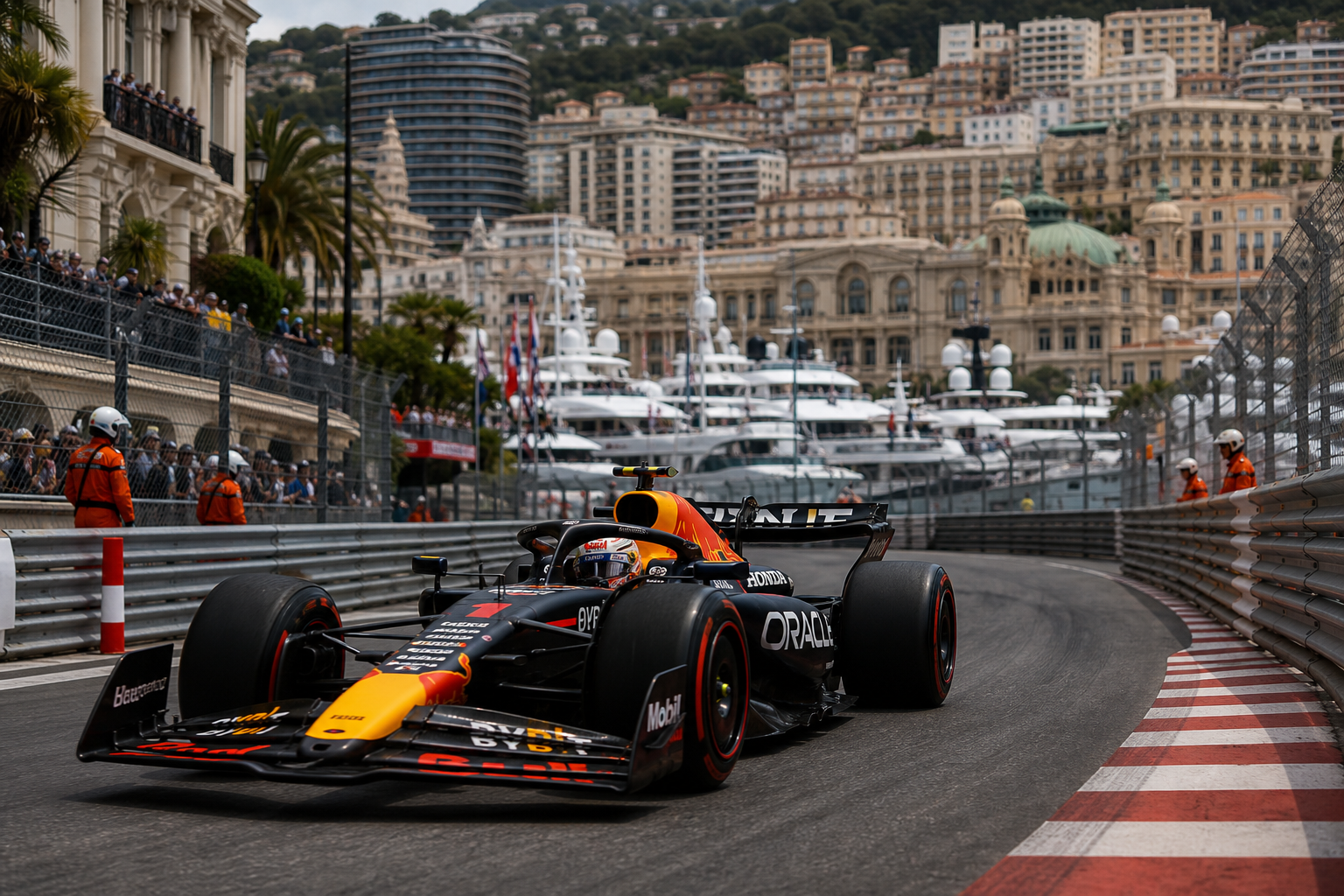

Max Verstappen has delivered the sort of reaction that makes a Formula 1 marketing department quietly reach for a stress ball. Asked about Monaco receiving a sprint race on the 2027 calendar, the reigning champion’s response was blunt: “No emotion attached to it.”
That is not quite a rejection of the sprint format itself. It is a pointed observation about Monaco, a circuit where the traditional Grand Prix is already dominated by qualifying, track position and the slightly medieval business of threading a fast car through barriers with almost no room for error.
Formula 1’s 2027 calendar includes 10 sprint events, an increase that was hardly unexpected given the championship’s commercial appetite. The more interesting decision is where those sprints will take place. Bahrain and Abu Dhabi are set to host the opening and closing sprint weekends respectively, while Monaco has also been selected—an eyebrow-raising choice for a race famous for producing processions even when the cars are not taking part in a shortened Saturday contest.
Why Verstappen’s Monaco Comment Is So Telling
A sprint race is designed to add urgency. It gives drivers a shorter, more aggressive contest, creates another opportunity for points and supplies broadcasters with an additional competitive session. On circuits with multiple overtaking zones, the format can produce genuine strategic tension.
Monaco is rather different. It is a qualifying circuit disguised as a race track, wrapped around a principality and furnished with enough concrete walls to make a parking garage look welcoming.
The circuit’s narrow streets leave very little space for cars to run side by side. The tunnel, the harbor section, the Swimming Pool complex and the final corner all demand precision, but the track does not offer many places where a driver can simply pull alongside and complete a pass. Once the field settles into order, the race often becomes a test of concentration and pit-stop timing rather than a sequence of wheel-to-wheel battles.
That makes Verstappen’s lack of enthusiasm understandable. A Monaco sprint could be spectacular if a driver makes a mistake, a safety car disrupts the order or teams gamble on tire strategy. But it may also become a compact version of the same track-position contest already familiar from Sunday, only with fewer laps in which anything can change.
Monaco Has Always Been About Qualifying First
The Monaco Grand Prix remains one of Formula 1’s most recognizable events because it offers something other circuits cannot: an extraordinary visual setting, immense historical weight and a level of precision that turns qualifying into a major event in its own right.
That does not automatically make it a perfect venue for the sprint format.
At many circuits, a poor qualifying result can be repaired during the race. Monaco is much less forgiving. Starting near the front is so valuable that Saturday afternoon’s qualifying session can feel like the decisive contest, with Sunday serving as an extended exercise in defending position. A sprint could intensify that effect. Instead of creating more overtaking, it might simply give the front runners another opportunity to protect track position while the midfield queues behind them.
There is also a technical complication. Formula 1 cars need enough aerodynamic downforce to carry speed through Monaco’s slow and medium-speed corners, but the circuit’s tight layout makes following another car difficult. The driver behind loses performance in disturbed air, yet cannot easily use that deficit as a reason to pass because there is rarely enough road available to exploit it.
In other words, the sprint may add laps without adding much racing. That is precisely the sort of distinction an experienced driver notices immediately.
The Commercial Case Is Easier to Understand
Formula 1’s move to 10 sprint races is commercially straightforward. A sprint weekend supplies another race-like product for broadcasters, more competitive content for fans and additional opportunities for sponsors. It also gives promoters a second headline event instead of asking audiences to build their entire weekend around Sunday afternoon.
From a business perspective, the logic is difficult to argue with. Formula 1 is now a global entertainment property with an enormous appetite for live content. If fans will watch another race, buy another ticket and discuss another result, there is an obvious incentive to provide one.
The awkward bit is that the sprint format does not suit every circuit equally. A short race at Interlagos, where the track’s elevation changes and overtaking opportunities can encourage bold strategy, is a different proposition from a short race around Monaco. Treating both events as interchangeable products risks flattening the character that made each Grand Prix valuable in the first place.
Monaco does not need much help attracting attention. It already has the yachts, the celebrities, the history and the annual parade of extremely expensive machinery being driven at walking pace through the harbor district. Formula 1 could probably sell the event without adding a second race.
Why the 2027 Sprint Choices Are Raising Eyebrows
The 2027 calendar’s sequence has been described as logical, but the sprint selections are more provocative. Bahrain is set to host the opening weekend sprint, Abu Dhabi the season finale, and Monaco joins them among the chosen venues.
Bahrain and Abu Dhabi are established Formula 1 venues with modern facilities and layouts designed around racing, overtaking and television-friendly action. Their inclusion is easy to understand. The Monaco decision is more curious because its appeal lies in qualities that do not necessarily translate into a compact sprint contest.
That contrast explains why Verstappen’s comment landed with such force. He was not giving a grand philosophical speech about the future of Formula 1. He was pointing out that a sprint at Monaco may not create the sort of racing spectacle its supporters expect.
Drivers tend to judge these formats by a different standard from promoters. A promoter sees another session, another crowd and another batch of broadcast hours. A driver sees tire preparation, track position, traffic, setup compromises and the possibility of damaging a car before the main event. At Monaco, where the margins are already tiny, that calculation becomes especially important.
Could the Sprint Still Work?
It would be premature to declare the Monaco sprint a guaranteed failure. Formula 1 has changed its technical regulations repeatedly, and the behavior of the cars in 2027 may alter the racing picture. Tire allocations, sprint-weekend rules, parc fermé restrictions and the competitive order could all influence how the event unfolds.
A wet session would be another matter entirely. Monaco in the rain can turn from a procession into a test of nerve, judgment and mechanical sympathy within minutes. A safety car or red flag could scramble the order, although relying on weather and accidents is not much of a design philosophy.
The sprint could also add pressure to qualifying. If the cars are closely matched, a driver who finds a few extra inches through the barriers might gain a meaningful advantage before Sunday. That has value, even if the race itself produces little passing. Formula 1 does not need every session to resemble a touring-car brawl to be compelling.
Still, the format should be judged by what it adds rather than by the number of boxes it ticks on a commercial calendar. At Monaco, the risk is that the sprint becomes another controlled procession, only shorter and with more opportunities for a driver to make an expensive mistake.
Formula 1 Cannot Manufacture Monaco’s Magic
Monaco remains important because it is unlike anything else on the calendar. Its prestige comes from the challenge of the circuit and the setting around it, not from a guaranteed supply of overtakes. That distinction is easy to lose when every race weekend is asked to deliver the same modern package of action, drama and additional content.
Verstappen’s “no emotion attached to it” remark sounds dismissive, but it may be the most practical assessment available. A Monaco sprint might work. It might even produce a memorable Saturday. Yet the selection feels driven more by the desire to expand the sprint portfolio than by a perfect match between format and circuit.
And that is the peculiar thing about Formula 1. It can spend years preserving Monaco as a jewel of the calendar, then decide the jewel needs an extra race bolted onto it. The 2027 event will reveal whether that is clever reinvention or merely another case of adding content because someone, somewhere, had an empty broadcast slot.

0 Comments