
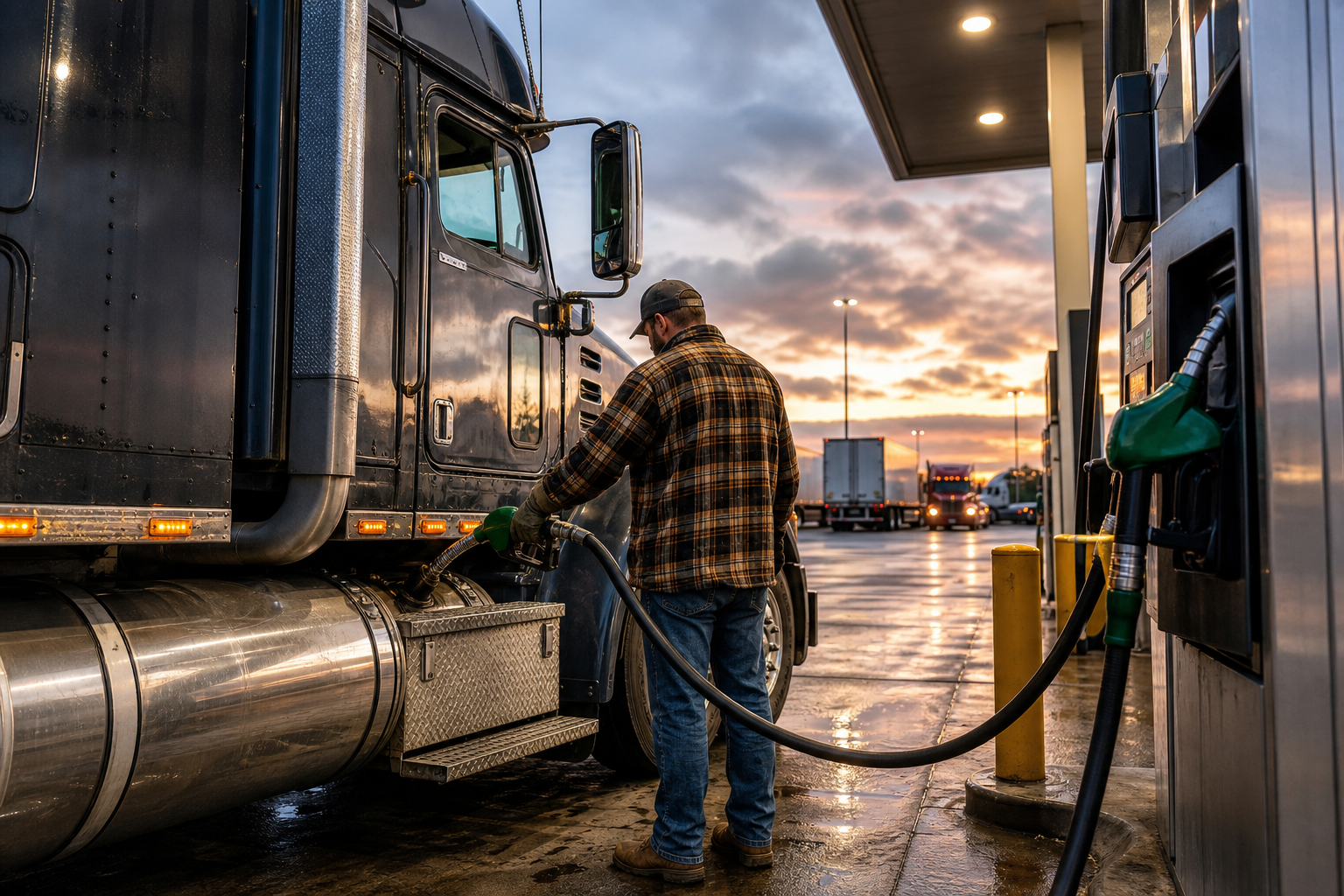

For many drivers, a $100 fuel stop still feels substantial. For long-haul truckers, though, that number is being blown past with uncomfortable regularity. A recent example of a driver spending more than $1,000 on diesel without filling the tank has become a sharp illustration of just how expensive keeping a heavy-duty rig on the road has become.
The headline is eye-catching, but the underlying issue is straightforward: large diesel tanks, high fuel consumption, and elevated pump prices can combine to produce four-digit fuel receipts with little drama. For owner-operators and fleet drivers alike, that changes how trips are planned, how margins are managed, and how much profit remains after a run.
The math behind a four-digit fuel stop
Passenger-car owners rarely encounter fuel bills that cross into four digits, but commercial trucks live on a different scale. Road tractors often carry dual tanks with a combined capacity that can approach or exceed 200 gallons, depending on configuration. Even when the tanks aren’t emptied, putting a substantial amount of diesel into a Class 8 truck can add up fast when prices are high.
That’s why the sight of a trucker spending over $1,000 at the pump doesn’t necessarily indicate an empty tank or an exceptional one-off situation. It can simply reflect the realities of over-the-road trucking: big tanks, long distances, and fuel economy measured in single digits rather than tens of miles per gallon.
Unlike the average pickup or SUV, a highway tractor is a revenue tool. Every gallon purchased is part of the cost of doing business, and the price per gallon can have an immediate effect on what a load is worth to the driver. When fuel is expensive, the difference between a profitable week and a weak one may come down to routing, idle time, backhaul availability, and how efficiently the truck is loaded and driven.
Why diesel prices hit truckers especially hard
Diesel has long been the commercial vehicle fuel of choice because of its energy density and the efficiency of compression-ignition engines under steady highway loads. But trucking operators don’t buy fuel in the same way private motorists do. They buy in bulk, often multiple times a week, and they do it while covering huge distances.
That makes the business more sensitive to price swings. A truck that consumes hundreds of gallons over the course of a trip can see costs rise sharply with even a modest jump at the pump. The trucker who spends $1,000 on diesel is not necessarily being inefficient; the operating environment itself is simply expensive.
Fuel costs also ripple outward. Higher diesel prices can affect shipping rates, freight margins, and ultimately the prices consumers pay for goods moved by truck. The issue is not limited to independent operators, either. Large fleets face the same fuel math, even if they have better purchasing leverage or route optimization tools.
What the viral moment says about the trucking business
Stories like this resonate because they make a usually abstract business expense visible. A lot of the trucking industry’s economics happen out of sight: fuel surcharges, lease payments, maintenance reserves, tolls, tires, insurance, and compliance costs. A single stop that tops $1,000 brings one of those line items into clear view.
It also highlights how modern trucking is built around scale. The diesel tank on a tractor isn’t there for convenience; it’s there so the truck can cover long distances without constant refueling stops. When the tank is sized to support a day’s work or more, filling it becomes a major transaction rather than a quick errand.
That reality is especially familiar in long-haul work, where routes can cross multiple states and fuel planning matters as much as load planning. Drivers often weigh fuel prices along the route, not just at the starting point, because where they buy fuel can have a real impact on the bottom line.
A reminder of how different commercial vehicles really are
The story also serves as a useful contrast with the passenger vehicles most readers drive every day. A half-tank refill in a family sedan may cost less than a trucker’s single top-off, yet the truck is doing the work of moving freight at scale, often on tight schedules and in a highly competitive industry.
Commercial trucking depends on engines, drivetrains, and fuel systems designed for durability and sustained load rather than outright speed. Those machines are built to pull, cruise, and rack up enormous mileage, but they do so with fuel consumption that makes every price increase feel immediate. When diesel prices rise, there’s no way to escape the bill; the business still has to move freight.
That’s why a $1,000 fuel stop lands with such force. It isn’t a novelty so much as a glimpse at the operating scale of modern trucking, where the fuel tab alone can look like a major monthly household bill before the truck has even finished filling.
For truck drivers, that kind of transaction is becoming less surprising and more like another entry in the ledger. For everyone else, it’s a reminder that the economics of moving goods by road are far more severe than the fuel stop at the corner suggests.

0 Comments