
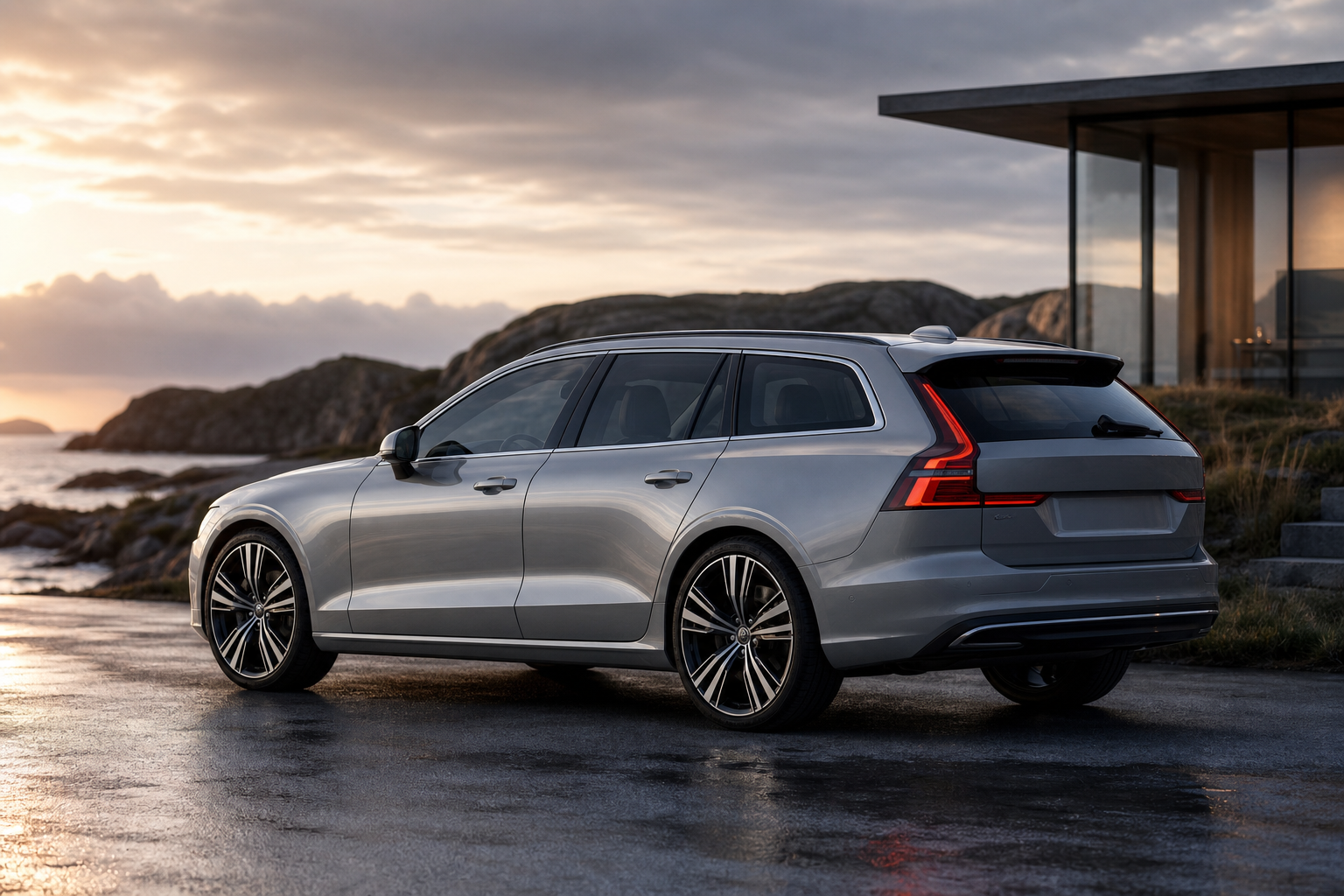

Volvo has outlined an ambitious product plan that points to 13 new vehicles arriving worldwide by 2030, and the detail that should catch enthusiasts’ attention is the company’s reference to both “low and high body types.” In plain terms, that suggests Volvo isn’t planning to abandon the station wagon shape entirely, even as the brand continues to reshape its lineup around electrification and global market priorities.
What Volvo is signaling for 2030
The Swedish automaker’s announcement is broad rather than model-specific, but it is still useful because it reveals the direction of Volvo’s future portfolio. Thirteen new vehicles by 2030 is a substantial rollout for a brand that has already been modernizing its range around new platforms, new powertrains and a more clearly defined product strategy.
The most intriguing part is the mention of “low and high body types.” Volvo did not spell out exactly which vehicles those would be, but that wording strongly implies a mixture of sedan- or wagon-like models alongside crossovers and SUVs. For a company whose current sales are heavily weighted toward SUVs, that matters. It suggests Volvo sees room for lower, more traditional passenger-car forms in its future lineup.
Why the wording matters
Automakers tend to be very deliberate with this kind of language. If a manufacturer wants to eliminate a body style, it usually doesn’t hint at it in corporate planning material. Volvo’s reference to “low” body types therefore reads like a clue, not an accident. It doesn’t confirm a new wagon, but it does keep the idea alive at a time when many brands have abandoned the segment altogether.
That is significant because Volvo has long been identified with wagons. The brand built a large part of its reputation on practical, boxy family cars that paired conservative styling with real-world usefulness. Even as SUVs have taken over showroom traffic, the wagon remains one of the strongest parts of Volvo’s identity. A future model in that shape would fit the brand’s history far better than it would for many of its rivals.
How this fits Volvo’s broader strategy
Volvo’s product planning over the past several years has centered on simplifying the range and moving the company toward a more electrified future. New vehicles now tend to be positioned with a mix of premium design, advanced safety technology and a cleaner powertrain strategy. Within that framework, 13 launches by 2030 suggests Volvo intends to refresh and expand aggressively rather than stand still.
The reference to body styles also hints that Volvo is likely thinking carefully about regional demand. SUVs remain the dominant global body style, but demand patterns still vary by market. Europe, in particular, has historically been more receptive to wagons and lower-riding family cars than many other regions. A new station wagon could therefore serve as both a brand statement and a practical product aimed at markets where the format still makes commercial sense.
What a new Volvo wagon would represent
If Volvo does bring a new wagon to market, it would be more than a nostalgia play. The segment has largely contracted, especially in North America, but there is still a clear audience for a premium wagon with SUV-rivaling practicality and a lower driving position. Volvo has already shown that it can make those ingredients work with modern safety systems, restrained Scandinavian design and a straightforward cabin layout.
A new wagon would also give Volvo something different in a crowded premium field. The market is packed with crossovers that blur together visually and mechanically. A well-proportioned estate car could stand out simply by being something other than yet another tall-riding utility vehicle. That doesn’t guarantee large volumes, but it does help reinforce brand identity, which matters just as much in the premium space.
What still isn’t known
For now, Volvo has not named the vehicles in its 2030 plan, nor has it confirmed whether the “low body type” reference points to a single wagon, a sedan, or a family of models. It also hasn’t provided technical details, platform information, powertrain specifics or launch timing beyond the 2030 horizon.
That leaves plenty unanswered. The company could be referring to a niche model, a mainstream global car, or a more specialized derivative of an existing architecture. But even without a full product roadmap, the language is enough to show that Volvo isn’t ready to give up entirely on the car shapes that helped define it.
A familiar Volvo idea with a modern business case
The bigger takeaway is that Volvo appears to be balancing two realities: the commercial strength of SUVs and the brand value of traditional passenger cars. A future wagon would sit right at that intersection. It would likely need to justify itself with design, efficiency, practicality and a premium execution rather than with outright sales volume alone.
That is a challenge, but it is also where Volvo has often been at its best. If the company follows through on the implication of its 2030 plan, enthusiasts and loyal buyers may yet see a new chapter for one of the most recognizable body styles in Volvo history.
0 Comments