
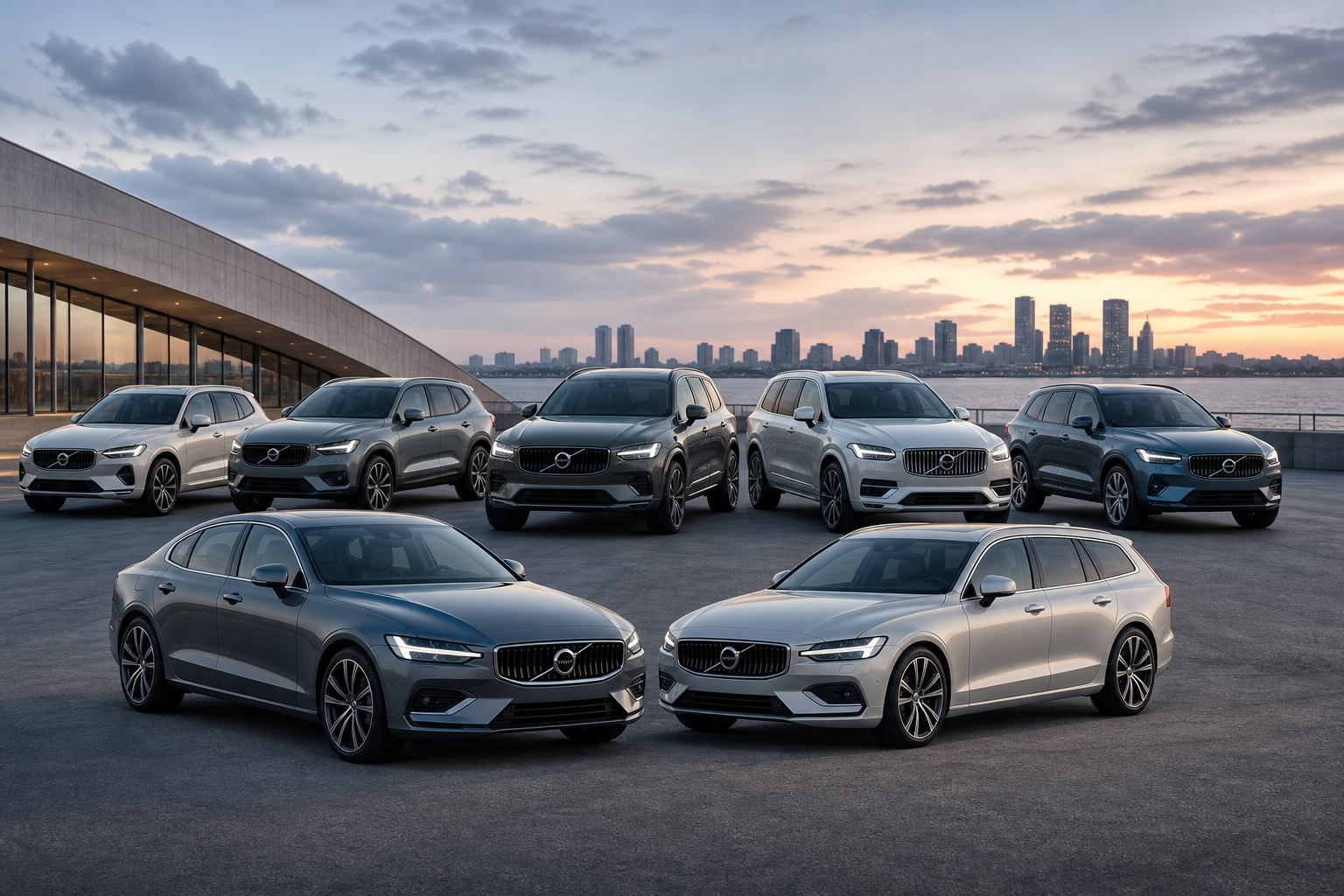

Volvo is preparing a significant product push, and the scale of it suggests far more than a routine model-cycle refresh. The Swedish automaker says its upcoming 13-car offensive will include seven all-new models aimed at Western markets, with new sedans, wagons, and larger vehicles specifically called out for the United States.
The announcement points to a broader reset for a brand that has spent the last several years reshaping itself around electrification, safety, and a more premium market position. While Volvo hasn’t released a full roadmap of every vehicle in the pipeline, the company’s language makes one thing clear: this is not a one-off launch plan. It is a multi-model expansion intended to deepen the lineup and cover more of the premium segment, especially in markets where Volvo’s traditional strengths have always mattered.
A broader lineup for Volvo’s next phase
The key detail in Volvo’s latest product strategy is the number of vehicles involved. A 13-car offensive is substantial for any manufacturer, but the fact that seven of those are described as new models indicates a meaningful expansion rather than a simple replacement program. For buyers and dealers, that usually means more body styles, more powertrain choices, and a stronger ability to compete across multiple segments at once.
Volvo’s mention of sedans and wagons is particularly noteworthy. These remain part of the brand’s identity even as many competitors have shifted heavily toward crossovers. Volvo has long used those body styles to project a more understated, Scandinavian premium image, and new entries in those categories would help preserve that identity in Western markets.
At the same time, the reference to larger vehicles for the US points to the practical realities of the American market. Size still sells there, especially in the premium class, and Volvo appears to be preparing products that can better address that demand. Whether that means larger SUVs, bigger three-row models, or new interpretations of existing segments, the strategy suggests Volvo wants a stronger foothold where buyers continue to favor space and versatility.
What the announcement says about Volvo’s strategy
Even without a full product breakdown, the direction of the plan is easy to read. Volvo is building out its range at a time when premium buyers expect choice across both traditional and electrified models. A broader lineup helps the company reduce reliance on a handful of core vehicles and gives it more ways to respond to market shifts.
That matters because Volvo’s modern identity has been tied closely to premium utility vehicles, safety technology, and electrification. A larger portfolio gives the company room to offer different formats without abandoning that foundation. A sedan can still appeal to customers who prefer a lower, more classical driving position. A wagon can speak to long-time Volvo loyalists and European markets where load-carrying practicality still has appeal. A larger utility vehicle can address the US appetite for more space and a higher seating position.
For a brand like Volvo, lineup breadth is also a strategic business tool. A wider range supports stronger showroom traffic, gives retailers more to talk about, and can improve the company’s ability to retain customers as their needs change. Someone drawn to a compact SUV today may later want a larger family vehicle or a more upscale sedan. If Volvo has those products in-house, it improves the odds of keeping that buyer in the brand.
Why sedans and wagons still matter
Volvo’s decision to hint at new sedans and wagons stands out because those body styles are no longer the default growth segments in much of the industry. Crossovers dominate sales, but sedans and wagons still have a role for brands with a clear design and engineering point of view. Volvo has historically been one of those brands.
Wagons, in particular, have long been part of Volvo’s image in Europe and among enthusiasts elsewhere. They combine the packaging logic of a utility vehicle with a lower ride height and more car-like driving feel. In a market crowded with SUVs that often blur together, a properly executed wagon can still offer something distinct.
Sedans remain important for similar reasons. They can provide a more refined road feel, a sleeker silhouette, and a stronger link to premium passenger-car tradition. For Volvo, which has built a reputation on restrained design and a premium-casual cabin ethos, a new sedan would not be a throwback so much as a way to keep a full premium portfolio intact.
The US market remains central
Volvo’s mention of larger US-focused vehicles is especially relevant because the American market continues to shape product planning for global automakers. Even brands with deep European roots often need vehicles sized and configured for American expectations. That usually means more cargo room, more rear-seat space, and a stronger emphasis on family-friendly packaging.
For Volvo, the US has long been one of the company’s more important Western markets, and a product offensive that includes larger vehicles suggests the brand sees room to grow there. That could mean new flagship SUVs or other larger models designed to sit above or alongside the existing lineup. Either way, Volvo seems to be betting that a broader and more versatile range will help it compete more effectively against established premium rivals.
What buyers should watch for next
The most immediate takeaway is that Volvo is not standing still. A 13-car offensive with seven new models implies a staggered rollout rather than a single reveal, so more details will likely emerge over time. The most useful next questions are straightforward: which existing nameplates will be replaced, which will be added, and how Volvo will balance internal-combustion, hybrid, and electric versions across the new lineup.
For now, the company has done enough to establish the shape of its strategy. Volvo wants a broader presence in Western markets, a stronger hand in the United States, and enough product depth to support its premium ambitions. The exact cars will matter when they arrive, but the plan itself already shows where the brand thinks the market is headed.
0 Comments