
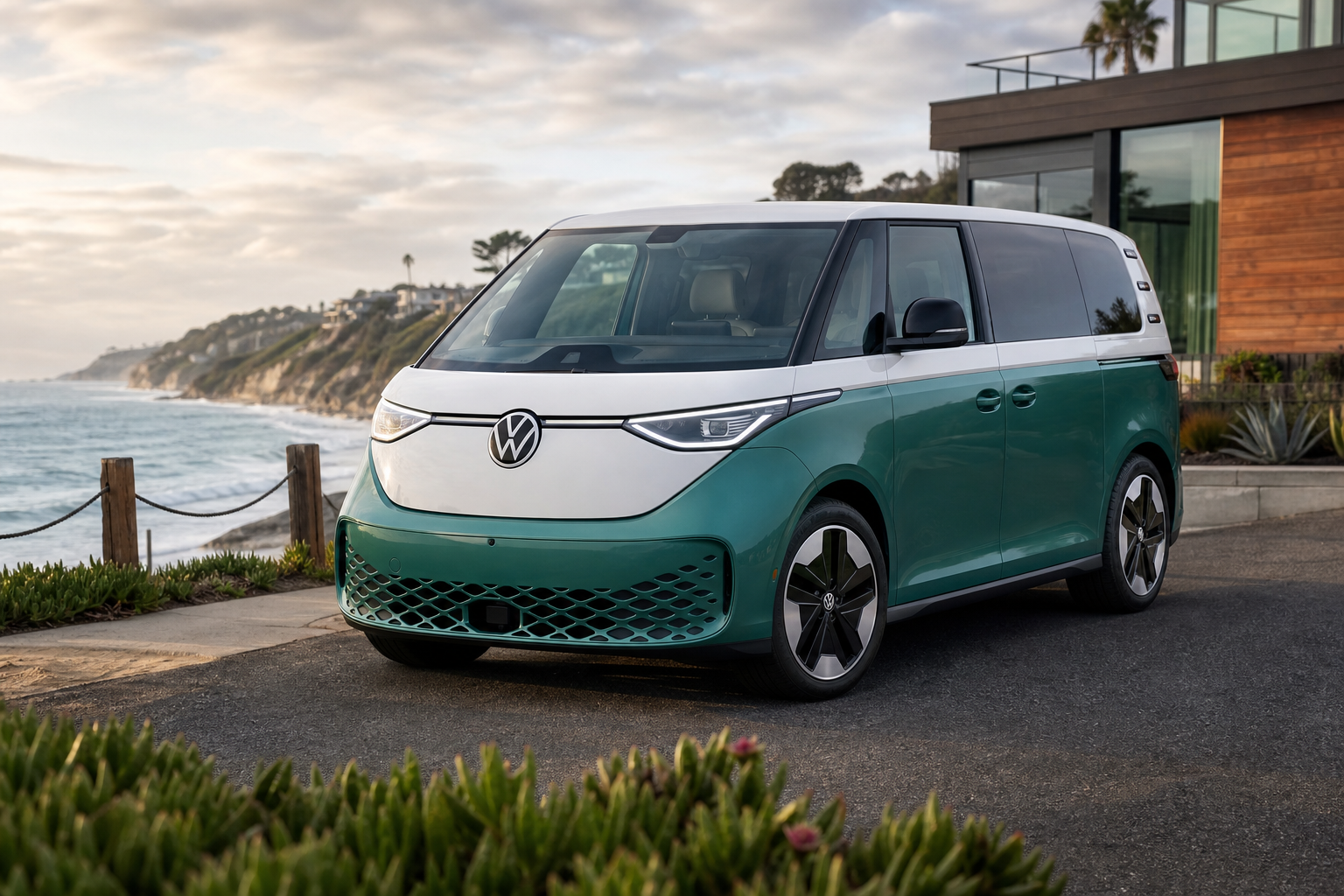

Volkswagen’s electric van has been sent back into the scheduling department. The ID.Buzz, originally expected to return to the U.S. lineup this fall, is now set to reappear for the 2028 model year after skipping the 2026 model year.
That is a substantial delay for a vehicle whose entire appeal depends on being a cheerful, highly visible alternative to the usual parade of anonymous electric crossovers. The ID.Buzz was meant to bring the spirit of Volkswagen’s classic Microbus into the electric age. Instead, American buyers will apparently have to wait a little longer while the calendar performs an awkward three-point turn.
The ID.Buzz’s U.S. Timeline Has Become Unusually Complicated
The immediate facts are straightforward, even if the timing is not. Volkswagen had planned for the ID.Buzz to return to its U.S. lineup this fall. That plan followed the model skipping the 2026 model year. The revised schedule now points to the 2028 model year.
That wording matters. A model year is not the same thing as a calendar year, so “2028 model year” does not necessarily mean the van will arrive on January 1, 2028. Automakers routinely launch vehicles months before or into the calendar year attached to the model-year designation. Volkswagen has not, based on the available information, provided a more specific U.S. arrival date here.
There is also no stated explanation for the delay. It would be foolish to fill that gap with confident theories about production, certification, demand, software, or supply chains. The automotive industry has enough speculation already, usually delivered by people who have never had to make 4,000 components arrive at the same factory on the same day.
A More Interesting Electric Vehicle Than Another Crossover
The ID.Buzz occupies an unusual place in Volkswagen’s electric strategy. Most battery-powered vehicles arriving in the United States are crossovers, SUVs, or sleek sedans designed to look as though a wind tunnel had personally approved every surface. The ID.Buzz takes a different route.
Its shape draws from the company’s historic Microbus, giving it a visual identity that does not require a badge-reading session to understand. The upright body, van-like proportions, and retro influence make it immediately recognizable. That is valuable in a market where many electric vehicles appear to have been designed by the same committee using the same three approved silhouettes.
The vehicle also offers Volkswagen a way to sell electric power in a more lifestyle-oriented package. It is not merely an electric version of a familiar compact SUV. The van format gives the ID.Buzz a distinct purpose and a personality that could appeal to families, road-trippers, and buyers who want their transportation to look slightly less joyless.
Why the Delay Matters
Delaying the ID.Buzz to the 2028 model year leaves a notable gap between its intended return and its revised arrival. For buyers attracted to the concept, that means waiting longer for an electric vehicle with genuine visual character rather than settling for a more conventional body style.
It also complicates Volkswagen’s effort to maintain momentum around its ID-branded electric vehicles in the United States. A recognizable model can do useful work for a brand beyond its own sales figures: it attracts attention, creates showroom traffic, and gives customers a memorable reason to consider the rest of the lineup. A delayed van cannot perform that job while it remains an item on a future product calendar.
None of this means the ID.Buzz concept has become irrelevant. If anything, the delay makes the eventual return more important. By 2028, buyers will judge it against a broader selection of electric vehicles, and novelty alone will not carry the van. Its packaging, range, charging performance, pricing, and software will all matter. The retro styling may get people through the showroom door, but it will not convince them to sign paperwork if the practical details disappoint.
What Volkswagen Has Not Yet Clarified
The revised timing leaves several practical questions unanswered. Volkswagen has not supplied additional details here about the version planned for the 2028 model year, its equipment, pricing, powertrain configuration, or the reason for the schedule change.
Those details will determine whether the delay is merely frustrating or genuinely damaging to the model’s prospects. An electric van needs to justify its footprint and price in everyday use. Buyers will want to know how easily it fits family life, how far it can travel between charges, how quickly it can recharge, and whether its distinctive design comes with sensible interior flexibility rather than just a large bill and excellent parking-lot visibility.
For now, the only firm conclusion is that the ID.Buzz’s U.S. return has moved to the 2028 model year. Volkswagen’s charming electric van remains on the itinerary, but the journey has acquired an unexpectedly long layover.
0 Comments