
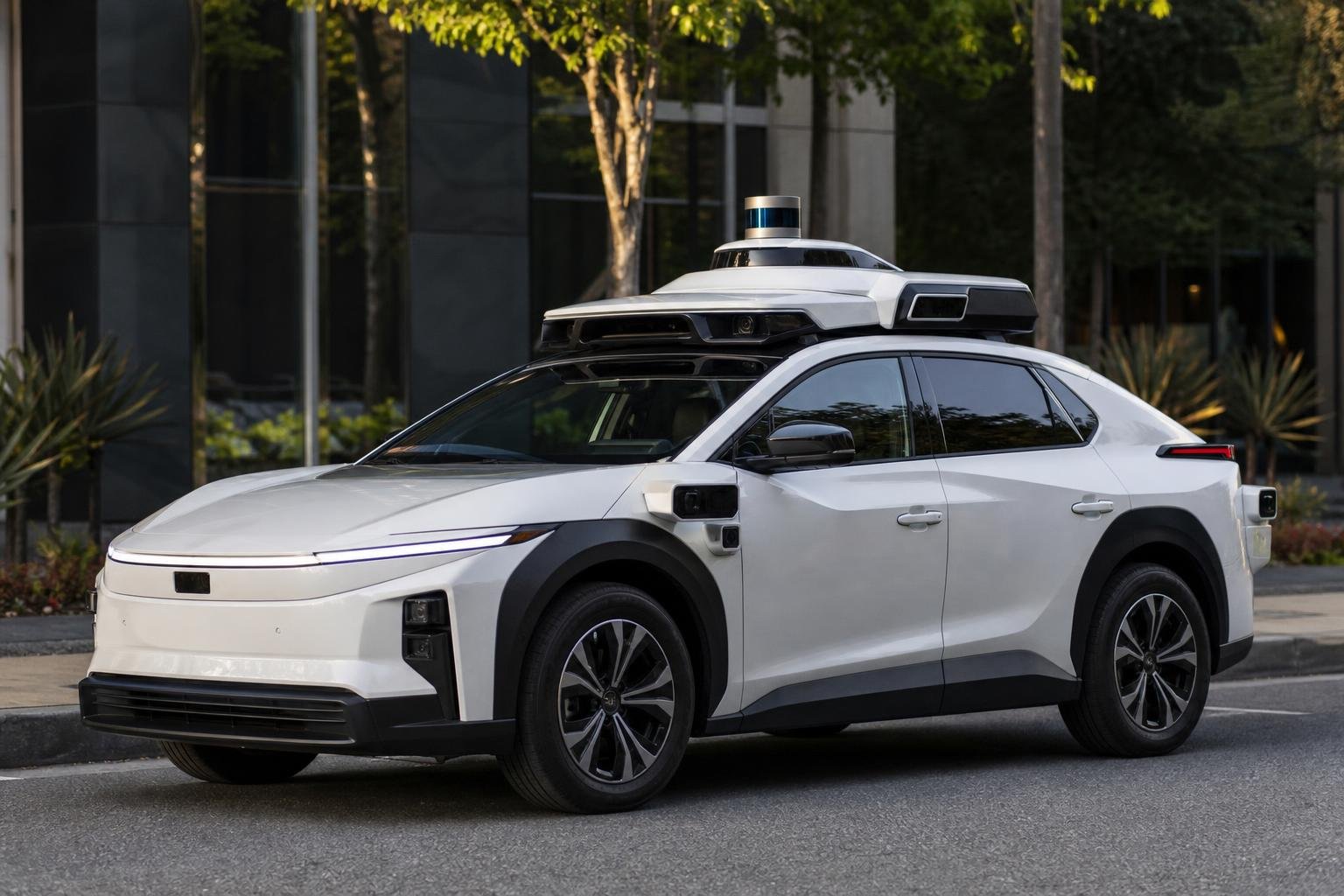

Toyota and Waymo have revealed more details about a driverless taxi based on the facelifted Toyota bZ4X. The specially equipped electric crossover is expected to begin operating in Japan in 2027, followed by the UK and other markets served by Waymo in the years ahead.
The Japanese-spec bZ4X is sold simply as the bZ in North America. For autonomous operation, the crossover receives Waymo sensors across the roof, front bumper, front fenders, rear bumper, tailgate, and rear spoiler. The underlying body design remains largely unchanged, with the prototype shown in white and marked with Waymo lettering on its doors.
Purpose-built factory integration
The robotaxi will also receive several cabin changes intended for ride-hailing use. Toyota has added automatic doors, a power-operated liftgate, and ambient lighting, while the companies say the vehicle will provide generous rear-seat legroom.
Unlike existing Waymo vehicles, which generally receive their autonomous sensors and computing equipment after leaving conventional production facilities, the new bZ robotaxi will be assembled with Waymo’s Level 4 autonomous hardware at Toyota’s Takaoka plant in Japan. The companies’ collaboration was first announced last year, but the latest update provides a clearer look at the vehicle and its manufacturing process.
Standard bZ4X specifications remain unchanged in the announcement
Toyota has not disclosed detailed specifications for the autonomous version. The standard production bZ4X uses the e-TNGA architecture and is offered with either one or two electric motors, producing up to 214 horsepower, or 160 kW and 217 PS.
That model uses a 74.7-kWh lithium-ion battery. Its maximum claimed range is 314 miles (505 kilometers) under the WLTP testing cycle, while the EPA-rated figure is 252 miles (406 kilometers). It is not yet clear whether the Waymo vehicle will match those specifications.
Potential expansion and future Toyota vehicles
The companies have not confirmed whether the Toyota robotaxi will operate in U.S. cities currently served by Waymo, including Phoenix, San Francisco, Los Angeles, and Atlanta. If deployed there, it could eventually join or replace some of the custom Jaguar I-Pace SUVs that have been part of Waymo’s fleet since 2018.
Toyota and Waymo are also researching how Waymo’s autonomous-driving technology could be incorporated into Toyota vehicles owned by private customers. The effort includes cooperation with Woven by Toyota, Toyota’s software arm, with the stated goal of using real-world operational data to help improve road safety.
0 Comments