
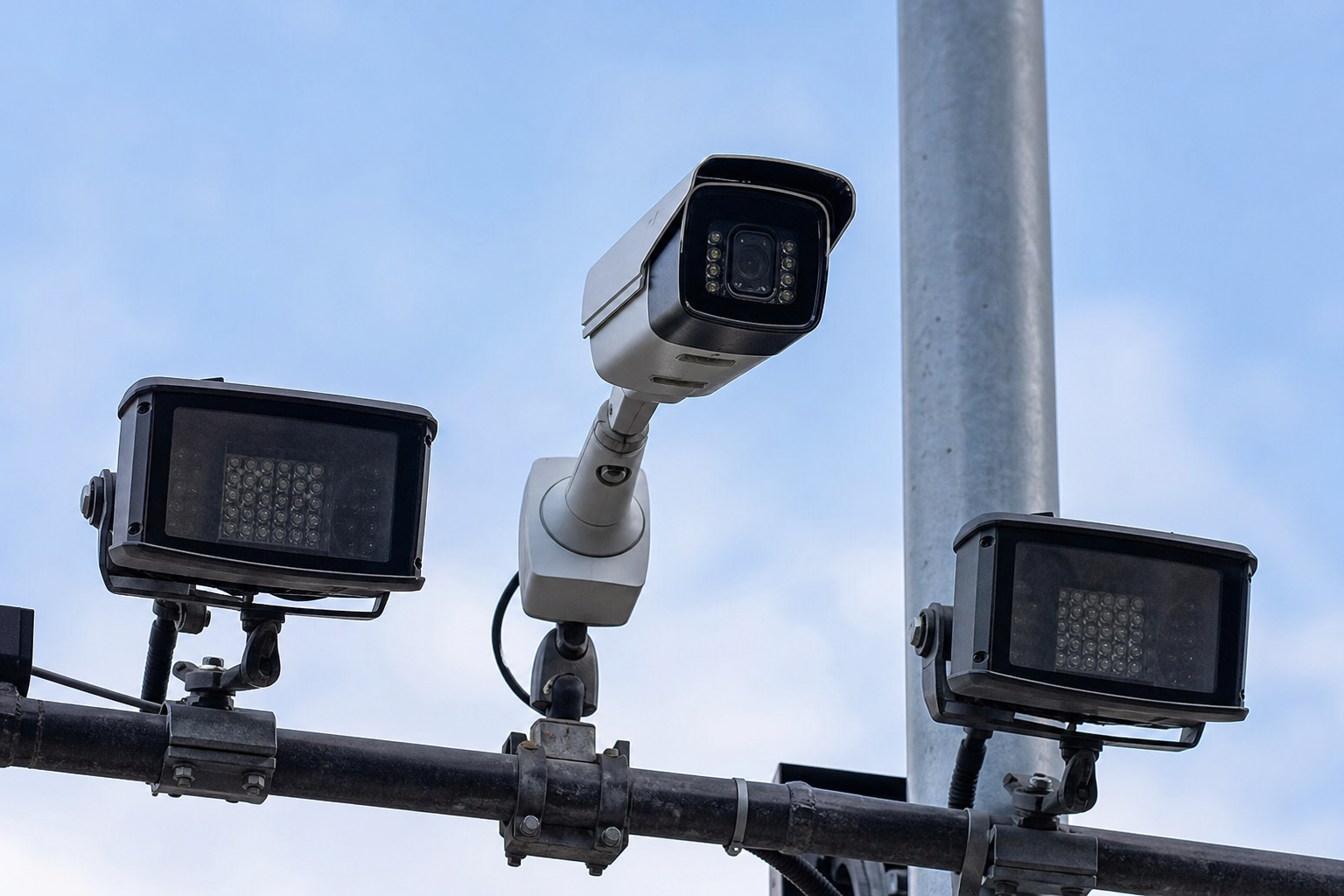

A federal district judge in Oklahoma has ruled that police violated the Fourth Amendment by using more than a month of historical automated license plate reader data without a warrant to track a driver’s movements.
U.S. District Judge Sara Hill described the data collection as a form of “indiscriminate mass surveillance” and ordered evidence obtained after the search suppressed. The decision concerns one criminal case and does not establish a nationwide ban on automated license plate readers (ALPRs).
The Oklahoma case
The case involved Melisa Kyle, who was driving a Mazda SUV with California license plates through Oklahoma. Tulsa County Deputy Sheriff Freddie Alaniz began following the vehicle and searched license plate databases available to him.
The search showed that the Mazda had recently traveled toward the California-Arizona border before heading back toward Missouri. Alaniz later stopped Kyle for traffic violations and questioned her about the trip while continuing to examine ALPR records.
After Kyle declined permission to search the SUV, officers used a police dog. They ultimately found 91 pounds, or about 41 kilograms, of methamphetamine inside the vehicle.
Hill found that the initial traffic stop was justified by the observed moving violations. However, she determined that Alaniz did not have reasonable suspicion to extend the stop. She also ruled that searching the historical ALPR data constituted an unconstitutional warrantless search.
Historical location data at issue
Alaniz could access at least 30 days of vehicle-location information from multiple states. His search returned more than 50 records showing where Kyle’s vehicle had been during that period.
The ruling acknowledged that drivers generally do not have an expectation of privacy while traveling on public roads. The court instead focused on the ability to combine individual observations into a searchable record of a person’s movements over time.
Hill wrote that ALPR systems continuously collect information about vehicles without regard to whether their drivers are suspected of wrongdoing. In her view, the scale and searchable nature of the data transformed the records into a form of mass surveillance.
Ruling does not apply nationwide
The decision came from the U.S. District Court for the Northern District of Oklahoma and is tied to a single case. It is not a nationwide prohibition, nor does it create binding precedent for courts elsewhere.
The ruling also differs from decisions issued by several other federal courts in Oklahoma, which have concluded that ALPR use does not amount to a Fourth Amendment search. Flock Safety was not a party to the case and has argued that the decision conflicts with prior rulings. The company expects the decision to be appealed and overturned.
Although Flock operates one of the largest ALPR networks in the United States, the court’s reasoning was directed at the broader use of ALPR technology rather than at one manufacturer. Other companies offering license plate recognition systems include Motorola Solutions, Genetec, Rekor, Axon, and Leonardo.
If higher courts eventually adopt Hill’s interpretation, switching from Flock to another system would not necessarily resolve the constitutional issue. Any network capable of generating similarly broad historical location records could face the same questions. For now, however, the ruling remains a limited district court decision rather than a nationwide change in ALPR policy.

0 Comments