
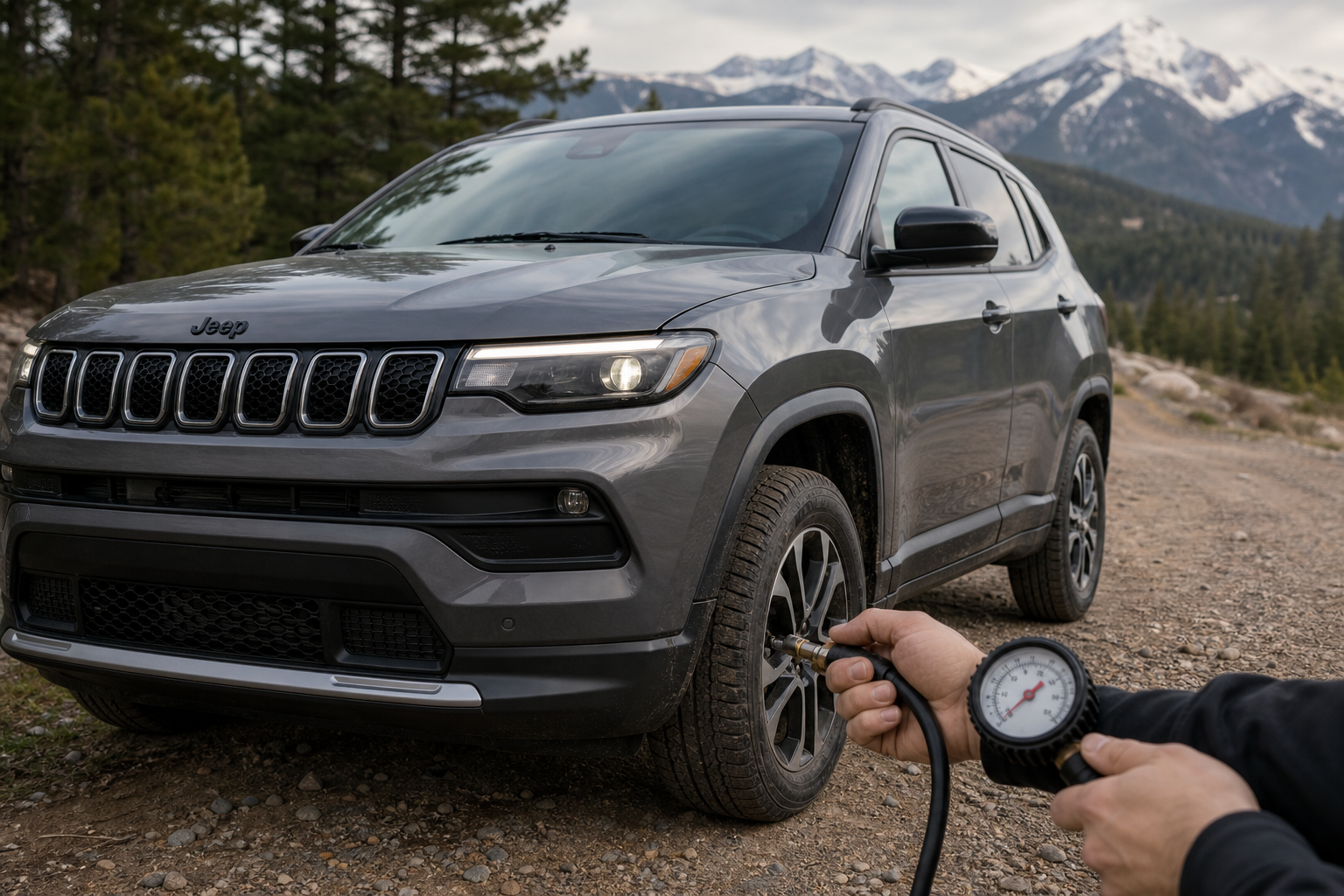

A tire-pressure warning light is supposed to be one of the least dramatic things a Jeep can do. It glows, the driver checks the tires, and everyone carries on with the day. For nearly 202,000 Jeep SUVs, however, a software defect means that warning may never appear when it should.
Jeep will address the problem with a free dealer software update. Owners are expected to receive notification letters, after which they can arrange the repair with an authorized Jeep dealership. No parts replacement is described in the available information, which makes this a software remedy rather than the sort of recall that leaves half the vehicle scattered across a service bay.
Why the Missing Warning Matters
The tire-pressure monitoring system, or TPMS, is designed to alert the driver when one or more tires have lost pressure. That warning can provide an early indication of a slow leak, a puncture, a damaged valve, or a tire that has simply fallen below the manufacturer’s recommended pressure.
When the system works properly, it adds a useful layer of protection between a developing tire problem and an unpleasant roadside discovery. When the warning light fails to activate, the driver loses that layer. The tire may still be visibly low by the time it is noticed, but modern tires do not always look dramatically deflated when they are carrying less air than they should.
That matters because incorrect tire pressure can affect handling, braking, ride comfort, and tire wear. Underinflation also creates additional heat inside the tire, particularly at highway speeds. TPMS is not a substitute for checking tire pressure manually, but it is meant to make an important warning harder to miss.
The Defect Is Software-Based
The issue affecting these Jeep SUVs is described as a TPMS software defect. The available information does not identify every affected model, model year, or the precise software logic that prevents the warning from appearing. It does, however, establish the important point for owners: the fault concerns the system’s ability to trigger the tire-pressure warning, not a recommendation to ignore the light or a routine need to replace all four tires.
That distinction is useful. A TPMS warning can be caused by a genuine pressure problem, a sensor issue, or a system fault. In this case, the planned remedy is a dealer update intended to correct the software. Owners should still treat any existing tire-pressure warning seriously. The presence of a recall-related software problem does not mean a tire warning can be dismissed as a harmless electronic tantrum.
What Jeep Owners Should Do
Owners of the affected vehicles should watch for the notification letter and follow the instructions provided by Jeep. Once contacted, they can schedule the update with an authorized dealer. The repair will be performed at no charge.
In the meantime, regular manual pressure checks remain sensible. The correct cold-tire pressure is listed on the vehicle’s tire-information label, typically found on the driver’s doorjamb, rather than on the tire sidewall. The number molded into the tire is generally the tire’s maximum pressure, not the vehicle manufacturer’s recommended setting. Confusing the two is an easy way to turn a five-minute check into a small engineering experiment nobody requested.
Pressure should be checked when the tires are cold, before driving or after the vehicle has been parked long enough for the tires to cool. A basic gauge is still useful even in vehicles equipped with TPMS, because the system is a warning aid rather than a replacement for maintenance.
Drivers should also inspect the tires for nails, cuts, bulges, uneven wear, or other visible damage. If a tire is losing air, topping it off without finding the cause is only a temporary solution. A low tire can make a TPMS warning relevant even if the vehicle is also covered by this software campaign.
A Reminder About What TPMS Can—and Cannot—Do
TPMS is often treated as a fit-and-forget feature, but it has limits. It generally warns the driver after pressure has fallen below a defined threshold; it does not necessarily provide an instant alert for every small change. It also cannot tell the driver whether a tire has been damaged unless that damage results in a detectable pressure loss.
Temperature changes can alter tire pressure, too. A cold morning may produce a warning that disappears after the tires warm up, although the underlying pressure should still be checked and corrected. Seasonal changes, heavy loads, long highway trips, and extended periods without checking the tires can all expose weaknesses in a neglected maintenance routine.
That makes a functioning warning system particularly useful, but it also explains why drivers should not wait for an illuminated symbol before checking the tires. A dashboard light is the backup singer, not the lead vocalist.
The Practical Impact for Owners
For affected Jeep owners, the remedy should be relatively straightforward: receive the notice, make an appointment, and have the software updated. The inconvenience is likely to be measured in dealer time rather than major mechanical work, but the safety relevance is still real. A warning system that fails silently is more troublesome than one that lights up at the wrong moment because it can leave the driver unaware that anything is wrong.
Until the update is completed, owners should pay closer attention to tire pressure and avoid assuming that no warning means no problem. A quick check with a gauge is less glamorous than scrolling through another screen in the Jeep’s cabin, but it is also considerably more useful.
The affected vehicles will receive a free fix once notification letters begin arriving. Until then, sensible tire maintenance remains the best defense against a warning light that may be taking an unscheduled vacation.


0 Comments