
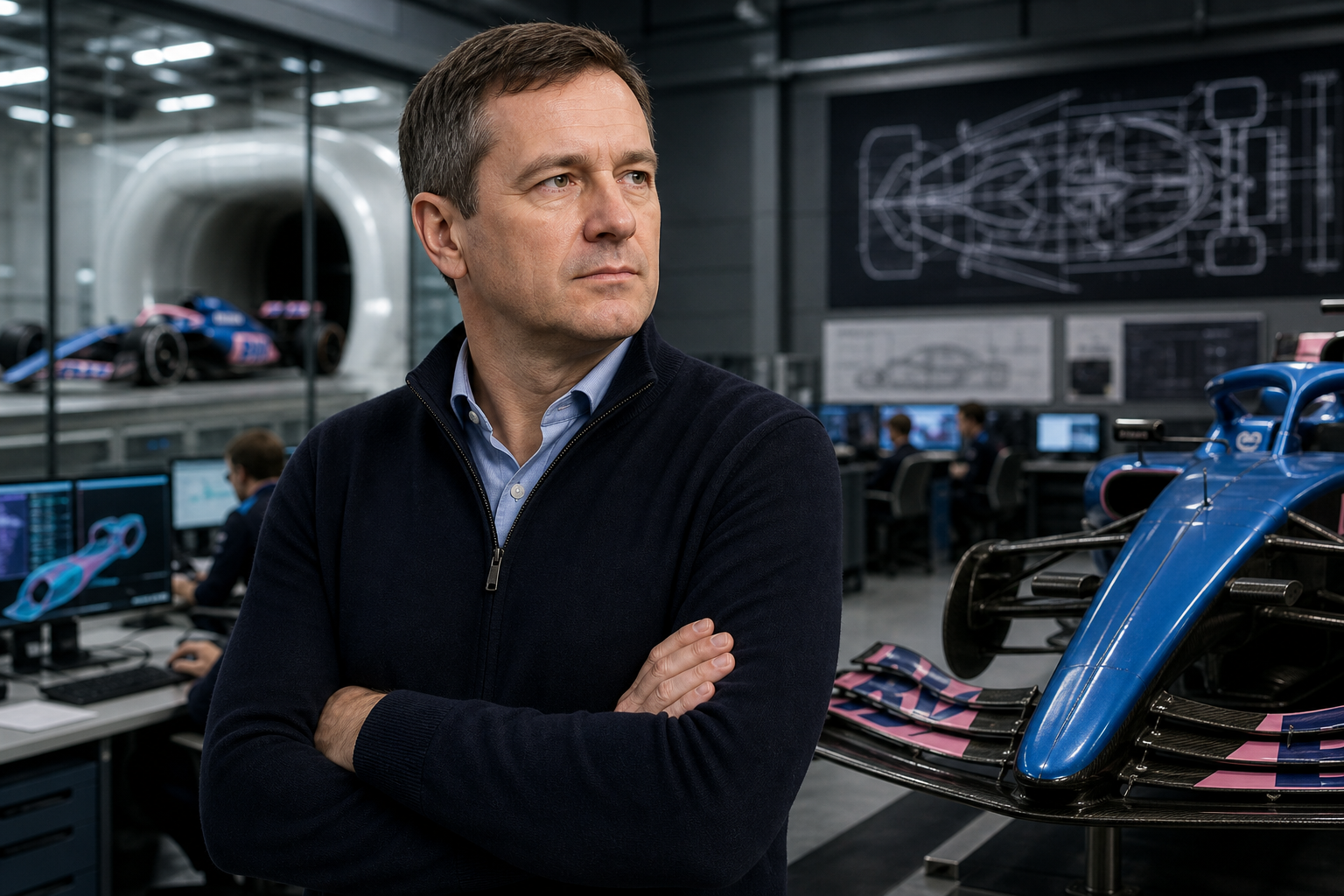

BWT Alpine has turned to a familiar name to strengthen its technical operation, appointing Mike Elliott as Chief Technical Officer and placing him in charge of the team’s engineering and technical work at Enstone. The move brings Elliott back to the factory where he spent part of his earlier Formula 1 career, this time in a senior leadership role with responsibility across the performance side of the team.
The appointment is notable not just because of Elliott’s background, but because it fits Alpine’s long-standing need for technical stability. Enstone has gone through repeated restructuring across its Renault, Lotus and Alpine identities, and the technical group has often been asked to deliver more consistency while the wider organisation has changed around it. Bringing in a senior figure with both Enstone experience and recent exposure to a front-running team is a clear attempt to reinforce that side of the business.
Elliott returns to familiar ground
Elliott is no stranger to the Enstone operation. From 2008 to 2012, he worked there as Principal Aerodynamist, during the period when the team competed under the Renault and Lotus nameplates. That stretch gave him direct experience of the culture, systems and development methods that have shaped the factory for years, even as the branding and ownership changed.
His return matters because Enstone is still one of Formula 1’s most established technical centres. The site has long been known for its ability to design, develop and build a complete grand prix car in-house, with the aerodynamic department playing a central role in the team’s competitiveness. For a chief technical officer, familiarity with that environment can be as important as the title itself.
From Mercedes to Alpine
Elliott arrives from Mercedes, where he served as Chief Technical Officer. That background gives Alpine a senior engineer who has spent recent seasons inside one of Formula 1’s benchmark operations. Mercedes’ technical structure has been a reference point for much of the hybrid era, and any executive moving out of that environment brings with him a detailed understanding of how a top team organises development, integrates different departments and manages the race car across a season.
For Alpine, the attraction is obvious. The team has been looking to build a stronger technical platform while competing against manufacturers and independent squads that have set a very high bar in areas such as aero development, vehicle dynamics and operational execution. A CTO with experience at both Enstone and Mercedes offers a blend of institutional knowledge and current top-team standards.
What the role means for Alpine
As Chief Technical Officer, Elliott will oversee the technical and engineering side of the Enstone factory. In practical terms, that places him at the centre of the car’s development path, from concept work and aerodynamic direction to the broader engineering processes that determine how quickly the team can turn ideas into lap time.
That is a significant brief for any Formula 1 team, but especially for Alpine, which has spent recent seasons trying to close the gap to the front of the grid while also managing internal change. The CTO role is not just about producing a faster car for the next race weekend; it is about setting the technical framework that shapes the team’s competitiveness over multiple seasons.
Modern Formula 1 has made the technical organisation of a team as important as the car itself. Aerodynamics, simulation, correlation between the wind tunnel and the track, and the efficiency of the engineering structure all feed into performance. Alpine’s decision to place Elliott in charge suggests a desire to tighten that entire chain rather than rely on isolated gains.
Enstone’s continuing importance
Enstone remains one of the most recognisable factory operations in the sport. Over decades, it has produced championship-winning cars and endured multiple ownership changes, but the core of the site’s value has always been its technical capability. Teams do not simply inherit success there; they have to maintain the engineering depth that has historically made the factory competitive.
For Alpine, that context is important. The team competes in a category where marginal gains matter and where organisational clarity can be worth as much as a fresh upgrade package. Elliott’s appointment appears aimed at reinforcing the structure behind the car, not just adding a well-known name to the organisational chart.
Why the appointment stands out
Senior technical hires in Formula 1 are rarely cosmetic, because the role is tied directly to how a team develops its future cars. Elliott’s move stands out because it connects three key elements: previous Enstone experience, recent senior leadership at Mercedes, and a factory that needs strong technical direction to maximise its resources.
Alpine has not disclosed any dramatic overhaul beyond the appointment itself, but the choice of Elliott signals an emphasis on engineering leadership and continuity. In a sport where teams can gain or lose tenths through organisational efficiency as much as raw pace, who runs the technical department is often as important as the upgrades that eventually reach the track.
For Alpine, this is a move aimed at building structure as much as speed. For Elliott, it is a return to a place he knows well, but under far greater responsibility than before.

0 Comments