
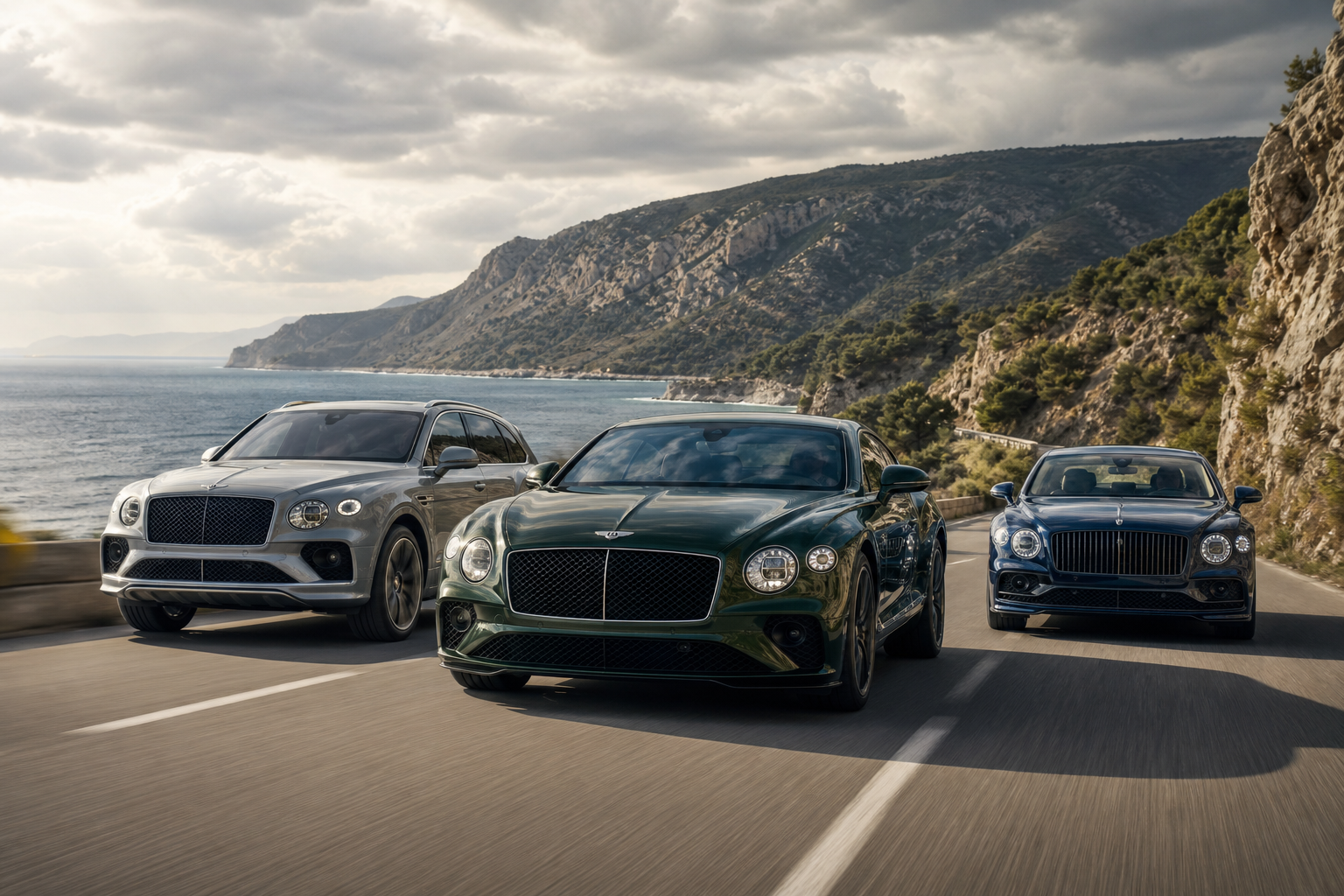

Bentley has abandoned its 2030 deadline for becoming an all-electric automaker, choosing instead to keep gasoline engines and hybrid powertrains in production while slowing the rollout of fully electric models. It’s a significant change of direction for a luxury brand that had previously placed a firm date on the end of combustion-powered Bentley cars.
The new strategy is being led by Bentley Torcal, with the company now favoring a mixed powertrain lineup rather than a sudden switch to battery-electric vehicles. That means Bentley’s future will include electric cars, but not at the expense of engines that still define much of the brand’s identity and customer appeal.
Bentley’s Electric Ambition Has Been Softened
A 2030 all-electric target sounds wonderfully tidy on a presentation slide. Real product planning is rarely so cooperative. Luxury vehicles demand large batteries, substantial performance, long-distance comfort, and the ability to carry plenty of equipment without becoming comically heavy. Customers also expect effortless highway range and quick charging, particularly when the vehicle carries a price tag that could fund a small apartment and several regrettable vacations.
Bentley’s revised approach recognizes that an electric-only lineup cannot be introduced simply by replacing an engine with a battery and hoping nobody notices. The company must match the refinement, range, performance, and character expected from its existing cars while also responding to customer demand. The decision to slow the all-electric rollout suggests that Bentley no longer considers a fixed 2030 deadline more important than getting that transition right.
That does not mean Bentley is walking away from electric vehicles. The company is still moving toward electrification, but at a slower pace and alongside continued production of combustion and hybrid models. The distinction matters. This is a delay and reshaping of the plan, not a rejection of battery power.
Combustion and Hybrid Models Stay in the Lineup
Keeping gasoline engines alive gives Bentley room to develop its electric products without forcing every buyer into the same technology at the same time. Hybrid models can serve as the middle ground, using electric drive for quieter, cleaner short trips while retaining a gasoline engine for longer journeys and the sort of effortless touring Bentley owners expect.
There is also a brand question here. Bentley’s appeal has never rested solely on transport. Its cars are built around smooth power delivery, substantial presence, and a sense of occasion that has traditionally been supplied by large, refined engines. A battery-electric Bentley can deliver enormous acceleration and near-silent running, but it must create character in different ways. Instant torque is useful; it is not, by itself, a personality.
Hybridization allows Bentley to preserve some of the familiar experience while adding electric assistance where it is most useful. It also avoids treating the transition as a binary choice between old-fashioned gasoline power and a fully electric future. The mechanical reality is rather more complicated, which is inconvenient for slogans but helpful for buyers.
Why the Change Matters for Bentley Buyers
For customers, the immediate consequence is choice. Bentley can continue offering combustion-powered and hybrid vehicles while expanding its electric range gradually. Buyers who are not ready to move into a fully electric luxury car will not be pushed toward one simply because a calendar target says they should be.
That flexibility may be particularly important in the luxury segment, where purchase decisions are influenced by far more than basic transportation needs. Charging access, driving patterns, road-trip habits, towing or cargo requirements, and personal preference all play a role. A wealthy customer may be perfectly happy to add an electric vehicle to a collection while still wanting a gasoline-powered Bentley for long-distance travel. Affluence does not magically make charging infrastructure appear outside every country estate.
The revised plan should also give Bentley more time to refine the details that determine whether an electric luxury car feels genuinely finished. Battery weight, thermal management, charging performance, software behavior, cabin packaging, and long-distance efficiency all matter. A quiet cabin and rapid acceleration are easy headlines. Making a heavy electric vehicle feel graceful, composed, and distinctly Bentley is the harder job.
A More Cautious Route to Electrification
Bentley’s decision reflects a broader practical issue facing automakers: the pace of electrification cannot be set by corporate ambition alone. Product cycles, customer demand, infrastructure, regulation, and the cost of developing new platforms all pull in different directions. A deadline can concentrate minds, but it can also encourage rushed decisions when market conditions move more slowly than expected.
By maintaining gasoline and hybrid production, Bentley can spread the transition across several powertrain types instead of staking the company’s entire future on one timetable. That approach carries its own complications. Supporting combustion, hybrid, and electric vehicles requires more engineering work, more complex manufacturing, and a wider range of technical expertise. It is not the cheap or simple option. It is simply less abrupt.
The strategy also leaves Bentley with a difficult communications task. The brand must continue presenting electric vehicles as a serious part of its future while explaining why gasoline engines remain in the plan. That message will require rather more honesty than the usual claim that every new drivetrain is revolutionary. Customers can understand a gradual transition. They are less likely to appreciate being told that a delay is secretly a triumph of the original schedule.
Bentley’s Next Chapter Will Have Several Powertrains
For now, the important point is straightforward: Bentley has dropped its 2030 all-electric deadline and will continue producing combustion and hybrid models while slowing the arrival of fully electric vehicles.
That leaves Bentley with a more complicated future, but possibly a more credible one. Electric vehicles will remain part of the plan, yet gasoline engines and hybrids will continue to occupy valuable space in the lineup. For a brand built on smooth, powerful grand touring, that compromise may be less glamorous than a bold zero-emissions pledge, but it sounds considerably more usable in the real world.
0 Comments