
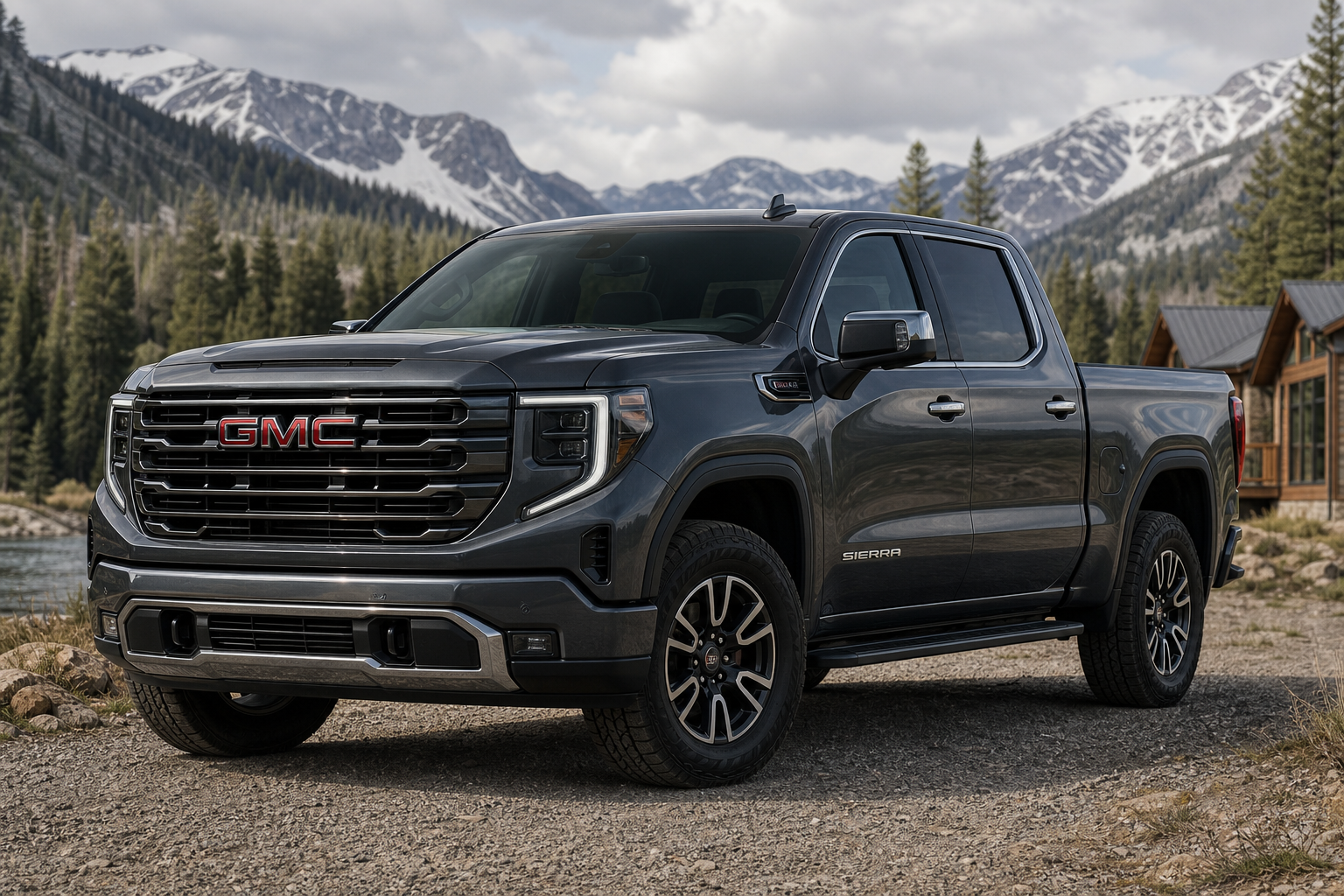

The new-generation 2027 GMC Sierra 1500 is arriving with a less welcome surprise: higher starting prices. GMC has released pricing for four-wheel-drive crew-cab versions, and most of those models cost several thousand dollars more than their predecessors.
That detail matters because the Sierra 1500’s headline price is only part of the story. The figures released so far apply specifically to crew-cab trucks equipped with four-wheel drive, rather than every body style and configuration in the lineup. Regular-cab, extended-cab, two-wheel-drive, and other versions may follow a different pricing structure once GMC publishes their numbers.
Higher Prices for the Versions Many Buyers Want
Crew-cab pickups have become the default choice for a large portion of the full-size truck market. They provide the rear-seat space that families expect, while still offering the bed and towing capability that make a full-size pickup useful. Four-wheel drive is similarly popular, particularly in regions where winter weather, rough job sites, or muddy boat ramps are part of normal life rather than an occasional inconvenience.
That makes the newly announced pricing more consequential than an increase affecting a niche configuration. GMC is raising prices on the versions that many buyers would naturally start with, and the increase is measured in thousands rather than pocket change. A few thousand dollars can disappear rather quickly on a well-equipped pickup, but it remains a meaningful sum when the truck is being financed, leased, or purchased for work.
The exact impact will depend on trim level and equipment. GMC has not, in the supplied pricing announcement, provided a complete price walk for every Sierra 1500 variant, nor has it established the final cost of every possible configuration. Buyers should therefore be careful when comparing a single published starting price with the outgoing truck. The body style, drivetrain, cab, and standard equipment all need to match before the comparison becomes useful.
A New Generation Does Not Come Free
New generations of full-size pickups rarely involve a simple change of sheet metal. Manufacturers typically revise the structure, electrical architecture, cabin, safety systems, suspension tuning, powertrain integration, or manufacturing process. Those changes can bring genuine benefits, but they also give automakers room to move pricing upward.
GMC’s announcement is therefore a familiar equation in the truck business: newer hardware, newer pricing. The awkward bit is that buyers do not get to pay for only the improvements they value. Someone shopping for a straightforward work truck may have little interest in a more elaborate cabin or additional electronic systems, yet the cost of developing and installing those features can still influence the price of the entire range.
There is also a practical reason to pay close attention to the phrase starting price. It describes the point at which a configuration enters the lineup, not necessarily the truck most customers will find sitting on a dealer lot. Crew-cab, four-wheel-drive models already represent a more expensive combination than a basic two-wheel-drive work truck, and optional equipment can push the transaction price considerably higher.
What the Announcement Does—and Does Not—Tell Us
The latest information establishes three useful points. First, GMC has begun revealing pricing for the 2027 Sierra 1500. Second, the announced figures cover four-wheel-drive crew-cab models. Third, most of those prices are higher by a few thousand dollars than before.
It does not yet provide a complete picture of the 2027 Sierra 1500 range. Without full pricing for every cab, drivetrain, and trim, it would be premature to describe the entire lineup as uniformly more expensive. Nor does the announcement, by itself, establish whether the new generation brings major changes to towing ratings, payload, engine choices, fuel economy, interior packaging, or technology. Those details will determine whether the additional money buys something tangible or merely moves the Sierra into a pricier parking space.
That distinction is important in a market where trucks are often purchased according to a very specific set of requirements. A buyer who needs four-wheel drive and a full-size rear seat may accept the increase because those requirements narrow the alternatives. Someone who mainly wants an inexpensive hauler may find the new pricing harder to justify and could look more closely at a lower trim, a different configuration, or an outgoing model while inventory remains.
The Outgoing Sierra May Become the Interesting One
Whenever a new generation arrives with higher prices, remaining examples of the previous truck deserve a closer look. Dealers may have incentives to clear older inventory, while buyers who do not require the newest design can sometimes avoid paying the full premium attached to the replacement.
That does not automatically make the older Sierra the better truck. The 2027 model may offer improvements that are valuable in daily use, and discounts on outgoing vehicles vary by dealer, trim, and availability. Still, the price gap creates a sensible question: does the new truck deliver enough additional capability or convenience to cover the difference?
For fleet operators and small businesses, the calculation is even less glamorous. A higher purchase price affects monthly payments, depreciation, insurance, and the cost of putting several trucks into service. A private buyer may focus on comfort and appearance; a business owner will also be looking at the spreadsheet, which is where many glamorous pickup decisions eventually go to sober up.
Wait for the Full Range Before Drawing a Final Verdict
The 2027 GMC Sierra 1500’s price increase is clear, but the broader judgment must wait for a complete breakdown of the lineup and equipment. The announced figures cover an important slice of the range, not every Sierra 1500 sold.
For now, the sensible approach is to compare like for like: same cab, same drivetrain, same trim, and equivalent standard equipment. If the new generation brings meaningful improvements, the higher price may be understandable. If the changes are less substantial than the numbers suggest, buyers may find the outgoing truck—or a less heavily equipped configuration—the more rational choice.
Either way, the 2027 Sierra 1500 will begin its career with a familiar full-size-pickup problem: the truck may be new, but the financial decision remains stubbornly old-fashioned. Work out what you actually need before the options list starts doing the thinking for you.
0 Comments