
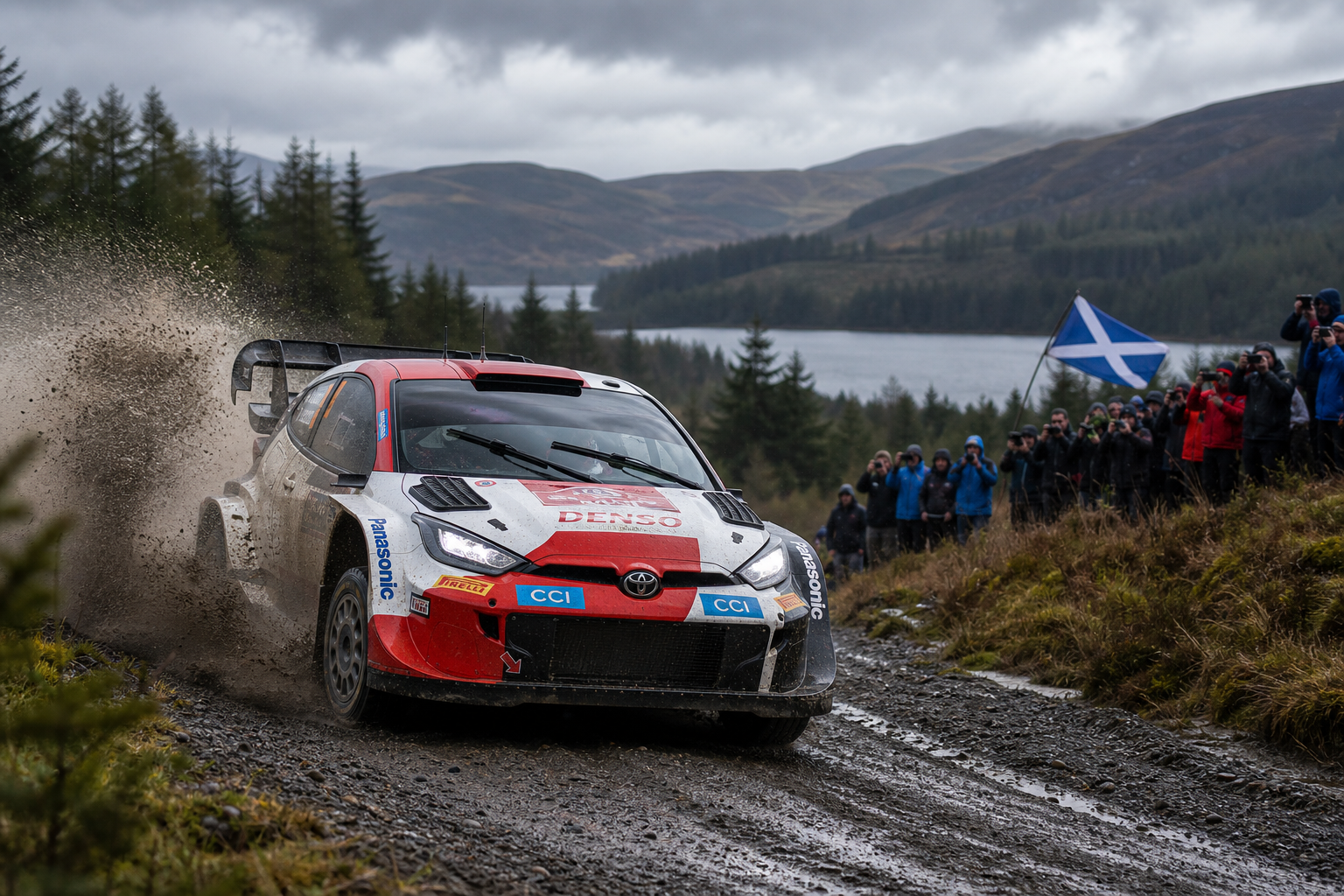

The World Rally Championship is heading back onto free-to-air television in Britain, and that alone is worth a raised eyebrow and a quiet cheer. From 2027, the BBC will carry live WRC action under a new three-year UK rights agreement, giving rally fans a proper chance to follow the business end of each event without hunting through subscription packages like a mechanic looking for a 10mm socket.
The deal runs from 2027 through 2029 and brings with it live coverage of selected stages from every round, including the all-important Power Stage. Each rally will also receive a 60-minute highlights program, which should at least ensure that the key moments, the biggest mistakes, and the occasional gravel-induced disaster make it onto mainstream television where they belong.
What the BBC will actually show
The headline element here is live coverage of selected stages from all WRC events, rather than a token clip or two buried somewhere in the schedule. The Power Stage, of course, is the one everyone cares about by the time the rally reaches its final act. It is where bonus points are often decided, where crews are pushing hardest, and where a championship fight can be sharpened or completely mangled in a handful of minutes.
That makes the BBC’s involvement more meaningful than a simple highlights package. Rallying has always been at its best when viewers can see the tension build in real time: the changing grip, the weather turning nasty, the road conditions evolving, and the kind of commitment required to throw a car sideways down a forest track at speeds most sane people would reserve for fleeing a wasp. Live stages capture that in a way edited summaries never quite can.
The 60-minute program for each rally will give the series a more conventional broadcast home as well. For casual viewers, that matters. WRC can be brilliant, but it is not always the easiest form of motorsport to follow from the outside. Stages are spread over long distances, results change constantly, and one puncture can ruin a weekend. A tidy highlights show helps make sense of the chaos without sanding off the drama.
Why this is a useful step for rallying
Broadcast visibility matters for rallying in a way it does for almost no other form of motorsport. A circuit race has a start, a finish, and a neat little television shape. Rallying is scattered across roads, forests, hills, and weather fronts with all the orderly elegance of a suitcase after airline baggage handling. That unpredictability is the charm, but it also makes the sport harder to package for a broad audience.
A BBC deal gives WRC something it has often needed in Britain: accessibility. Free-to-air coverage means the championship can reach viewers who would never go looking for a subscription feed or a specialist streaming platform. It also gives the series a better chance of pulling in younger fans and casual viewers who stumble across the action and discover that rally cars, unlike most marketing departments, can actually do something interesting.
For the championship itself, a wider audience is not just a vanity metric. It helps with sponsor exposure, raises the profile of the drivers and manufacturers involved, and makes the sport easier to explain to people who only know rallying as “that thing with mud and a lot of shouting.” In a world where motorsport series spend fortunes trying to look more visible, getting a major broadcaster involved is a tidy piece of business.
Rally Scotland gets special treatment
The agreement also includes extensive live coverage from Rally Scotland, which appears to be getting a more generous serving of airtime than the rest of the calendar. That is a notable detail, even if the source material stops short of laying out the full broadcast schedule. Scotland’s stages have long been one of the more appealing rally backdrops in the UK, and if the BBC is willing to lean into that, so much the better.
Scotland has the sort of terrain and atmosphere that makes rallying look properly dramatic on television. The roads tend to be fast, the scenery does half the storytelling for you, and the weather often behaves like it has a personal grudge. In other words, it knows how to put on a show. If the BBC wants a stage rally to anchor its domestic coverage, it could do a lot worse.
What it means for the WRC’s audience
The timing is interesting too. This is a 2027 start, which gives the championship and broadcaster time to get the production and scheduling side sorted before the deal kicks in. That is not glamorous, but it is how these things work. Television rights agreements are built on logistics, not just enthusiasm and nice reel packages of mud being flung into headlamps.
For fans in the UK, the practical takeaway is simple: more WRC on a platform nearly everyone can access. That matters in motorsport, where visibility can be half the battle. Rallying has always had the raw material to be compelling on television: speed, danger, weather, machinery, and the occasional unplanned meeting with a tree. It has rarely lacked drama. It has more often lacked airtime.
This BBC deal does not solve every problem the championship has, and it does not magically turn rallying into a mainstream obsession. Nothing does that except possibly a national holiday and several million pounds of ad spend. But it does make the sport easier to find, easier to follow, and a lot less dependent on niche platforms for anyone in the UK who fancies a bit of sideways action on a Saturday afternoon.
And frankly, that is good news. Rallying has spent long enough being one of motorsport’s best-kept secrets. Giving it a proper place on the BBC should help ensure a few more people discover what the rest of us already know: when a car is doing 100 mph on a gravel road in the rain, all while its driver and co-driver are trying to remain calm, television becomes a considerably more interesting place.
0 Comments